Why Your Minecraft Server Explains Ecological Memory in Nature
Source PublicationScience Advances
Primary AuthorsKopecky, Castorani, Tuff et al.
"A Minecraft player building their base inside the stone fortress left behind by a retired veteran player."
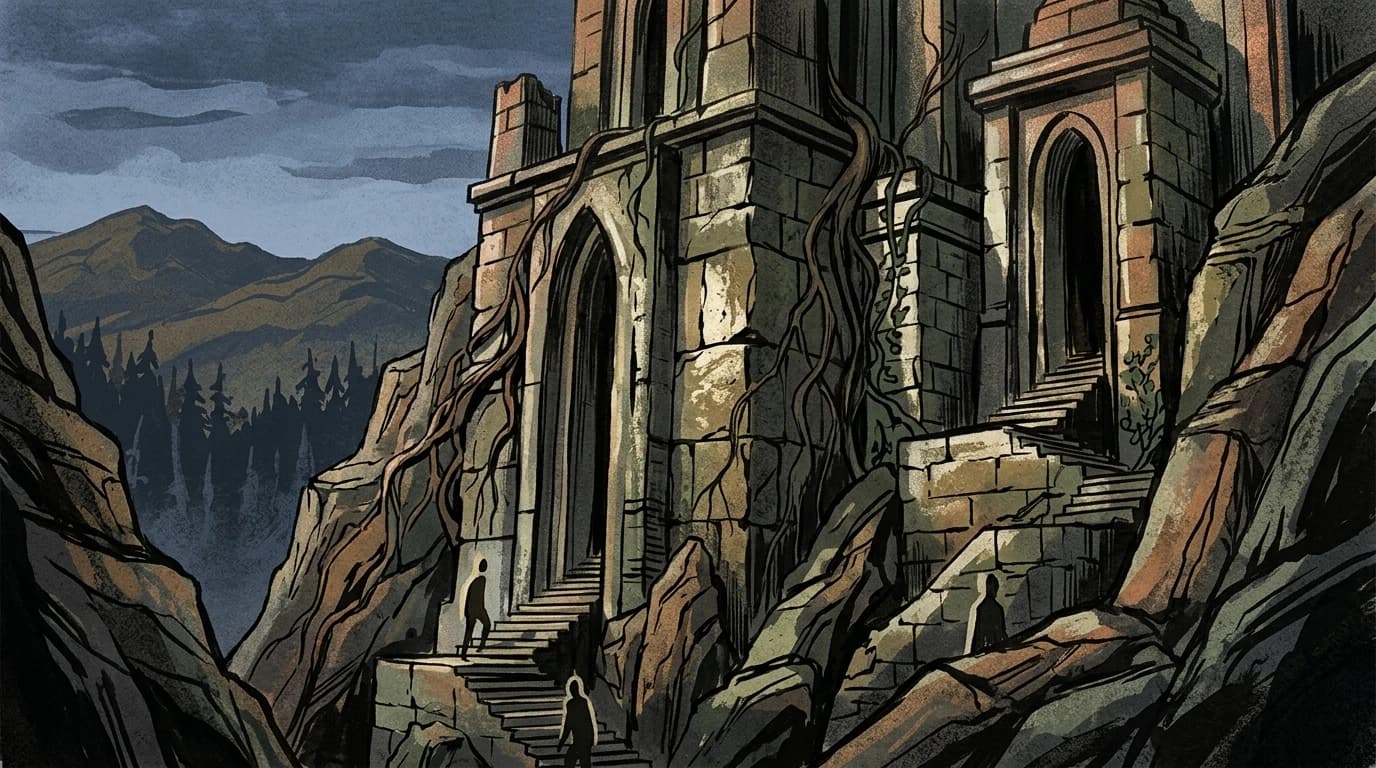
Imagine logging onto a shared Minecraft server. If a veteran player logs off for good but leaves behind a massive stone fortress, you do not start from scratch. You use their leftover walls for shelter and build your base inside them.
Nature operates on the exact same principle. Long after key organisms die, their physical remains leave a structural blueprint that dictates how the next generation grows.
How Ecological Memory Guides the Next Generation
Scientists call this phenomenon ecological memory. Although this study focused specifically on ten US-based ecosystems, a research team analysed data spanning 2 to 32 years across these marine and terrestrial sites to measure how dead "foundation" species affect living members of their own species.
The study found that these physical legacies do not just decay quietly. They actively alter the survival and growth of new life, causing effects ranging from a 50% reduction in population growth to a massive 12-fold increase.
- Dead trees leave behind structural remains that influence where new trees of the same species can take root.
- Leftover oyster shells provide a physical foundation that helps new generations of oysters anchor and build reefs.
- Dead coral skeletons act as a physical scaffold, helping young corals of the same species settle and establish themselves.
Managing the Ghosts of Our Ecosystems
This research suggests that protecting nature is not just about keeping organisms alive. It means we must also preserve the physical structures left behind after climate-driven disasters.
As you inherit a world facing more frequent wildfires and coral bleaching, understanding these postmortem patterns is vital. It allows conservationists to organise smarter restoration projects, using nature's own structural memory to rebuild damaged habitats.