Why Your Brain Overreacts: The Science of Pain Catastrophizing
Source PublicationCenter for Open Science
Primary AuthorsChang, Ding, Sakaki et al.
"It's like your brain's fire alarm system getting so loud that it overrides your ability to check if there is actually a fire, while simultaneously unplugging the fire extinguisher."
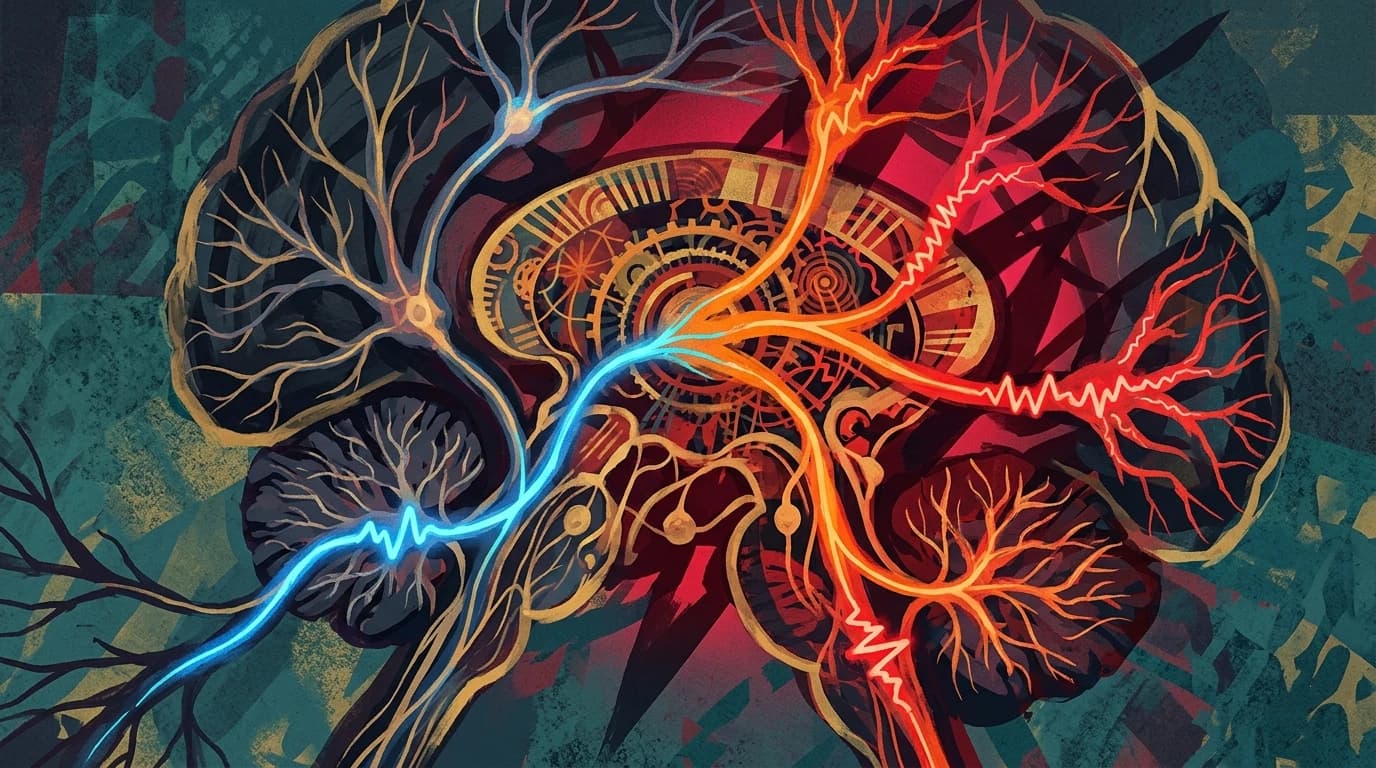
Did you know that your brain can literally trick you into feeling more physical pain just by worrying about it? This mental spiral is known as pain catastrophizing, and it is not just "all in your head."
When you get a tiny scratch, some people shrug it off, while others immediately anticipate the absolute worst. Researchers wanted to see if this habit of imagining worst-case scenarios actually changes how brain regions communicate.
Mapping Pain Catastrophizing in the Brain
To find out, scientists applied capsaicin—the spicy chemical in chilli peppers—to sixty healthy adults and scanned their brains using fMRI.
They discovered that people with high catastrophizing scores showed three distinct changes in brain connectivity:
- Increased coupling between sensory and emotional centres (S2 and ACC/mPFC), which may amplify the perceived threat.
- Reduced connection to visual processing areas, suggesting a shift inward.
- A total reversal in motor-planning connections (PCC to SMA) as pain intensified, which might alter how they prepare to react.
The Future of Managing Discomfort
These results suggest that catastrophizing is a physical, multi-network brain configuration rather than just a bad attitude.
By mapping these pathways, scientists could design better therapies to help people reorganise how their brains handle chronic discomfort. This could lead to personalised treatments that target specific brain networks to help calm the nervous system.