Why warming Pacific waters threaten sea lion extinction risk in Peru
A study shows that more frequent and severe El Niño events could increase the local extinction risk of female South American sea lions in Peru by 83.4% over 50 years.
Reading level
The full story with proper science words explained.
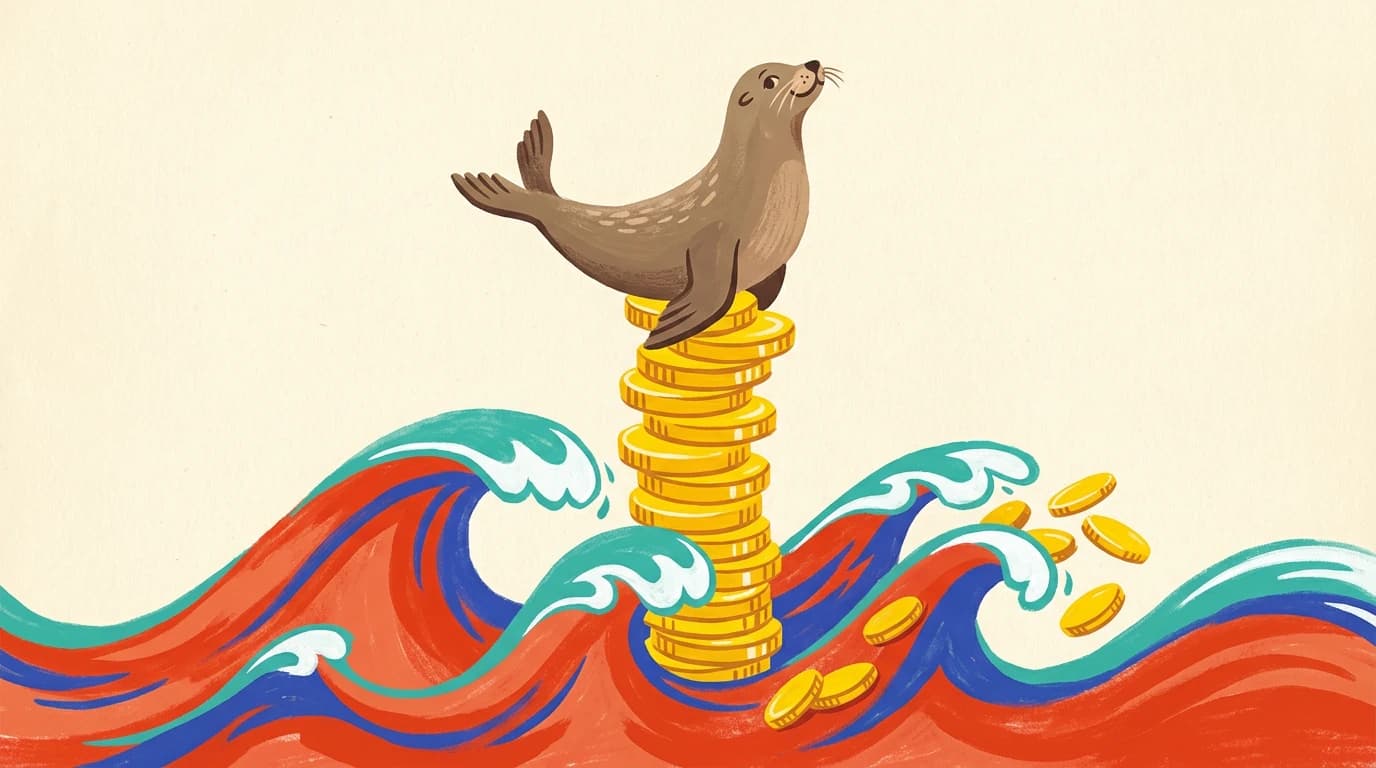
Heads up: this study is a preprint, which means other scientists haven’t finished checking it yet.
Weathering past storms
For twenty-five years, South American sea lions off Peru held their ground against marine warm spells. High female survival during good years allowed the group to rebuild its numbers after rough times.
Yet these climate shocks are getting stronger. A research team set out to test how well the sea lion, known as Otaria byronia, could cope if extreme warm events start hitting closer together.
Simulating the future
The team created a Bayesian population model, a statistical tool that blends field records with prior facts to track animal numbers. They used it to calculate vital rates—the measures of birth, life, and death—to see how shifts in the sea alter animal survival.
Next, they simulated future paths with more frequent and severe El Niño events, which heat up Pacific surface waters. This method matters because it tests whether past recovery patterns can withstand faster future shocks. By running these paths, the team measured the chance of extirpation, meaning the total loss of this local group even if other herds live on elsewhere.
The danger of faster shocks
The tests showed that past grit has real limits. Under a path with moderate rises in El Niño frequency and power, the local sea lion extinction risk jumped fast. Over 50 years, the risk of extirpation rose by 83.4% compared to today.
Think of it like a bank account hit by sudden bills. You can ride out an occasional large cost if your pay refills the balance between hits. But if big emergencies strike back-to-back without a break, the funds soon drop to zero. The analogy falls short because a bank balance is a simple pile of cash, whereas a wild herd depends on birth and death cycles across generations.
What we still do not know
This study tracked only female sea lions in Peru, so it may not match males or groups in other areas. It also depends on modeled future climate tracks. Experts still do not know the exact management steps or safety marks needed to stop extirpation as climate shifts grow more extreme.
Science words
- Otaria byronia
- The scientific name for the South American sea lion.
- Bayesian population model
- A statistical method that tracks animal numbers by combining observed records with prior knowledge.
- vital rates
- Statistics tracking how fast a population gives birth, survives, and dies.
- El Niño
- A climate pattern that brings recurring, unusually warm surface waters to the central and eastern Pacific Ocean.
- extirpation
- The local extinction of a species from a specific area, while it still survives elsewhere.
Check it yourself
This story is based on a real research paper in Scientific Publication by Chung, Cárdenas-Alayza, Alfaro-Shigueto et al.. We write with AI help and check it against the paper, but the original is the final word.