Why Tin Halide Perovskites Might Finally Outshine Lead
Source PublicationChemical Society Reviews
Primary AuthorsZhu, Chaudhary, Mishra et al.
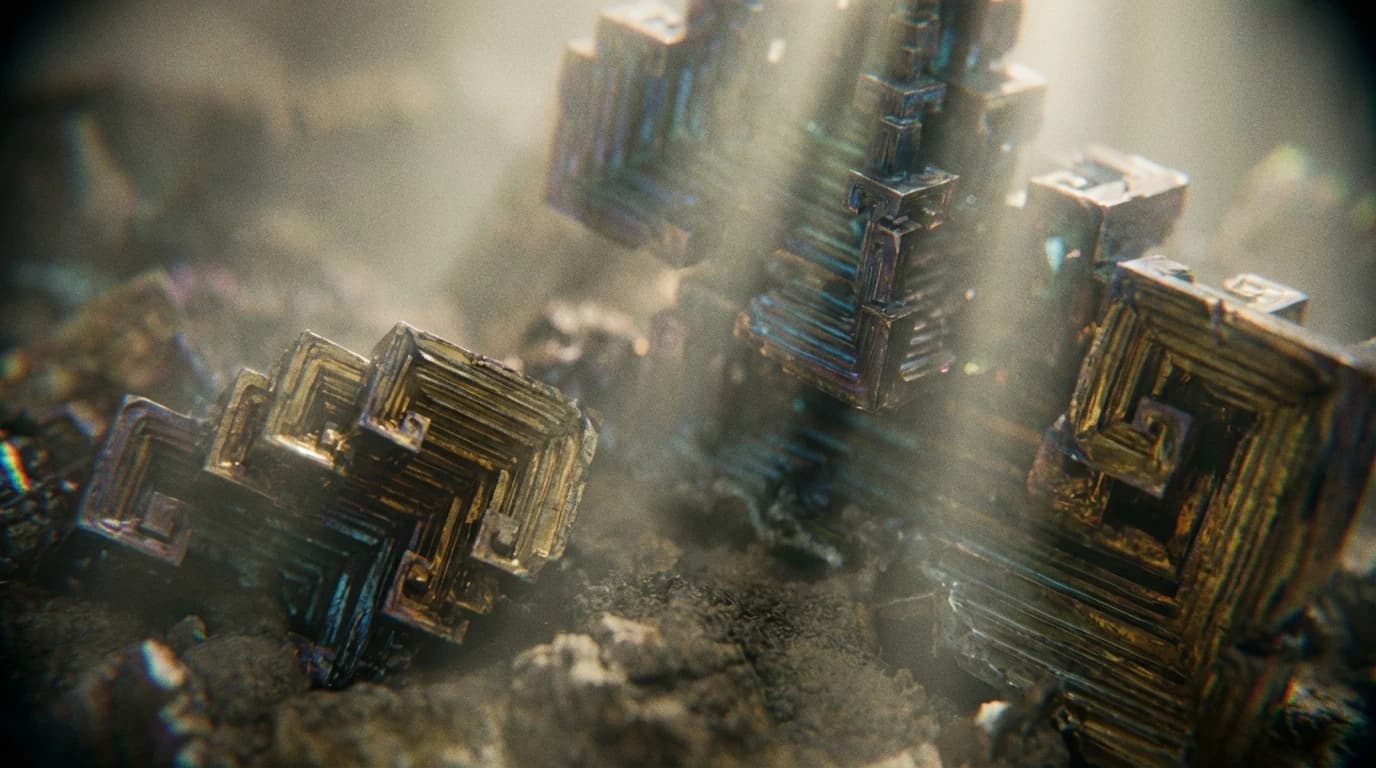
Is it not odd that the future of green energy currently relies on lead? We wrap our hopes for solar dominance in a material that we have spent decades removing from paint, petrol, and pipes. It works, certainly. Lead perovskites are ruthlessly efficient. But there is a cleaner candidate waiting in the wings, one that offers a fascinating chemical puzzle.
Enter the underdog.
The allure of Tin Halide Perovskites
Structurally, tin is the polite neighbour to lead. It sits just above it on the periodic table, sharing similar chemical traits but shedding the heavy toxicity. For a long time, it was ignored. Why? Because tin is temperamental. It likes to oxidise. It degrades the moment you look at it wrong. Yet, this review suggests we are finally getting a handle on its quirks. The lower bandgaps found in tin halide perovskites are theoretically superior for harvesting light, potentially capturing photons that lead lets slip by.
Flattening the structure
Here is where the chemistry gets clever. The review focuses on 'layered' or low-dimensional forms. Imagine slicing a 3D crystal block into ultra-thin sheets. By introducing organic spacers—bulky molecules that sit between the layers—scientists can effectively cage the tin. This controls crystallisation. It acts as a scaffold.
Suddenly, the material stops falling apart quite so fast.
These spacers do more than just stabilise; they allow for precise structural tuning. It is architectural chemistry. You can tweak the spacer to alter how the material handles charge, turning a chaotic soup of ions into an organised, high-performance semiconductor.
Solving the oxidation riddle
The challenge remains significant. Tin wants to turn into Sn4+ (useless for solar) rather than remain as Sn2+ (useful). But the move towards 2D structures seems to be the shield we need. By wrapping the tin lattices in these organic blankets, we protect them from the air.
We are not quite at the finish line. The efficiency needs to climb. But the path away from toxic lead is becoming clearer, paved with these intricate, layered tin crystals. It is a shift from brute force efficiency to elegant, sustainable design.