Why Solid-State Lithium-Oxygen Batteries Could Be Our Ultimate Power Upgrade
Source PublicationScientific Publication
Primary AuthorsXiong BQ, Liu X, Wang D, Jiang J, Guo J, Yang J, Yin J, Wang Z, Wang C, Ren X.
"It is like replacing a single-lane dirt road with a multi-lane superhighway where both sports cars (electrons) and delivery trucks (lithium ions) can travel side-by-side at top speed without crashing."
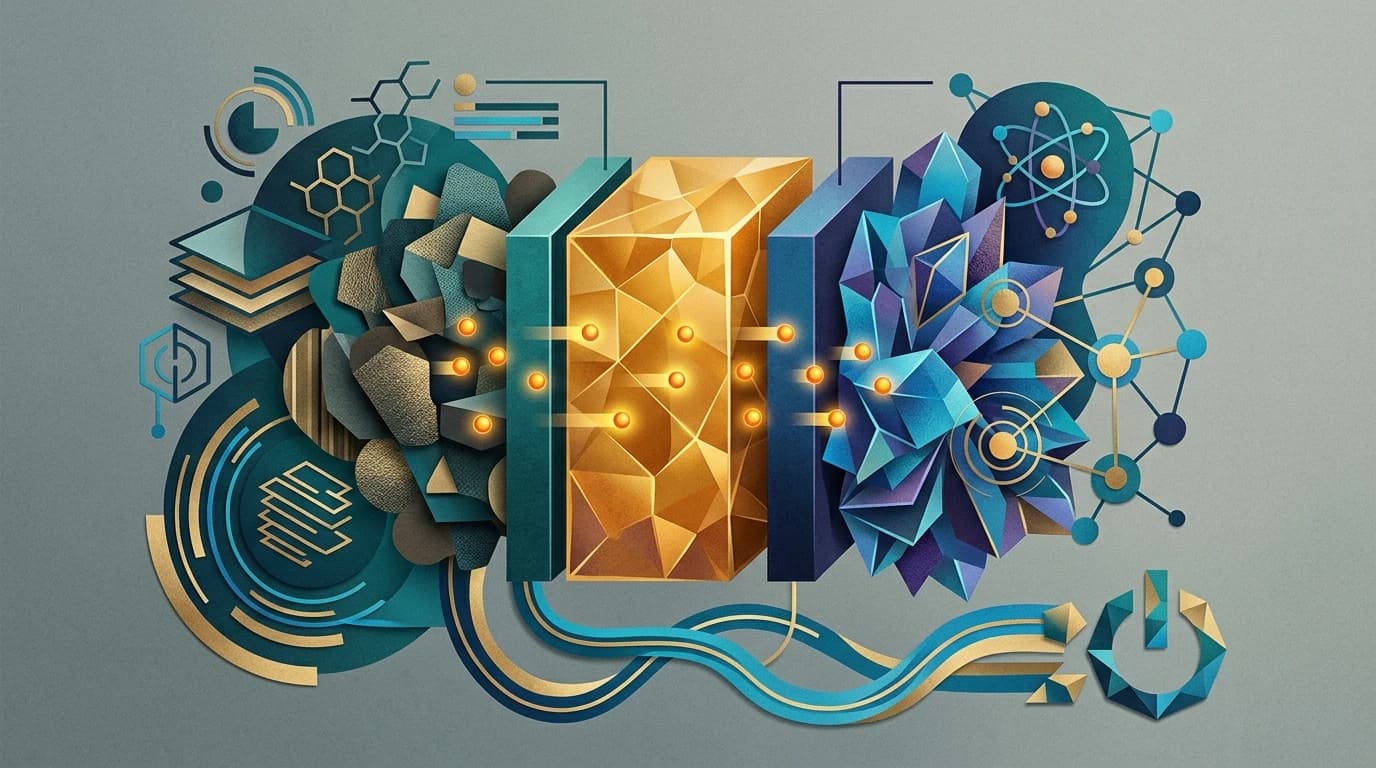
Did you know that the ultimate battery of the future might actually breathe oxygen? 😮 While standard lithium-ion batteries are heavy and limited, solid-state lithium-oxygen batteries have an ultrahigh theoretical energy density, meaning they could store a massive amount of energy while staying super safe.
These results were observed under controlled laboratory conditions, so real-world performance may differ.
The problem is that these batteries suffer from a massive traffic jam. The chemical reactions at the cathode are sluggish because lithium ions and electrons struggle to travel through the solid materials at the same time.
The Secret to Solid-State Lithium-Oxygen Batteries
To fix this, researchers working at a lab scale engineered a monolithic cathode that fuses the materials together using an ultrafast heating process. This creates a seamless network of pathways, allowing both ions and electrons to flow without resistance. They also utilised cobalt atoms as active catalytic centres to speed up the oxygen reactions.
Specifically, these active centres accelerate the formation of lithium superoxide during discharge and assist the reversible decomposition of lithium peroxide during charging. During laboratory testing, this design achieved an ultrahigh discharge capacity of 12,970 mAh g-1. The device also operated stably for over 400 cycles, showing a significant drop in energy loss.
These findings suggest we can bypass the transport bottlenecks that limit advanced energy storage. If scaled up, this architecture could help engineers build lighter, safer, and much more powerful energy storage systems for the future.