Why Single-Atom Catalysts for Water Purification Are Like Discord Mute Buttons for Pollution
Source PublicationChemical Reviews
Primary AuthorsZhou, Wu, Yu
"A Discord mute button that silences one noisy user while keeping the rest of the conversation perfectly clear, rather than muting the entire channel."
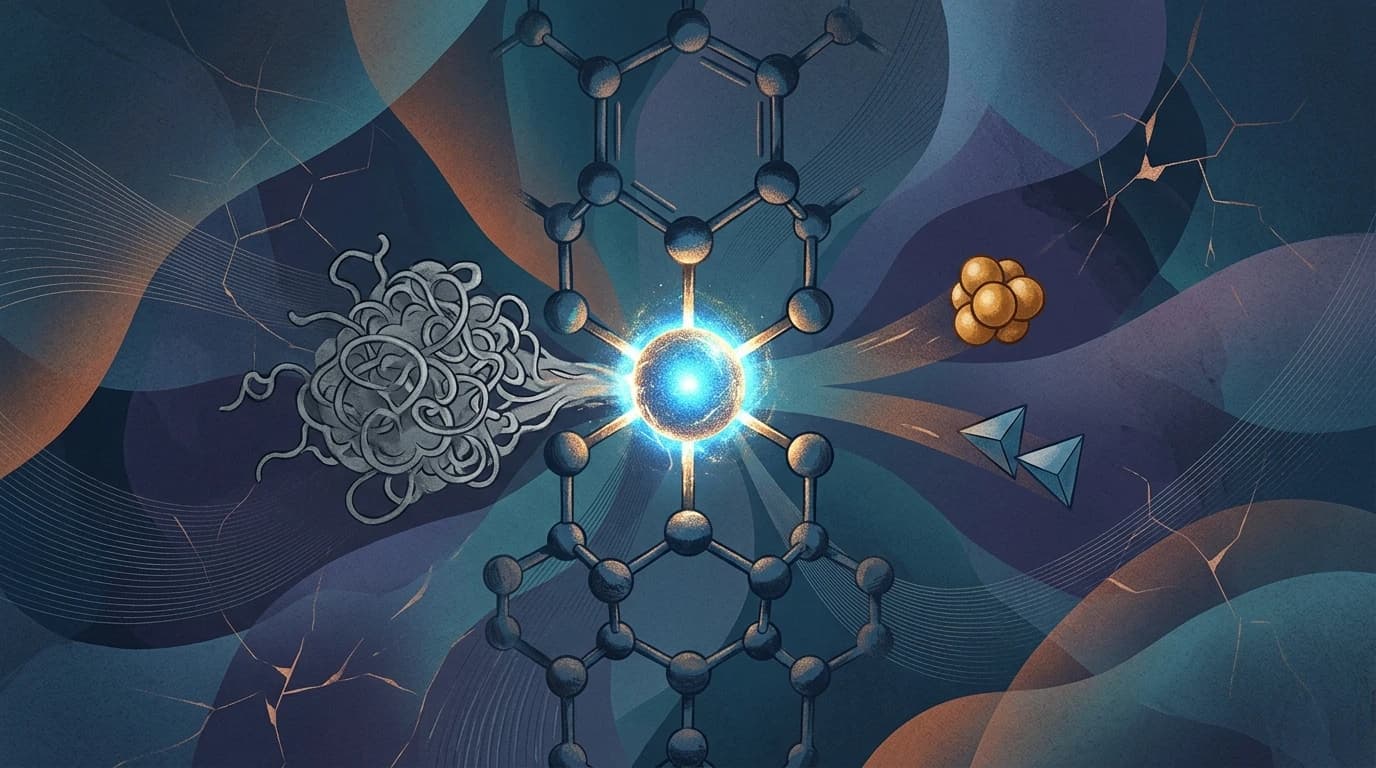
Imagine you are in a chaotic Discord call with twenty people. You do not want to mute the entire server; you just need to silence the one person eating crisps right next to their microphone.
These results were observed under controlled laboratory conditions, so real-world performance may differ.
Standard water filters act like a blunt mute button, trapping everything, even the harmless minerals our bodies actually need. This wastes energy and wears out the filters quickly.
How Single-Atom Catalysts for Water Purification Work
A recent scientific review highlights how anchoring individual metal atoms onto a surface creates highly targeted filters. These single-atom catalysts (SACs) do not just save material; they act like precision strikes against specific toxic chemicals.
Because these atoms are isolated, researchers can organise their chemical properties to ignore harmless background elements and target only dangerous pollutants. This specificity means the filters do not get clogged by normal river mud or mineral buildup, which typically ruins older systems.
A Circular Future for Our Water
The review suggests we could even build these filters using recycled industrial waste, turning carbon emissions or scrap metal into active filtering sites.
- Isolated atoms target specific toxic molecules.
- Filters resist clogging from natural minerals.
- Waste materials could be recycled to create new catalysts.
While more testing is required to scale this up for cities, automation and machine learning may soon help us design custom catalysts for different types of polluted water. This technology could ensure safer drinking water for communities facing severe industrial pollution.