Why Precision Oncology Needs to Level Up Against Smart Tumours
Source PublicationExpert Review of Anticancer Therapy
Primary AuthorsOkabayashi, Inada, Tabuchi et al.
"A video game boss fight where the enemy constantly changes their armour and attack patterns mid-battle, rendering your initial weapon useless."
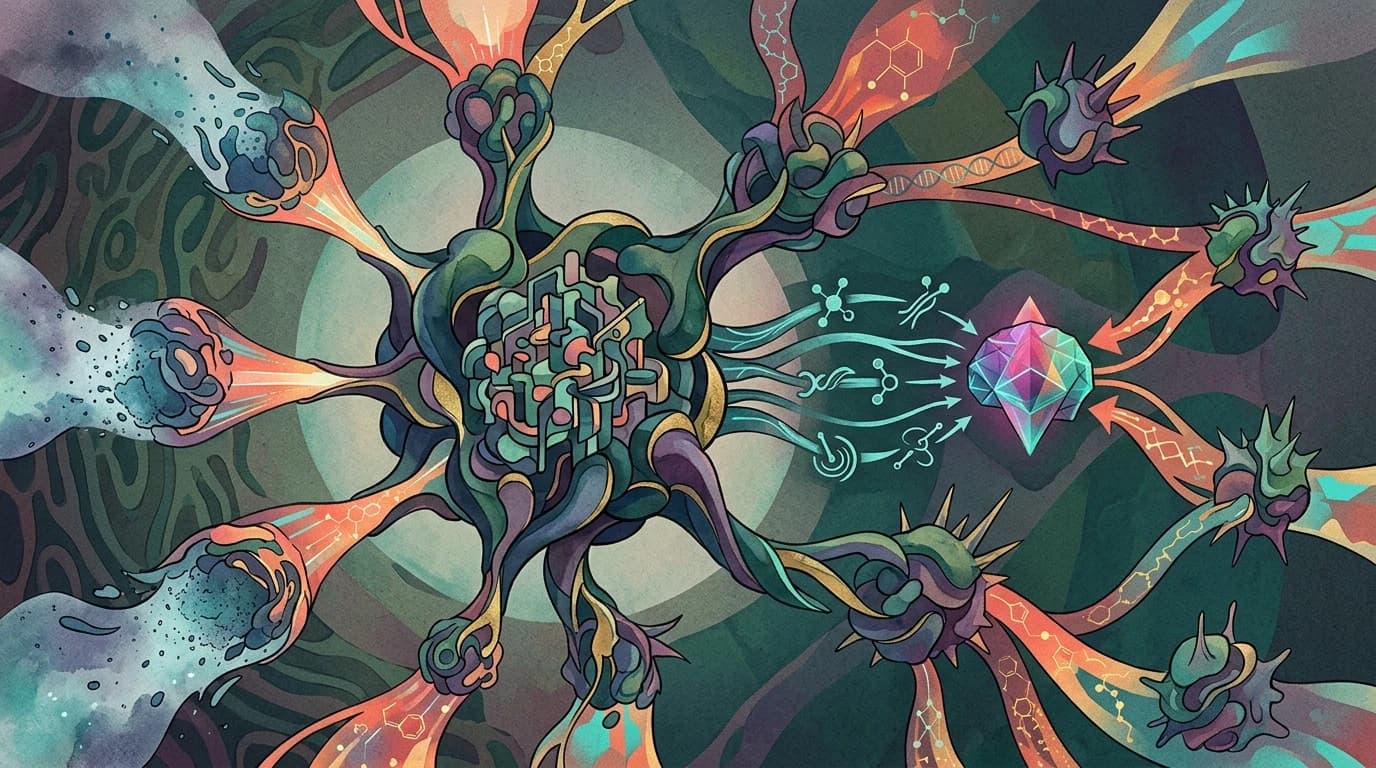
Imagine entering a boss fight in your favourite video game. You scan the boss, find their weak spot, and equip the perfect weapon. But mid-battle, the boss adapts, changes their armour, and renders your attack useless.
That is exactly what happens inside the body during cancer treatment. Doctors use a strategy called precision oncology to match drugs to a tumour's specific genetic profile. However, tumours are not static; they mutate and adapt rapidly to survive our best therapies.
The Limits of Current Precision Oncology
A recent scientific review analysed medical data from 2015 to 2026 to understand why these targeted treatments fail. The researchers found that looking at a single, static genetic snapshot of a tumour is no longer enough.
To outsmart cancer, treatments must address three dynamic forces:
- Tumour evolution: How cancer cells mutate during treatment.
- Phenotypic plasticity: How cells change their physical traits without altering their DNA.
- Host factors: How a patient's unique immune system and body chemistry react to drugs.
Organising the Future of Cancer Defence
This review suggests that the future of cancer care relies on longitudinal monitoring, using regular blood tests to track tumour evolution. Instead of one fixed treatment plan, doctors could adapt therapies on the fly as the disease changes colour.
For your generation, this means cancer care could transition from a rigid protocol to an active, real-time defence, helping patients manage the disease far more effectively.