Why microscopic marine life pulls Arctic ocean pollutants to the seafloor
Marine carbon from Arctic organisms binds industrial pollutants up to ten times better than land carbon. Models suggest higher marine plant production could increase pollutant removal from shelf waters by 1.3 times.
Reading level
The full story with proper science words explained.
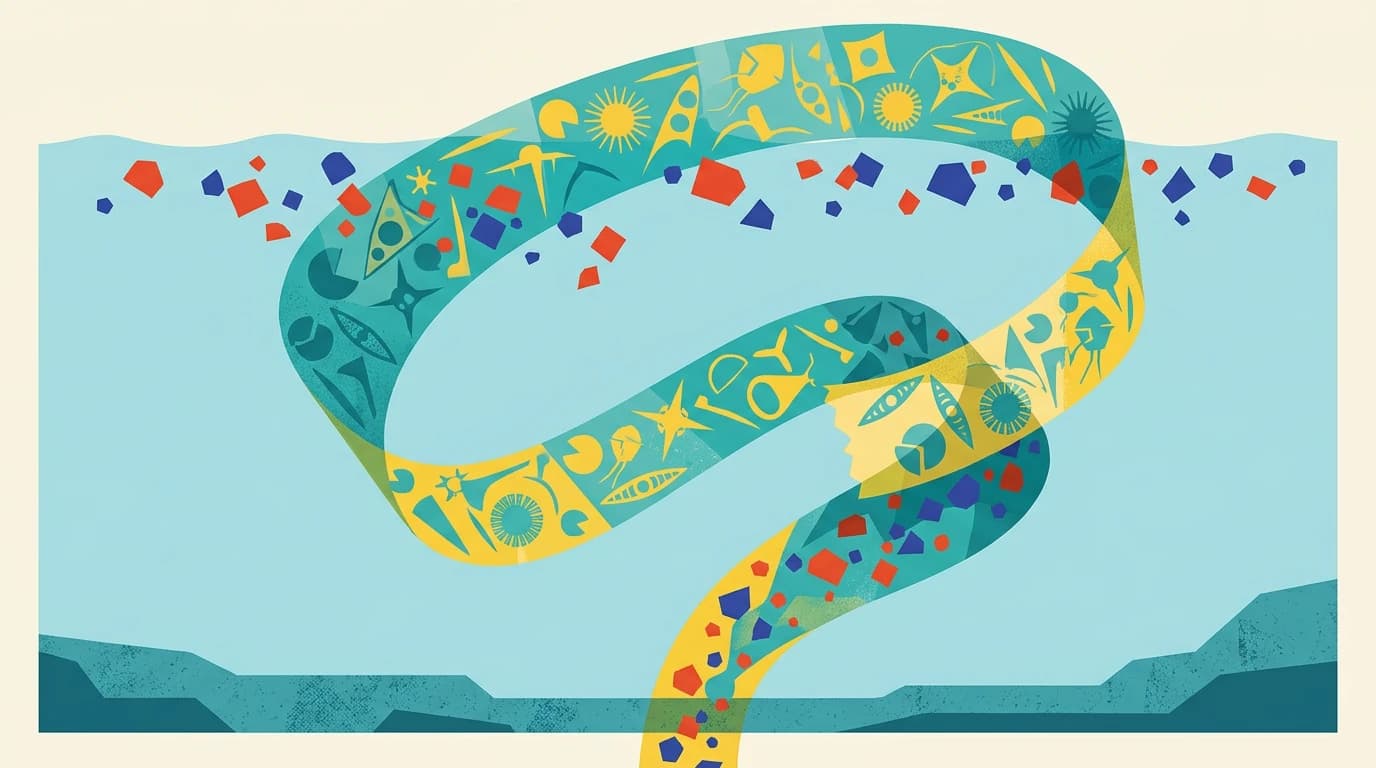
A seabed cleaning crew
Could tiny drifting plants help scrub industrial waste out of freezing polar seas? Arctic ocean pollutants have lingered in northern waters for decades. Among the most worrying are polychlorinated biphenyls (PCBs), a class of toxic, long-lasting industrial chemicals. Because these substances are hydrophobic organic contaminants, meaning water-repelling synthetic chemicals, they hate water. They escape it by clinging tightly to any floating bits of carbon they can find.
Not all carbon is equal
To see how this happens, scientists gathered mud from the seabed across Eurasian Arctic shelves. They sampled along a land-to-ocean continuum, which is the gradient running from river mouths out to open sea. Next, they tested how much pollution clung to carbon washed from rivers compared to carbon made by sea life.
The results showed that marine-derived carbon grabbed up to ten times more PCBs than terrestrial organic carbon, which comes from land plants and soil. Old models often assumed that all carbon behaves as a uniform sponge. However, this study proves that both carbon quality and quantity dictate how well pollutants are trapped. Marine carbon acts like fresh sticky tape, while soil carbon acts like dry paper.
Simulating the sink
Why does this comparison matter? Scientists took their sediment data and plugged the numbers into a computer model of ocean chemistry. They tested what will happen as rising primary production, the growth of marine algae using sunlight, adds more marine carbon to warming waters. The computer run showed a 1.3-fold increase in pollutant removal from the water column, as sinking biological particles pull toxic chemicals down toward the sea bottom.
What we still do not know
The findings rely on Eurasian shelf mud samples and computer projections rather than global, continuous field records. Researchers also do not yet know the exact physical reasons why marine carbon binds ten times better than land carbon. Finally, they cannot say whether warming seas will keep these trapped poisons safely buried in the seabed over time.
Science words
- Hydrophobic organic contaminants
- Water-repelling, long-lasting synthetic chemicals that stick to fat and carbon-rich materials.
- Polychlorinated biphenyls (PCBs)
- A group of toxic, man-made industrial chemicals that break down very slowly.
- Primary production
- The creation of organic matter by organisms like algae using sunlight and inorganic carbon.
- Land-to-ocean continuum
- The environmental gradient stretching from river mouths and coasts out to the open sea.
- Terrestrial organic carbon
- Carbon-rich material that comes from land plants and soil.
Check it yourself
This story is based on a real research paper in Nature Communications by Shi, Oziel, Benskin et al. We write with AI help and check it against the paper, but the original is the final word.