Why moving an endangered tree to save it might upset its soil
Moving the endangered conifer Cathaya argyrophylla into a botanical garden changes the surrounding soil microbes, revealing a rise in genes tied to immune disruption.
Reading level
The full story with proper science words explained.
Heads up: this study is a preprint, which means other scientists haven’t finished checking it yet.
An ancient survivor gets a new home
Fewer than 2,500 wild Cathaya argyrophylla trees remained on Earth by 2025. This ancient conifer is a relict species, a surviving remnant of a once widespread group. To save it, botanists turn to ex situ conservation, which means protecting a threatened organism outside its native wild habitat.
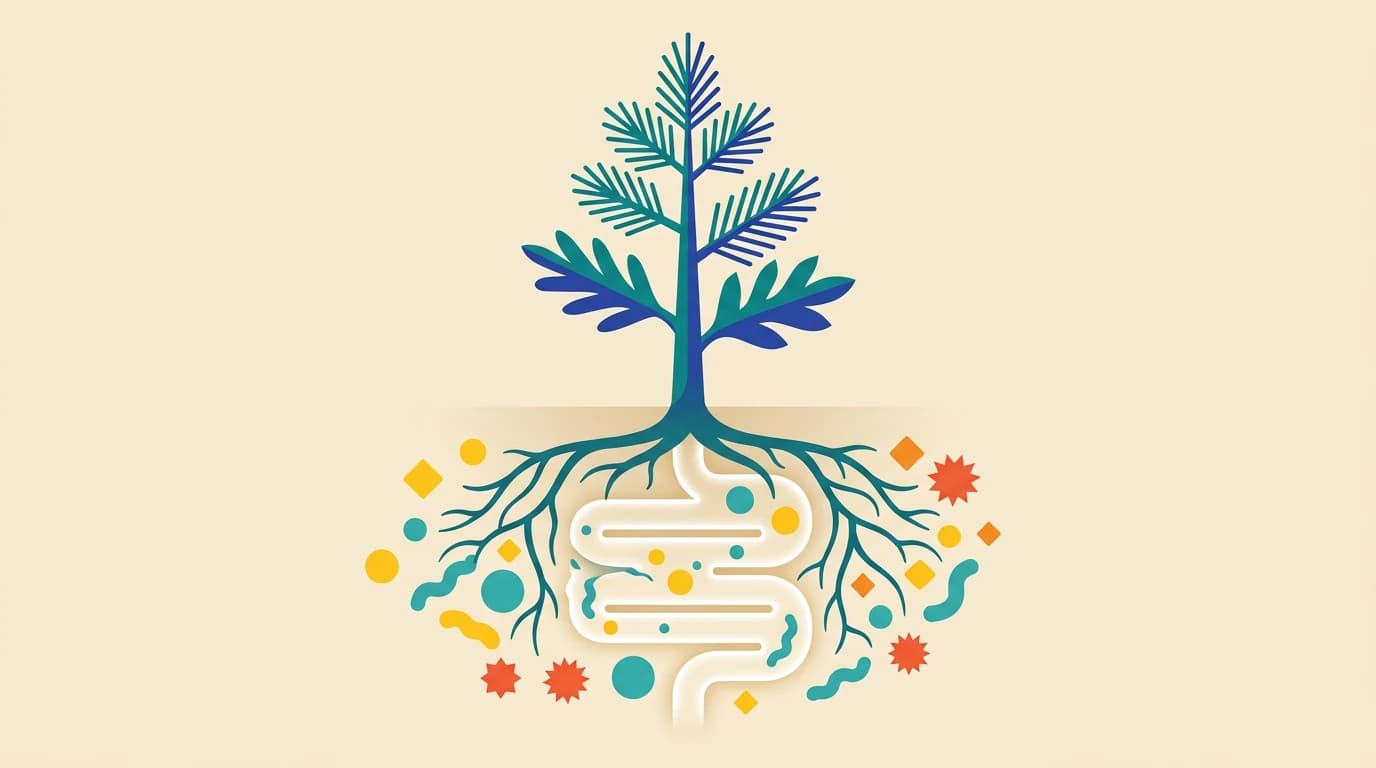
Yet moving a plant is not just about dirt and water. The narrow band of earth hugging plant roots, known as the rhizosphere, works like a human gut microbiome. It teems with microscopic life that supports health, but foreign living quarters can disrupt this unseen balance.
Reading the soil's genetic blueprint
Botanists at Hunan Botanical Garden in Changsha, China, studied transplanted Cathaya argyrophylla trees to see how their soil communities were coping. They gathered samples and applied metagenomic sequencing, a technique that reads all the genetic material in a soil sample at once. They also recorded the soil's physicochemical factors, its physical and chemical conditions.
The team discovered that three distinct groups—bacteria, archaea, and fungi—developed different community structures driven by these soil conditions. More surprisingly, the root zone harboured a higher share of microbial genes linked to immune disruption. While the gut analogy helps us picture this root system, it stops working if you assume roots literally digest food like stomachs. Instead, these microbes control soil chemistry and defence signals.
What we still do not know
This matters for endangered tree conservation because moving a species into protective care may accidentally alter its microbial shields. However, the study involved only a single botanical garden. Scientists have not yet tested whether these immune-disrupting genes actually cause disease or increase tree deaths. We also do not know how these garden microbial patterns compare to the trees' original wild homes.
Science words
- Cathaya argyrophylla
- An endangered, ancient conifer tree native to China, often described as a living fossil.
- relict species
- A surviving species of an ancient, once widespread group from an earlier geological age.
- ex situ conservation
- The process of protecting endangered plants or animals outside their natural habitats, such as in botanical gardens.
- rhizosphere
- The narrow region of soil directly surrounding and influenced by plant roots.
- metagenomic sequencing
- A method to sequence all the genetic material present in an environmental sample to identify all living microbes at once.
- physicochemical factors
- The physical and chemical traits of the soil, such as moisture and nutrient content.
Check it yourself
This story is based on a real research paper in Scientific Publication by Luo, Tian, Wang et al.. We write with AI help and check it against the paper, but the original is the final word.