Why Mechanocatalysis is Shaking Up Green Chemistry
Source PublicationAngewandte Chemie International Edition
Primary AuthorsBehera, Basoccu, Porcheddu
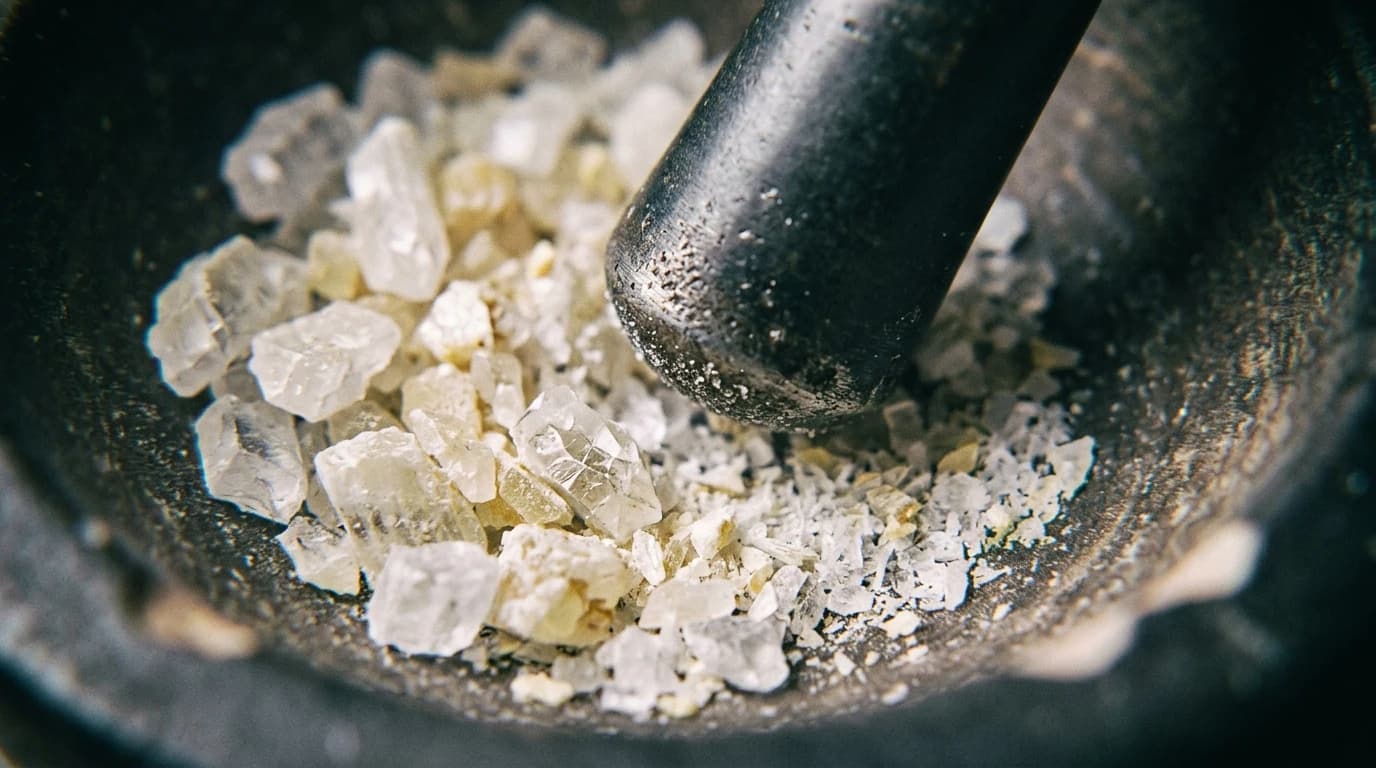
Imagine trying to mix a stubborn dry cake batter. Instead of adding cups of water to dissolve the lumps, you use a high-speed food processor to force the dry ingredients to bond. This is how scientists are rethinking chemical synthesis.
The Power of Mechanocatalysis
For decades, chemists have relied on toxic solvents to coax transition metals into driving reactions. Mechanocatalysis throws out the liquid, using physical force to smash molecules together and trigger reactions.
The intense friction does not just replace solvents. The mechanical energy actively reshapes how metal catalysts behave, forcing them into highly active states that are difficult to replicate in a liquid solution.
Grinding Out Results
A recent scientific review analysed how physical milling directs these metal-catalyst assemblies. The data showed that grinding produces highly precise molecular structures, measuring:
- Enantioselectivities up to 99% (highly precise molecular symmetry).
- Turnover frequencies exceeding 100 per hour.
- Cross-electrophile couplings completed within minutes.
This physical friction also reduces the need for strict, air-free laboratory environments, making the reaction setup simpler and more robust.
A Cleaner Industrial Future
This shift could alter how we manufacture pharmaceuticals and polymers. Eliminating bulk solvents reduces chemical waste and energy consumption.
While scaling up remains a challenge, technologies like twin-screw extrusion suggest industrial-scale mechanocatalysis is viable. This may lead to cleaner, safer chemical factories that run on physical force rather than chemical dilution.