Why Marine Metallic Debris is Creating a New Geological Record
Source PublicationMarine Pollution Bulletin
Primary AuthorsEllrich, Furukuma, Ehlers
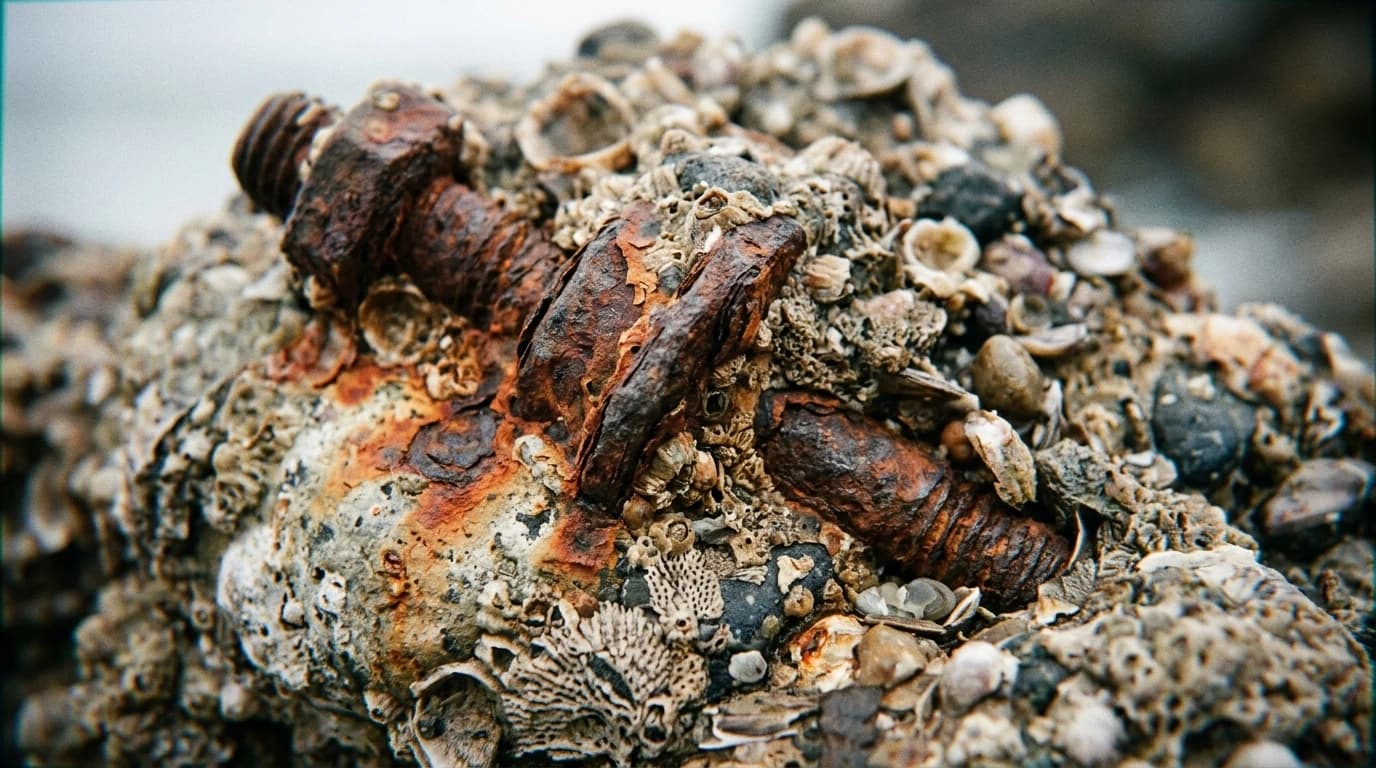
Marine pollution monitoring currently overlooks how discarded metals degrade and fuse with natural environments, leaving a significant gap in our understanding of coastal ecosystems. To address this, researchers recently analysed solid anthropogenic metal core concretions (AMCCs) across rocky coasts. Although currently documented only on specific shorelines in Spain, Japan, and Germany, these fused masses of marine metallic debris bind with sea glass, pebbles, and shells to form solid artificial structures.
The study measured how these concretions physically block rocky crevices, which function as vital thermal refuges and microhabitats for benthic organisms. The researchers observed that these structures contain common building materials, such as nails and screws, that had rusted together with their surroundings. Whilst this blocking threatens local biodiversity, these formations offer an unexpected scientific opportunity to understand human impacts on the environment.
Tracking Marine Metallic Debris in the Anthropocene
The research suggests that these metal concretions may serve as durable, easily accessible baseline tools. Over the coming decade, as we map our long-term environmental footprint, studying these synthetic formations will help us to:
- Track and understand the pathways of industrial debris as it integrates into the geological and archaeological record.
- Assess how solid anthropogenic substrates physically alter and block rocky intertidal habitats.
Additionally, these formations represent a permanent shift in how human-made materials fossilise. By analysing how industrial metals fuse with natural elements, scientists can better predict the long-term geological footprint of our civilisation.