Why marine bacteria chase a seaweed sugar they cannot even eat
Marine bacteria swim toward dense trails of fucoidan, a tough sugar shed by brown seaweeds. Even though they cannot digest this sugar for food, it acts as a guide to seaweed surfaces.
Reading level
The full story with proper science words explained.
A sweet trail you cannot digest
Think about walking toward the smell of roast dinner, only to find you cannot eat it. In the sea, many marine bacteria run this odd chase every single day.
Brown seaweeds, or macroalgae, shed lots of carbon-rich debris into the sea. In fact, a tough sugar called fucoidan makes up to 50% of the dissolved organic matter they release each day. This complex sugar takes a long time to rot. Because of that, teams wondered if passing microbes notice it at all.
Following the sugar trail
To test this, a team tracked 14 kinds of marine bacteria in microfluidic assays. These tiny devices hold narrow fluid channels. They let the team set up steady sugar trails using fucoidan from two brown seaweed species.
Every single one of the 14 strains swam straight toward the fucoidan. This happened when the sugar was dense, at 0.1 to 1 mg/mL. This directed swimming toward a cue is called chemotaxis. It only triggered at high levels found right next to a plant surface. When levels were low, the microbes ignored it. Some even swam away, showing mild chemorepulsion.
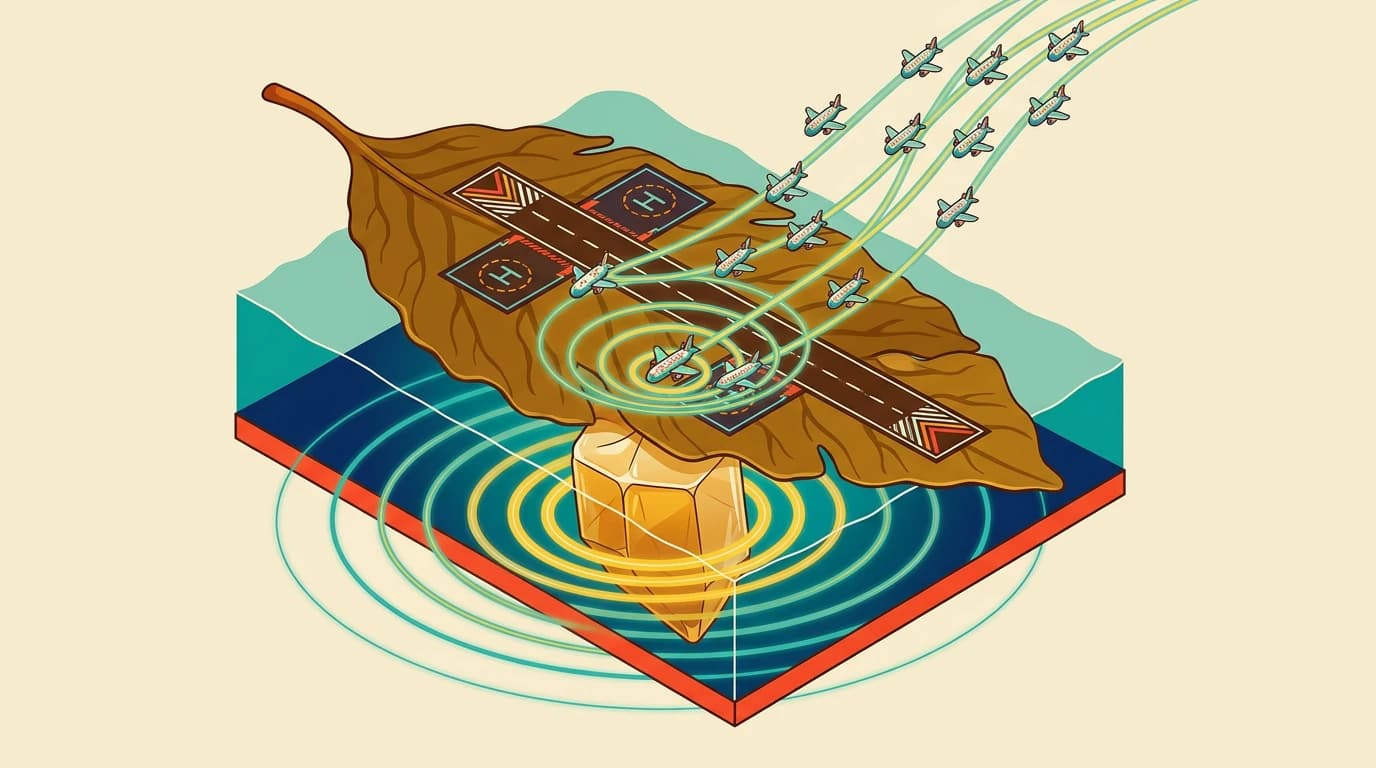
Curiously, the bugs could not use fucoidan to grow. It did not stop them from eating other food, but gave them no fuel on its own. The sugar acts like an airport radio beacon. It guides an airplane to land, even though the radio signal cannot power the plane.
What we still do not know
This work is an un-peer-reviewed preprint. It used 14 strains inside tiny plastic lab channels rather than open ocean waves. We do not yet know the exact tools microbes use to sense the sugar. We also do not know why faint traces push some bugs away. Still, this slow-rotting sugar seems to help cells locate rich seaweed surfaces where real meals wait.
Science words
- Macroalgae
- Large aquatic algae, commonly referred to as seaweeds.
- Fucoidan
- A complex, slow-degrading sugar molecule released in large amounts by brown macroalgae.
- Dissolved organic matter
- Soluble carbon-rich biological material released into water.
- Microfluidic assays
- Laboratory devices containing tiny channels used to control chemical gradients and observe cell movement.
- Chemotaxis
- The directed movement of cells or bacteria toward or away from specific chemicals.
- Chemorepulsion
- The movement of an organism away from a chemical stimulus.
Check it yourself
This story is based on a real research paper in Preprint by Anelli, Raina, Foffi et al.. We write with AI help and check it against the paper, but the original is the final word.