Why Mapping Oceanic Transform Faults Is the Next Frontier for Deep-Sea Tech Careers
Source PublicationScience
Primary AuthorsYang, Ye, Zhang
"A pressure cooker with a weighted valve that lets out bursts of steam at regular intervals, keeping the pot from exploding until a sudden shift resets the valve."
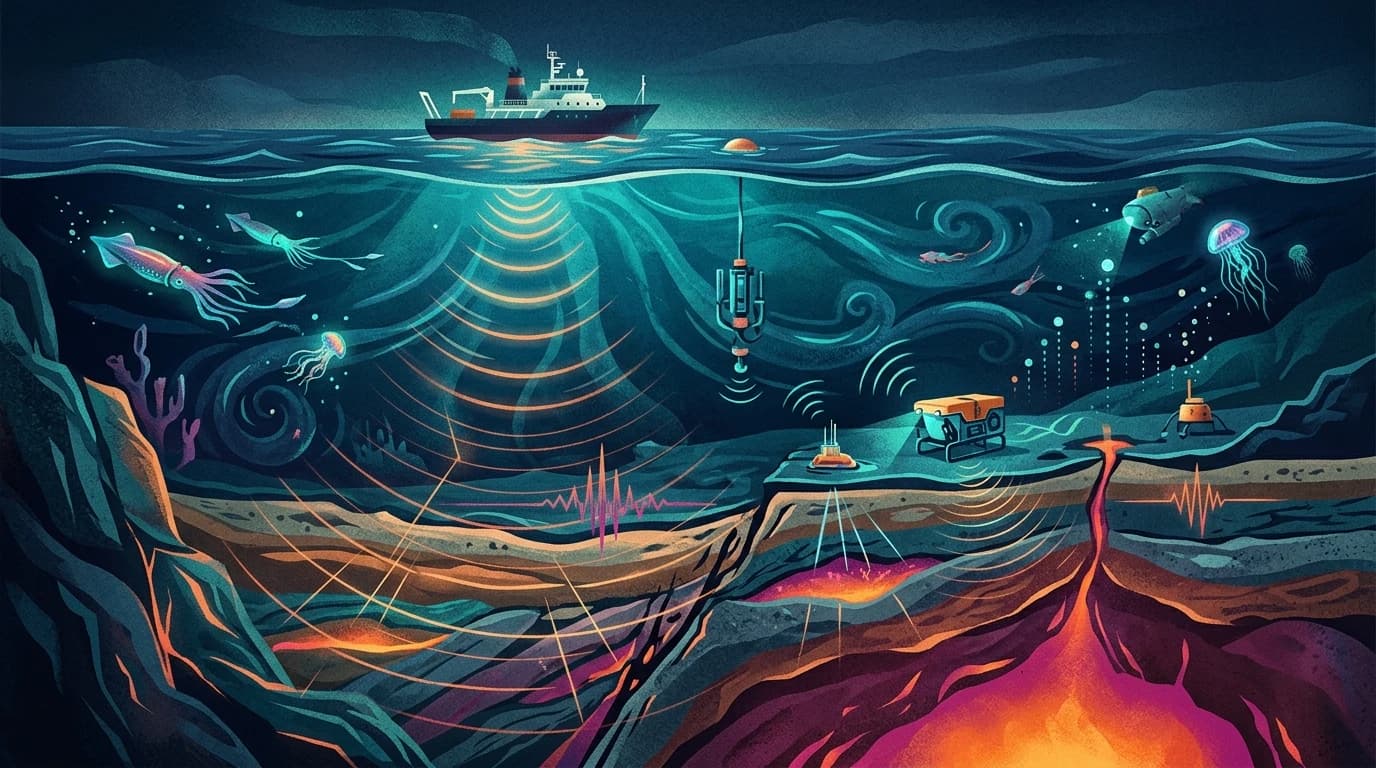
The Deep-Sea Tidal Clockwork
Imagine a world where networks of autonomous deep-sea sensors predict underwater earthquakes before they happen, safeguarding global communication cables and coastal communities. This future relies on understanding the mysterious mechanics of the deep sea. Deep beneath the waves, oceanic transform faults slice across the seabed, acting as dynamic zones where water, magma, and tidal forces interact.
The Future of Engineering on Oceanic Transform Faults
Scientists analysing the Gofar fault along the East Pacific Rise detected low-frequency seismic tremors that sync with ocean tides. The data suggest a valve-like sealing-drainage process: when hydrothermal pathways seal up, magmatic gases build up and make the fault highly sensitive to tidal tugs. When the fault ruptures, these fluids escape, silencing the tremors and triggering minor earthquakes before the system reseals.
This discovery suggests we can monitor tectonic activity by listening to these tidal tremors. Although these findings are currently specific to the Gofar fault, they open up a whole new field of study. By the time you graduate university, marine industries and research institutions will need specialists to monitor this dynamic seafloor. Key careers will include:
- Marine geophysicists to map active tectonic boundaries and deep-sea fluid pathways.
- Data scientists to write machine-learning algorithms that predict fault ruptures.
- Robotics engineers to build autonomous sensors that withstand extreme deep-sea pressures.
To join this frontier, start learning computer coding and physics today. You could be the scientist who builds the first global tidal-seismic warning system.