Why Greener Northern Landscapes Are Secretly Losing Their Ability to Bounce Back
Satellites show that while frozen northern lands keep looking greener, their vegetation resilience suffered a widespread decline after 2008 due to dry air and wildfires.
Reading level
The full story with proper science words explained.
A greener north with a hidden flaw
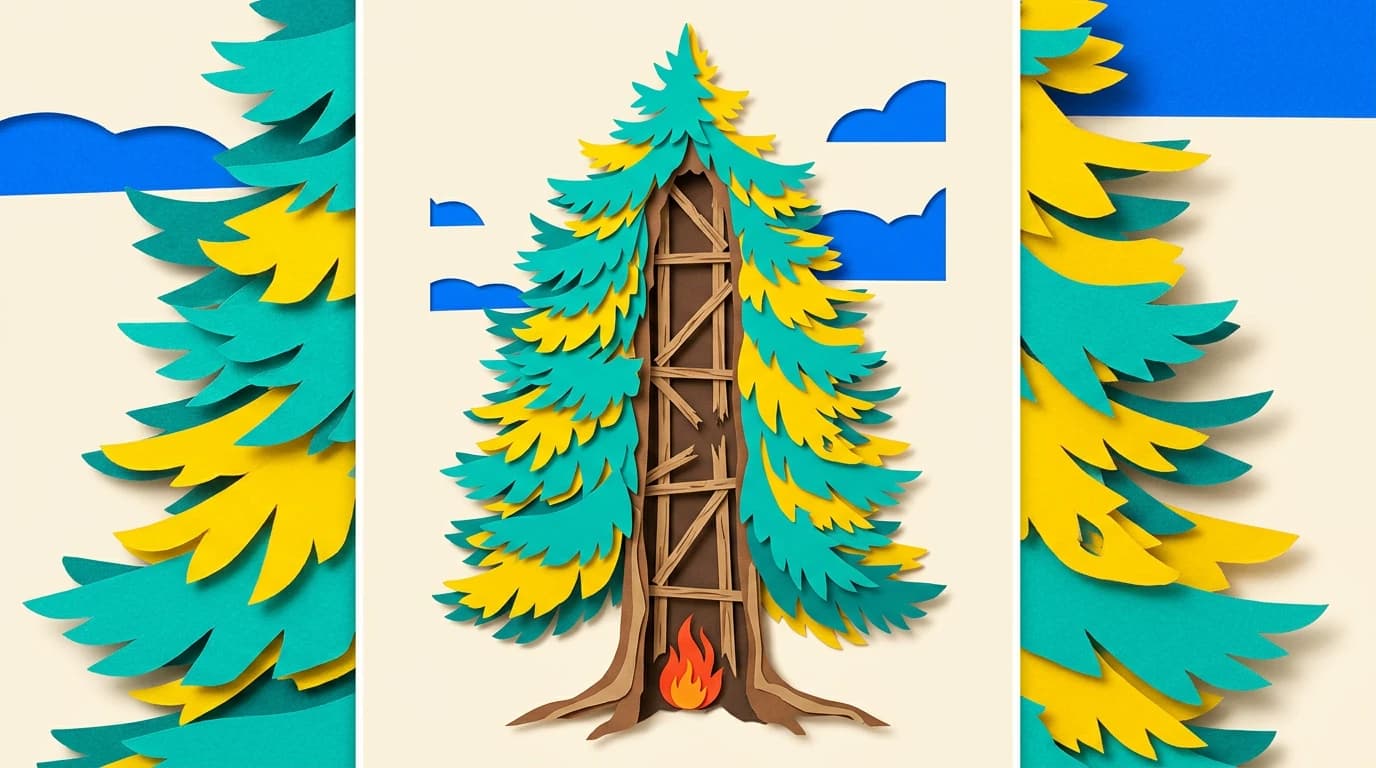
The far north is looking greener than ever from space, but that lush coat hides a fragile secret. Across high latitudes, plants grow above permafrost, which is ground that stays completely frozen for at least two consecutive years. As temperatures rise, these icy landscapes experience greening, an increase in plant cover and leaf area. However, greening does not equate to ecosystem stability. Satellite data from 2000 to 2023 reveal that Arctic plant communities are steadily losing their ability to endure stress.
The sudden turning point
Between 2000 and 2008, satellite observations showed rising permafrost vegetation resilience, meaning plants could readily withstand and bounce back from natural disturbances. Yet after 2008, this recovery power suffered a widespread reversal. Even though the tundra continued to look greener, its internal capacity to withstand shocks slumped. Researchers investigated environmental drivers to find out why. They examined ocean evaporation and atmospheric moisture transport, tracking how water moves across the globe. The primary culprit was atmospheric drought: excessively dry air that actively pulls moisture out of plants. Altered ocean moisture supplies starved the region of humidity, while wildfires struck disturbed areas, amplifying the damage.
What we still do not know
This decoupling of colour from strength carries serious consequences. The far north acts as a vital carbon sink, a natural reservoir that absorbs more carbon dioxide than it emits. Current climate models completely fail to reproduce this post-2008 resilience downturn. As a result, existing models may significantly underestimate the risk of northern carbon sinks failing under future stress. The study used macroscopic atmospheric tracking and satellite observations rather than on-the-ground plant physiological tests. Scientists still do not know exactly how ocean-land moisture shifts will steer atmospheric drought in coming decades, nor how long-term permafrost thaw will interact with future wildfires.
Science words
- permafrost
- Ground that stays completely frozen for at least two consecutive years.
- greening
- An observed increase in vegetation cover, density, or leaf area over time.
- vegetation resilience
- The ability of plant communities to withstand and bounce back after natural disturbances.
- atmospheric drought
- Excessively dry air that rapidly pulls moisture away from plants and soil.
- carbon sink
- A natural reservoir that absorbs more carbon dioxide than it emits.
Check it yourself
This story is based on a real research paper in Nature Plants by Guo, Wang, Smith et al. We write with AI help and check it against the paper, but the original is the final word.