Why Fluorescent Nanodiamonds Are the Ultimate Quantum Torches for Cells
Source PublicationThe Analyst
Primary AuthorsSotoma, Shiraya, Fujimaki et al.
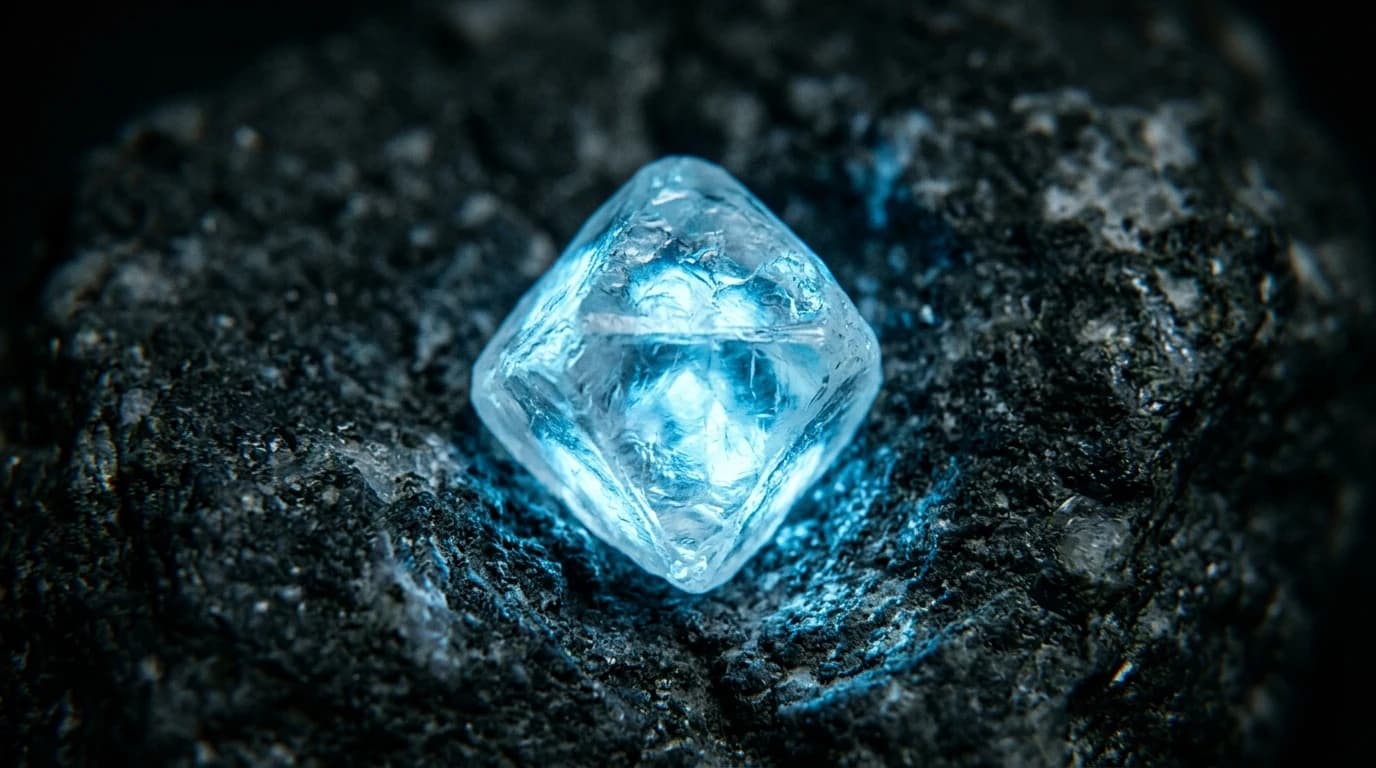
The Eternal Glow of Fluorescent Nanodiamonds
Imagine your cells are a chaotic, pitch-black warehouse. To see what is happening inside, you need a torch that never flickers or runs out of batteries. Most biological dyes are like cheap candles; they burn out quickly or can poison the environment.
Fluorescent nanodiamonds solve this problem. These tiny carbon crystals contain "defects" called nitrogen-vacancy centres. These spots absorb light and glow indefinitely without fading. Because they are made of carbon, cells generally treat them like harmless guests rather than toxic invaders.
Quantum Sensing in the Dark
Researchers have found that these diamonds do more than just glow; they act as quantum sensors. By measuring how the light from the nitrogen-vacancy centres changes, scientists can detect tiny shifts in their surroundings. In current lab-based research, this provides a window into the mechanical and thermal life of a cell.
The review highlights how scientists fine-tune these crystals to:
- Monitor internal cell temperature changes with high sensitivity, offering a thermal readout of the cellular environment.
- Detect free radicals, the highly reactive molecules that signal cellular stress.
- Track the exact rotation and orientation of particles as they move through a cell’s fluid.
A New Window into Biology
The data suggests these sensors could change how we analyse biological systems at the molecular level. Unlike traditional imaging, these diamonds provide a stable stream of data from inside a living organism without the signal degrading over time.
The next step involves linking these sensors to specific targets inside a cell. This may allow researchers to watch biological processes unfold in real-time. By refining the surface chemistry and particle size, scientists aim to create a multi-purpose toolkit for the next generation of molecular biology.