Why extreme ocean dust deposition leaves marine algae running on empty
In lab tests mirroring future oceans, heavy dust combined with high carbon dioxide made diatoms multiply fast but cut their individual carbon stores by half.
Reading level
The full story with proper science words explained.
A sudden feast in sour seas
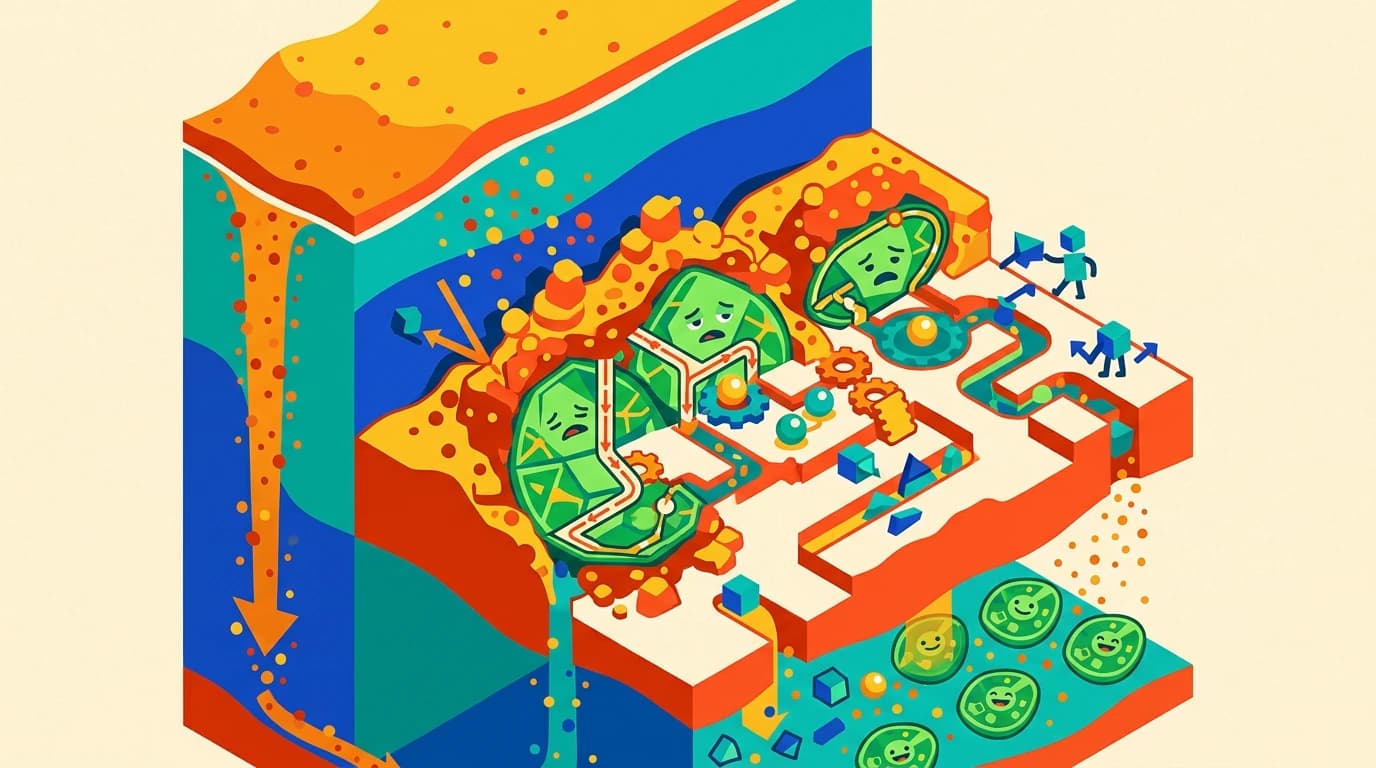
Desert winds sweep clouds of fine sand out over the open sea. When ocean dust deposition happens, tiny floating algae gain a sudden burst of food. Researchers tested what happens when one common marine alga, Skeletonema costatum, meets high carbon gas levels of 1000 ppm paired with heavy dust additions of 10 mg L^-1.
Extra carbon gas alone boosted steady growth by easing its carbon-concentrating mechanisms, which are cellular tools algae use to gather carbon for photosynthesis. Yet adding thick dust alongside that high gas triggered a surprise.
Fast division, hollow cells
Transcriptomic analyses, which track which genes are active inside a cell, revealed that an ammonium surge from the dust scrambled how cells handle food. Instead of storing oily fats and carbon, the algae poured all their energy into splitting in two as fast as possible.
Think of a bakery speeding up its oven lines to churn out puffed, airy rolls instead of dense bread. The overall count looks huge, but each roll lacks real substance. Here the analogy ends, because the lighter algae still divided and survived with ease.
Importantly, each cell saw its carbon uptake efficiency drop by 65.2%. Individual quotas of particulate organic carbon—the carbon held inside solid living tissue—fell by more than half compared to gas enrichment alone.
The sinking problem
Normally, the biological carbon pump locks away carbon by carrying dead, heavy algae down to the seafloor. During these lab blooms, the algae briefly soaked up dissolved carbon and raised seawater pH.
Yet this short spike does not mean the ocean locks away more carbon over time. These hollow cells are light and face remineralisation, rotting away in shallow water before they can sink into the deep sea.
What we still do not know
These findings come from one alga species grown in lab jars. We do not yet know how wild, mixed ocean communities will react, or how much rotting material escapes decay in open water.
Science words
- Skeletonema costatum
- A widespread, single-celled marine alga that forms chains and supports ocean food webs.
- Carbon-concentrating mechanisms
- Cellular tools used by algae to collect inorganic carbon and deliver it to photosynthetic enzymes.
- Transcriptomic analyses
- Laboratory methods that measure active genes to show how cells react to their surroundings.
- Particulate organic carbon
- Carbon stored inside solid living cells or organic debris.
- Biological carbon pump
- The natural process where surface marine life captures carbon dioxide and carries it deep when dying and sinking.
- Remineralisation
- The breakdown or decay of dead organic matter back into simple inorganic chemicals.
Check it yourself
This story is based on a real research paper in Ecotoxicology and Environmental Safety by Shi, Zhang, Jin et al. We write with AI help and check it against the paper, but the original is the final word.