Why City Trees Need More Than Leafy Canopies to Save Moths
Planting trees in towns can support declining moths, but only if planners design for tree age, variety, and connected green spaces rather than just adding canopy cover.
Reading level
The full story with proper science words explained.
The night-time rescue
Moths often get bad press, yet their numbers are dropping fast. Across the globe, steep falls in moth abundance and biomass—the total weight of living bugs—threaten flower pollination, plant eating, and vital food webs. These feeding links between insects, plants, and predators are known as trophic interactions. Today, cities plant trees by the thousands to cool hot streets, clean dirty air, and boost human health. Researchers realised these pre-funded civic tree-planting projects could give struggling moths a major boost without setting up brand-new schemes from scratch.
Apartments with a pantry
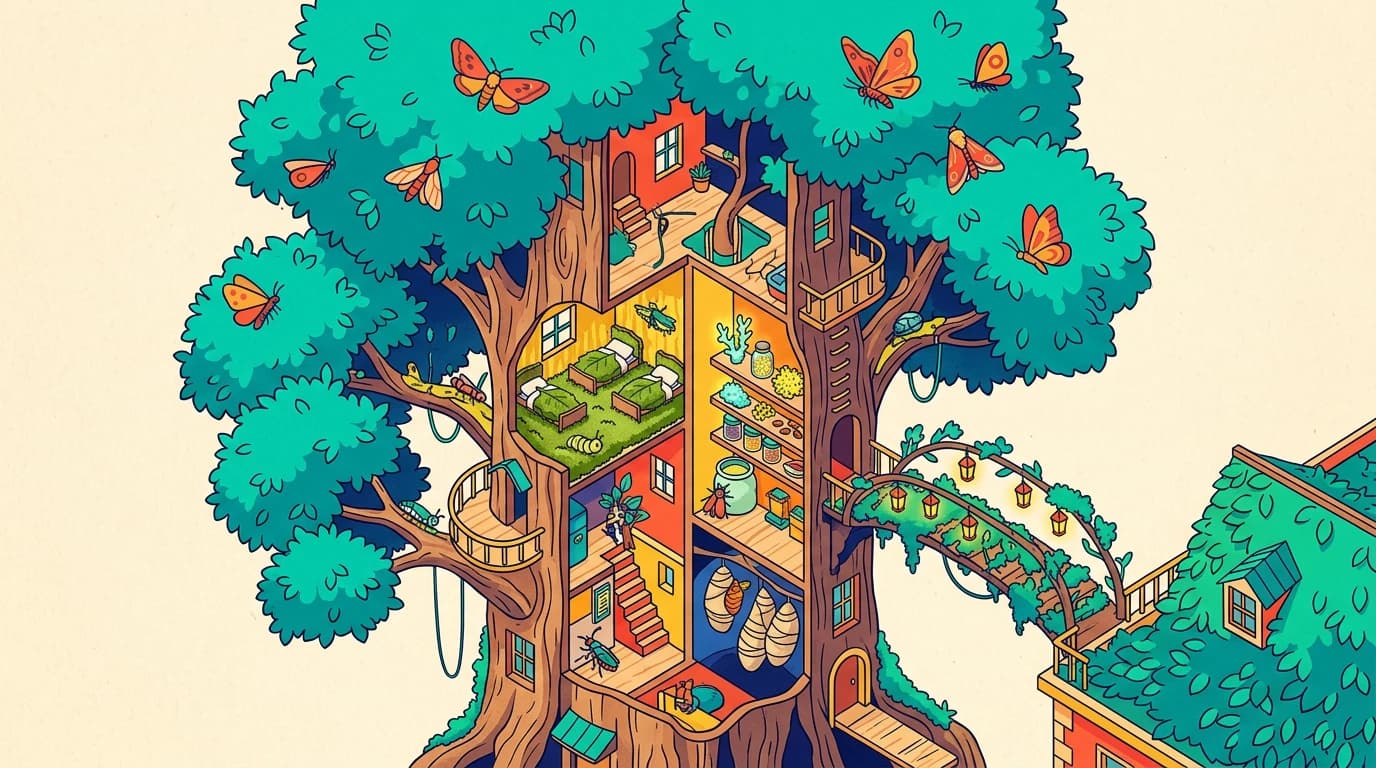
Trees function like living homes for insects. They supply foliage for caterpillars to eat and sweet nectar for flying adults, alongside quiet resting spots out of the wind. They also offer microclimatic buffering, which means plant canopies soften harsh city heatwaves and damp down parched air. Yet a close look at how nature works reveals a big catch: simply spreading out a leafy roof across town is not enough.
To truly help moths, urban treescapes—the total makeup and layout of trees across a city—must offer the right mix. Moths need planners to pick the right plant types and safeguard old, mature trees. Older boughs provide deep bark grooves and leafy layers that give shelter. Woodland patches, roads, parks, and back gardens must also link together. This landscape connectivity, or the ease with which wildlife travels between habitat patches, lets moths drift between green zones instead of being trapped on bare asphalt.
What we still need to learn
Moths act as great barometers for general insect health, yet planners rarely think of them. Most current rules on tree types come from farms and natural forests rather than city pavements. Scientists still need to track how wild moths interact with distinct street trees inside concrete neighbourhoods. Even so, shaping tree projects already taking place could turn plain city roads into safe havens for nature.
Science words
- biomass
- The total weight or mass of living organisms in an area.
- trophic interactions
- Feeding relationships and energy transfers between different levels of a food web.
- microclimatic buffering
- The moderation of local temperature and humidity extremes by plant shelter.
- treescapes
- The collective arrangement and composition of trees across an urban landscape.
- landscape connectivity
- How easily wildlife can move between separate patches of suitable habitat across a region.
Check it yourself
This story is based on a real research paper in Current Opinion in Insect Science by Fox, Roslin, Ellis. We write with AI help and check it against the paper, but the original is the final word.