Why Canada's protected wetlands are washing away despite conservation laws
Canada's coastal tidal marshes are shrinking three times faster than in 1988, even inside officially protected conservation zones.
Reading level
The full story with proper science words explained.
Heads up: this study is a preprint, which means other scientists haven’t finished checking it yet.
Vanishing lines in the mud
Even drawn lines on official maps cannot keep coastal mud in place. Canada holds the world's second largest area of tidal marsh, coastal wetlands flooded and drained by ocean tides. Yet rates of tidal marsh loss across the nation have quietly tripled since 1988.
By 2023, these coastal ecosystems were disappearing at about 150 hectares each year. Oddly, this retreat was not concentrated along built-up city shores. Instead, net losses appeared mostly in remote, minimally modified areas.
What the satellites uncovered
To measure changes across four decades, researchers examined 41,563 Landsat satellite images using a tide-informed tracking system. This produced the first unified yearly record of Atlantic and Pacific marshes. Previous surveys had relied on fragmented local reports that often contradicted each other.
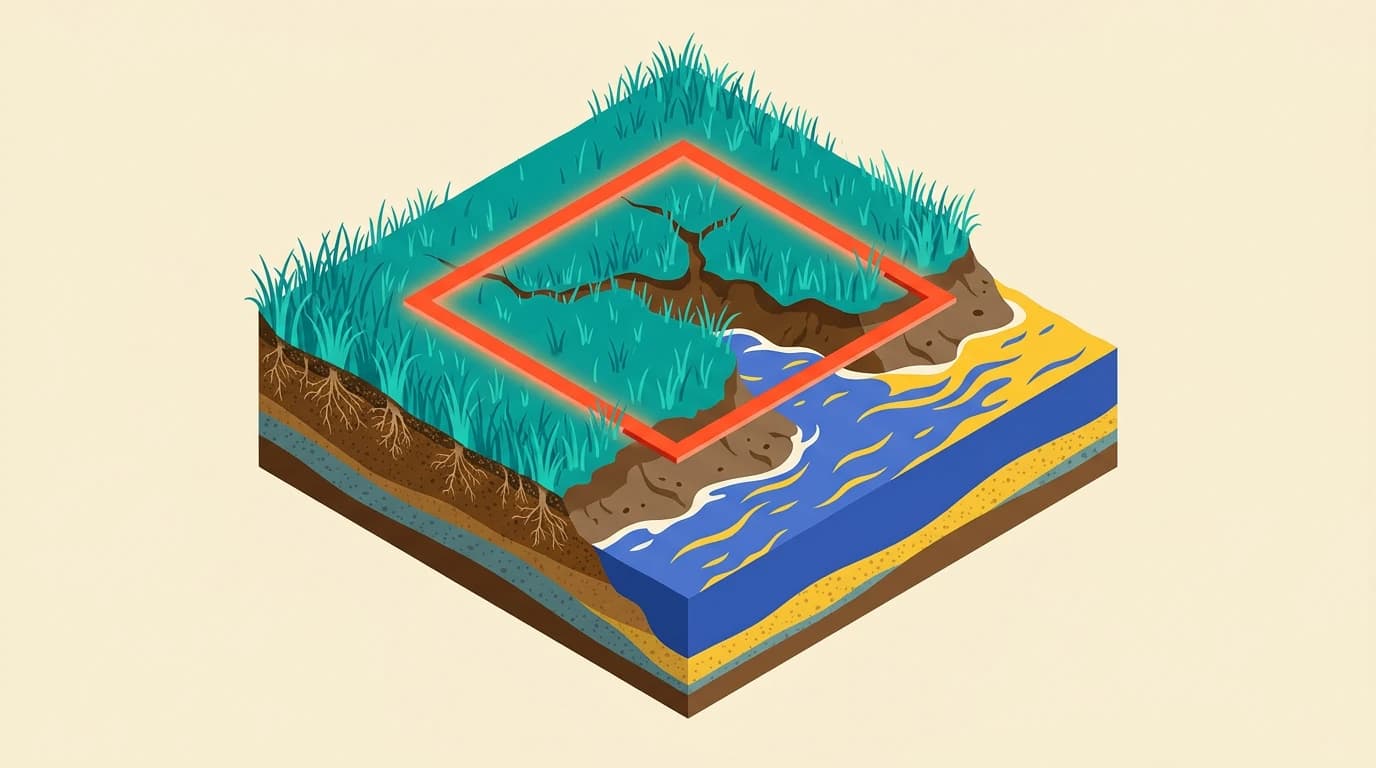
The satellite data revealed an unexpected trend. More than a quarter of Canada's tidal marshes lie inside protected conservation areas, or PCAs. Yet marsh area within these static spatial protections, fixed zones drawn on maps, still shrank after legal designation.
Protecting a shifting coast with a fixed fence is like drawing a chalk box on the pavement to protect a puddle. As the water evaporates or shifts, the box stays put, but the puddle disappears anyway.
The hidden carbon debt
Marshes lock away massive amounts of blue carbon, which is carbon stored naturally by ocean ecosystems. While some new marshes do sprout elsewhere, a newly formed mud flat cannot suddenly replace an old, mature marsh. It lacks the deep, carbon-rich soil built up over decades, giving humans a false sense of security.
What we still don't know
Satellite photos confirmed losses along the Atlantic and Pacific coasts, but they did not track Canada's other remote shorelines. We also do not know how many years new marshes need to match the carbon storage of mature wetlands. Finally, scientists are still trying to determine which dynamic management tools can save shifting coastlines when stationary fences fail.
Science words
- tidal marsh
- A coastal wetland that is flooded and drained by tidal saltwater.
- blue carbon
- Carbon stored naturally by coastal and marine ecosystems.
- static spatial protections
- Conservation reserves with fixed geographical boundaries that do not move when habitats shift.
- PCAs
- Protected Conservation Areas; legally established regions meant to preserve nature.
Check it yourself
This story is based on a real research paper in Scientific Publication by Yang, McHenry, Zhu et al.. We write with AI help and check it against the paper, but the original is the final word.