Why Acute Myeloid Leukemia Epigenetics Alters How We Map Blood Cancer
Source PublicationNature
Primary AuthorsOchi, Liew-Littorin, Nannya et al.
"A school textbook where different students highlight different chapters, completely changing how the same information is used."
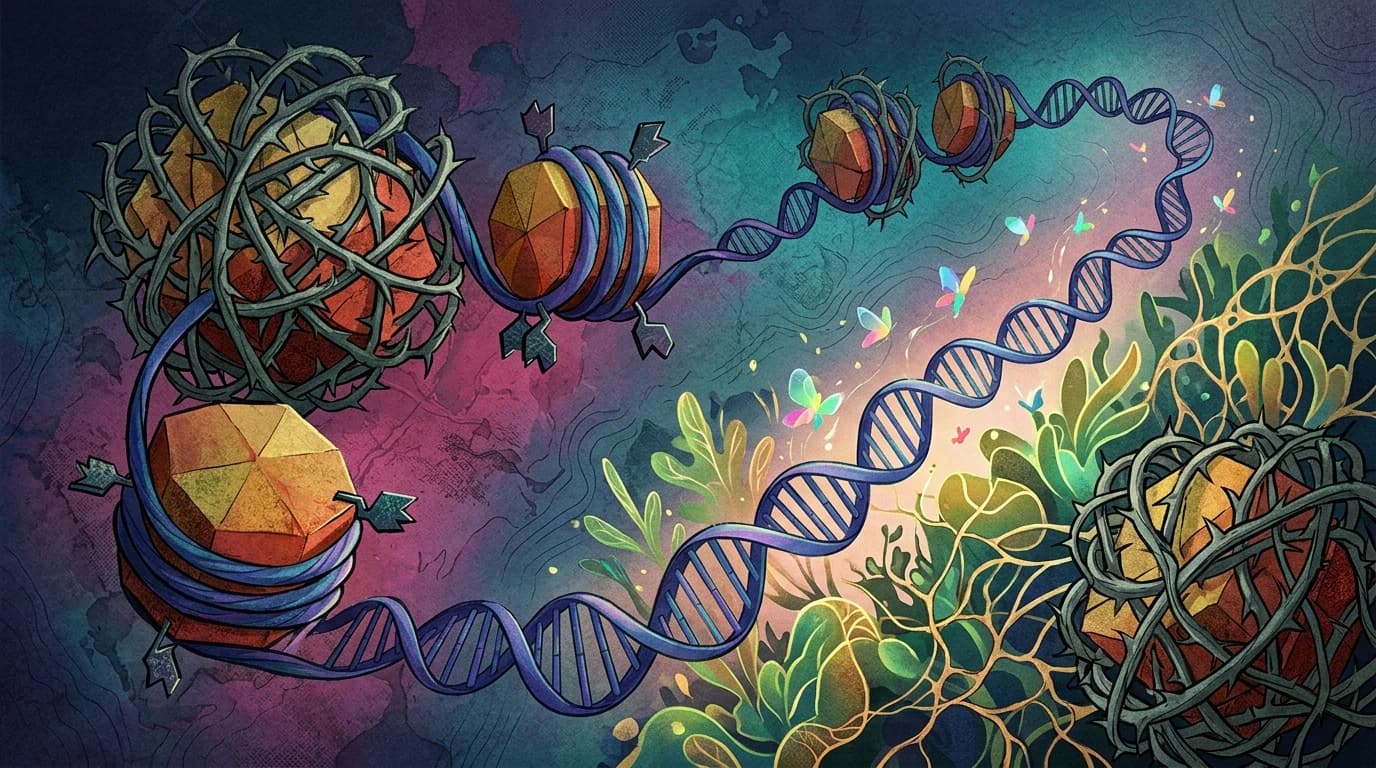
Imagine your DNA is a massive school textbook. Every cell in your body has the exact same book, but a muscle cell highlights different chapters than a brain cell. This molecular highlighting system is called epigenetics, and it dictates which instructions are actually read and acted upon.
Decoding Acute Myeloid Leukemia Epigenetics
For years, scientists focused on genetic mutations—literal typos in the DNA textbook—to understand acute myeloid leukemia (AML). However, these typos do not explain why patients with the same mutations often experience vastly different outcomes. To understand why, researchers analysed chromatin accessibility—the physical openness of the DNA structure—in 1,563 patients.
Using a sequencing method called ATAC-seq, scientists measured which regions of the genome were open for business. They discovered that AML can be organised into 16 distinct subgroups based on these open-DNA profiles. Each subgroup displays unique patterns of gene expression, chemical modifications, and clinical survival rates.
Why This Matters for Your Future
This discovery suggests that looking at genetic typos alone is no longer enough to treat this aggressive blood cancer. By mapping these 16 epigenetic profiles, doctors may soon categorise patients with far greater accuracy. The study also revealed that these subgroups correlate with specific drug sensitivities, which could help clinicians select more effective, personalised therapies.
- Scientists identified 16 distinct epigenetic subgroups of AML.
- Each subgroup shares a unique, stable pattern of open chromatin.
- These profiles could help predict patient outcomes and guide targeted drug selection.