What happens when young people try online PTSD therapy?
A qualitative study explored how 20 young people experienced an internet-based trauma therapy programme paired with remote therapist guidance.
Reading level
The full story with proper science words explained.
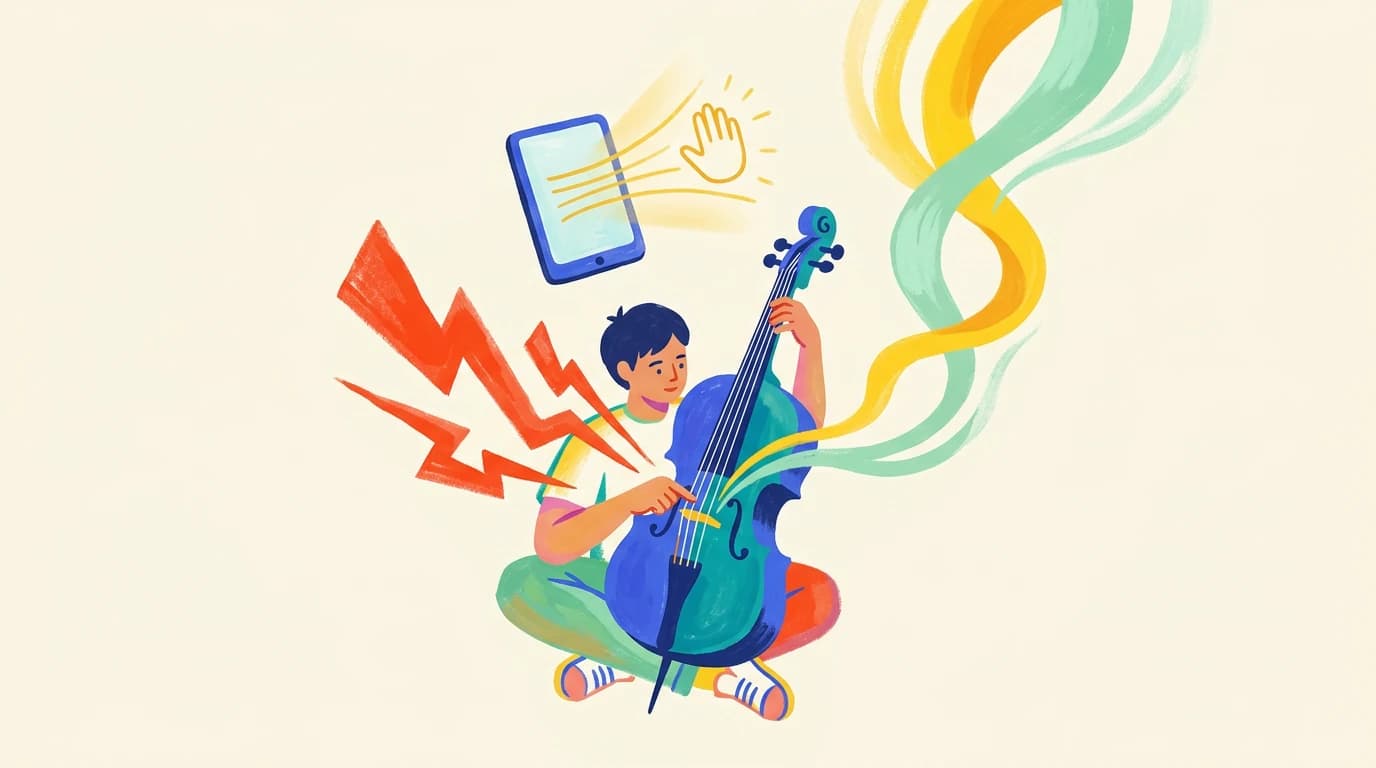
Help from a screen
Recovering from trauma often means travelling to see a trained expert in person. Yet most young people who need proven help never get it. To test whether home computers can close this gap, scientists ran a trial. They tested an online programme called iCT-PTSD-YP, which stands for internet-delivered cognitive therapy for post-traumatic stress disorder in young people.
Cognitive therapy helps people spot and change harmful thoughts and habits that linger after scary events. In this setup, teenagers log into a secure website from a safe, quiet room at home. They work through exercises at their own pace, while a trained therapist checks in remotely to guide them. This matters because it removes travel hassles and brings care directly to young people who might otherwise go without.
Convenience meets hard work
The team spoke with 20 young people aged 12 to 17 who tried the programme. They studied their spoken answers using reflexive thematic analysis, a research method that spots shared patterns across interview transcripts. Everyone found the site simple to use, flexible, and easy to fit into busy school weeks.
Still, logging in from a bedroom is no quick fix. The teenagers stressed that tackling tough memories took high motivation, serious effort, and steady focus. Regular therapist messages and interactive screen tools kept them going when tasks felt heavy. Most felt the programme helped them heal, but only because they put in real work.
What we still do not know
The project listened to personal stories rather than counting medical cure rates. Because it was an early test with just 20 young people, we cannot assume it works the same way for everyone. We do not yet know how well it works over many years, or what it costs to run across whole health systems. Scientists also want to tweak the design to help teenagers overcome home distractions and stay logged in until the end.
Science words
- iCT-PTSD-YP
- Internet-delivered cognitive therapy for post-traumatic stress disorder in young people.
- Cognitive therapy
- A talking treatment that helps people change harmful thinking patterns and behaviours.
- PTSD
- Post-traumatic stress disorder, a mental health condition triggered by terrifying events.
- Reflexive thematic analysis
- A research method used to find, analyse, and interpret patterns of meaning across interview transcripts.
Check it yourself
This story is based on a real research paper in European Journal of Psychotraumatology by Griffiths, Meiser-Stedman, Carr et al. We write with AI help and check it against the paper, but the original is the final word.