What brain scans suggest about children's screen time
A review of 23 brain-scan studies in children aged 0 to 8 links higher screen-time quantity to negative brain differences, while interactive, caregiver-supported media may boost key brain networks.
Reading level
The full story with proper science words explained.
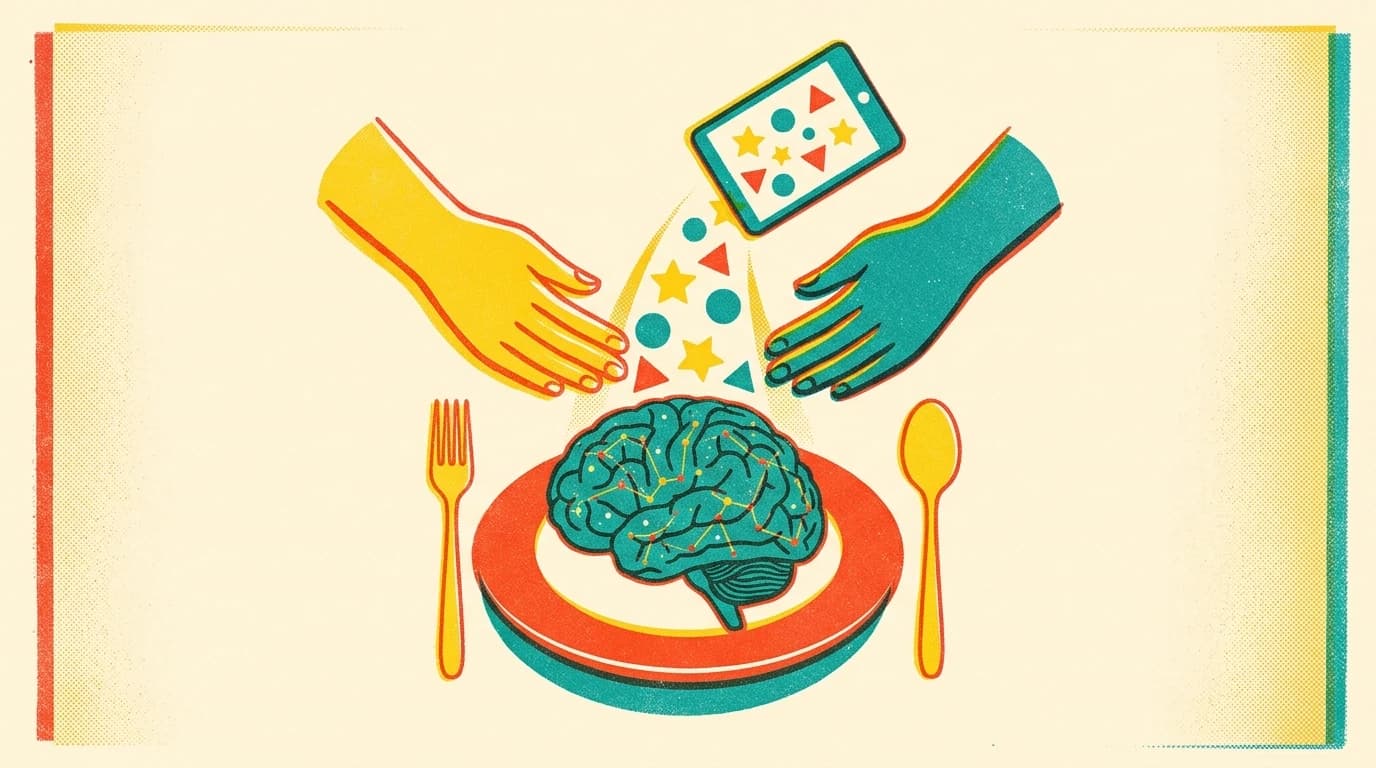
Does an hour of learning games affect a young brain the same way as an hour of passive viewing? For years, debates about children's screen time have focused just on the clock. Yet a new systematic review—a structured way of pooling past studies—suggests that what is on the screen matters just as much.
Scanning young brains
A team searched four research archives for papers published between 2012 and 2025. From 19,699 records, they picked 23 studies that used neuroimaging, which takes scans of brain structure or measures brain signals. These studies used tools like MRI and EEG on children aged 0 to 8 with typical growth. Why does this method matter? Pooling 23 brain-scan studies gives a much clearer picture than any single study alone.
Screen use is like a diet: counting portion size matters, but the food's nutrients and eating with adults also shape how you grow. Of course, a brain does not digest pixels like food, so this idea only goes so far.
Amount versus content
Eight studies looked at the amount of screen time. They linked more screen time to lower prefrontal activation—less activity in the front part of the brain, which supports thinking and attention. Higher screen use was also linked to shifts in white matter pathways, the nerve bundles that link brain regions, and lower myelination, the fatty coating that helps signals travel faster.
Fifteen studies looked at content and context. Interactive apps, learning games, and caregivers using screens alongside children boosted brain networks for language, perception, and social skills. By contrast, non-learning screen content showed no measurable brain benefits.
What we still don't know
These findings suggest debates should move beyond just counting hours. Still, this review only reports links across 23 studies of children aged 0 to 8, rather than proving direct cause and effect. We still do not know if heavy screen use directly causes these brain shifts, or how specific designs shape long-term growth. The impact of screen use remains an active area of study.
Science words
- Systematic review
- A structured method of finding, evaluating, and combining all existing research studies that meet strict criteria to answer a specific question.
- Neuroimaging
- Techniques used to capture images of the brain's structure or measure its activity.
- Prefrontal activation
- Activity in the front part of the brain, which supports thinking, attention, and cognitive control.
- White matter pathways
- Bundles of nerve fibres that connect different brain regions so they can communicate with each other.
- Myelination
- The development of a fatty protective coating around nerve fibres that helps electrical signals travel faster.
Check it yourself
This story is based on a real research paper in Child Development by Sun, Leuk, Low et al. We write with AI help and check it against the paper, but the original is the final word.