What Are Altermagnets? Mapping a Strange New Kind of Magnetism
Source PublicationNature
Primary AuthorsLong, Weinberger, Wu et al.
"Imagine a school marching band. In a normal magnet, everyone marches forward at the same speed. In an altermagnet, different sections march in different directions, creating a complex, changing shape depending on where you stand."
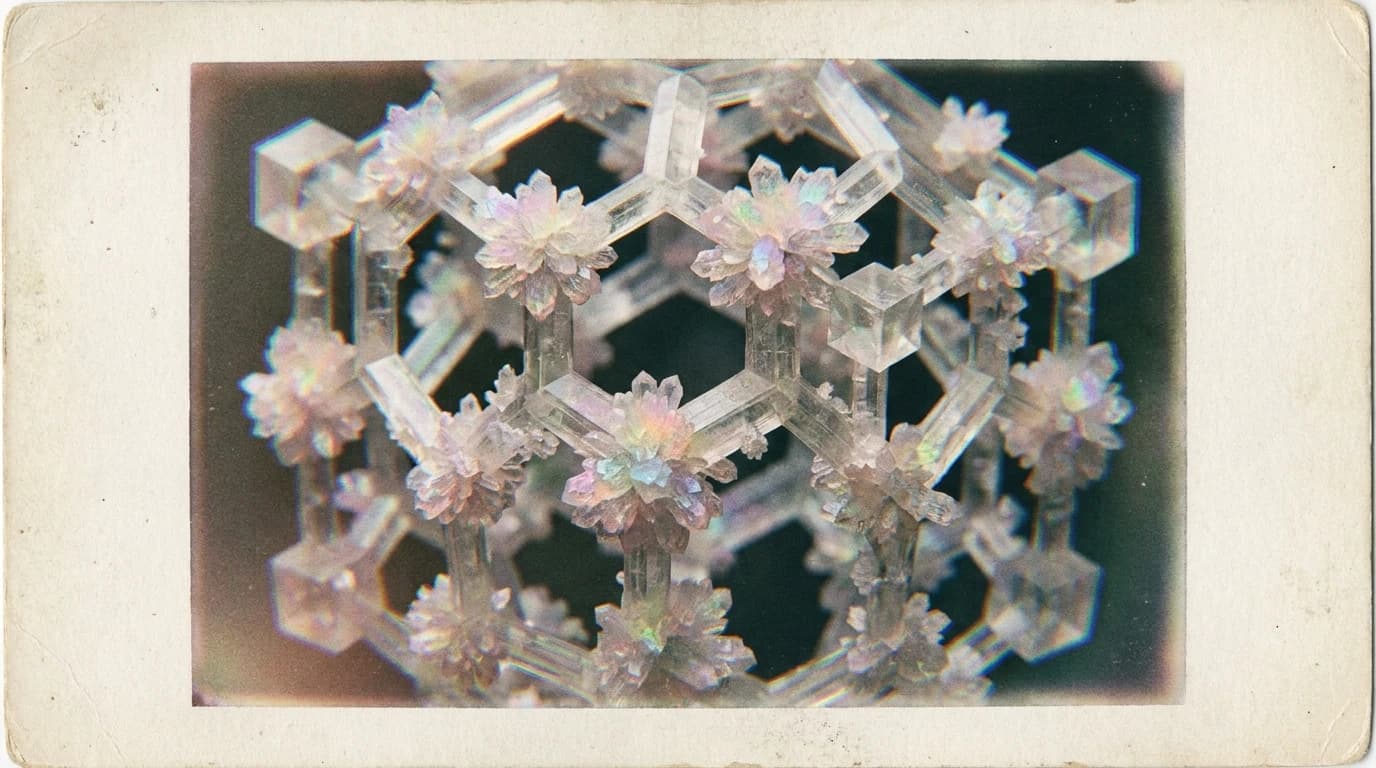
Have you ever played with a fridge magnet and wondered what is actually happening inside it?
Most of the magnets we use every day are called ferromagnets. Inside these materials, tiny particles called electrons all spin in the exact same direction. This creates a strong, invisible magnetic field that sticks your favourite drawings to the fridge door. But scientists have recently confirmed a completely different type of magnetism. It is strange. It is exciting. And it could change how we understand the physics of matter.
What Are Altermagnets?
For a long time, physicists mostly focused on familiar flavours of magnetism like ferromagnets, where all the electron spins point the same way. Now, researchers are studying an unconventional group called altermagnets. In these special materials, the up- and down-spin electrons behave differently, forming distinct, alternating patterns based on which direction they are moving through the crystal. Until now, seeing this exact pattern in 3D was incredibly difficult.
How It Works: Mapping the Invisible
To understand this, imagine a busy school marching band. In a regular magnet, every single student marches forward at the same speed. In an altermagnet, the trumpet players might march left and right, while the drummers march forward and backward. The shape of the band looks completely different depending on the angle you view it from. To see this invisible band, scientists studied a crystal called CrSb. They used a highly sensitive technique called magnetic quantum oscillation. By passing a powerful magnetic field through the crystal from different angles, they measured exactly how the electrons moved. This allowed them to map the behaviour of the electron spins in three full dimensions.
A Flower-Shaped Discovery
The results were spectacular. The researchers mapped the magnetic forces and found they form a complex, repeating shape. In fact, it looks very similar to a 'g-orbital'. This is a beautiful, flower-like pattern normally found inside a hydrogen atom. The study successfully measured the precise physical shape of these alternating spins, at least within this specific lab-tested CrSb crystal. This proves that the complicated, invisible symmetry of these unconventional magnets can be precisely mapped. It is a fantastic step forward in physics. It proves that even the oldest sciences still harbour new secrets to share.