Unlocking the Molecular Secrets of Microscopic Synapses
Source PublicationNature Communications
Primary AuthorsReig-Viader, del Castillo-Berges, Burgas-Pau et al.
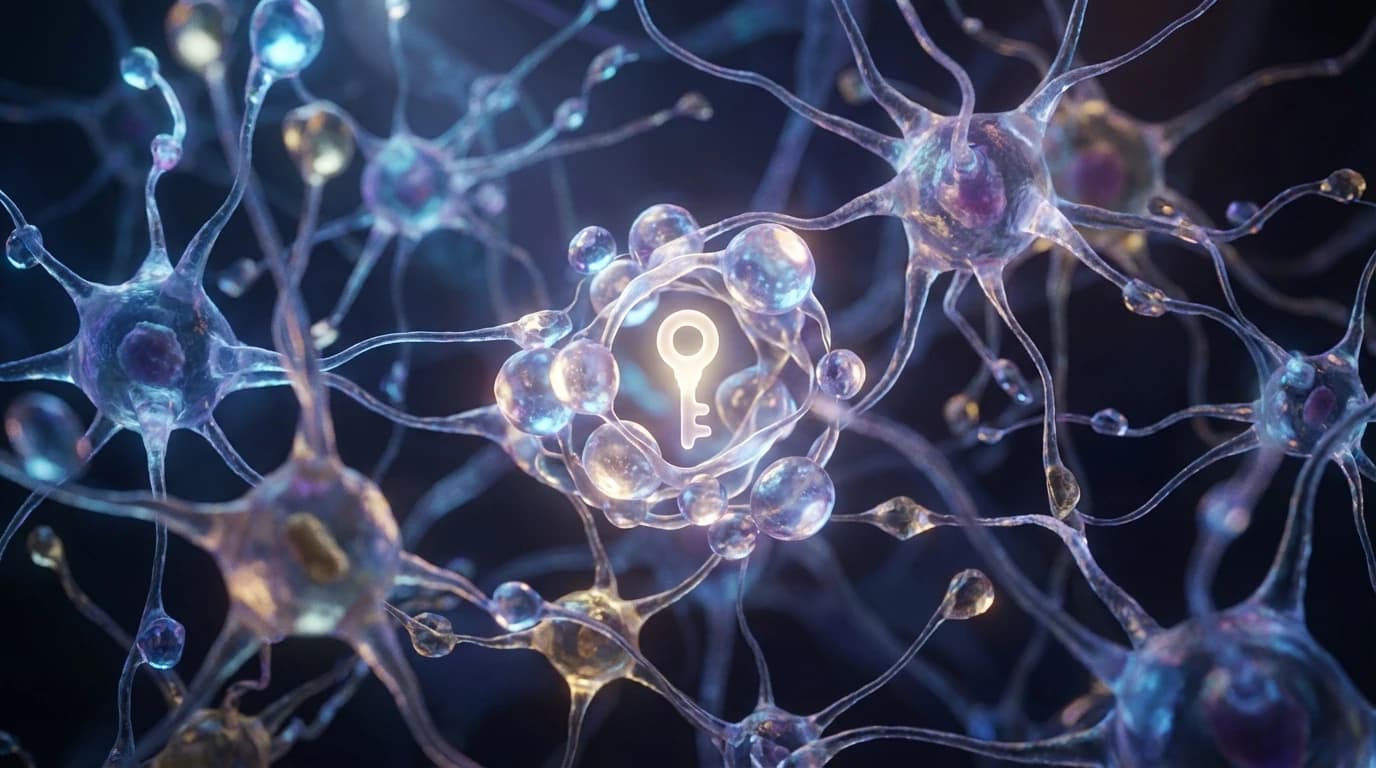
For years, neuroscientists have faced a significant hurdle: understanding the precise chemical blueprint of specific brain connections. While synapses—the junctions where neurons communicate—might possess similar electrical characteristics, they are often confined to microscopic regions, making detailed chemical analysis nearly impossible. This has limited our grasp of the molecular machinery driving brain physiology.
In a recent study, researchers introduced a novel procedure designed to characterise the synaptic proteome—the entire library of proteins—within these tiny areas of the mouse hippocampus. By exploring the molecular diversity among synapses in the trisynaptic circuit, the team discovered a remarkable variety in protein composition among connections previously thought to be quite similar.
Crucially, the analysis revealed that this diversity is not random. It is driven by the differential expression of proteins responsible for regulating glutamate receptors, which are essential for excitatory brain signalling. The study reports that this regulation is orchestrated by neuron-specific gene expression programmes. Essentially, individual neurons actively control the diversity of their synaptic proteins. This combined approach, utilising both proteomics and transcriptomics, uncovers a previously unrecognised layer of control where neurons fine-tune their receptor machinery to manage complex brain circuits.