Turning Breath into Armour: How Ants Master Carbon Mineralisation
Source PublicationSpringer Science and Business Media LLC
Primary AuthorsCurrie, Li, Fang et al.
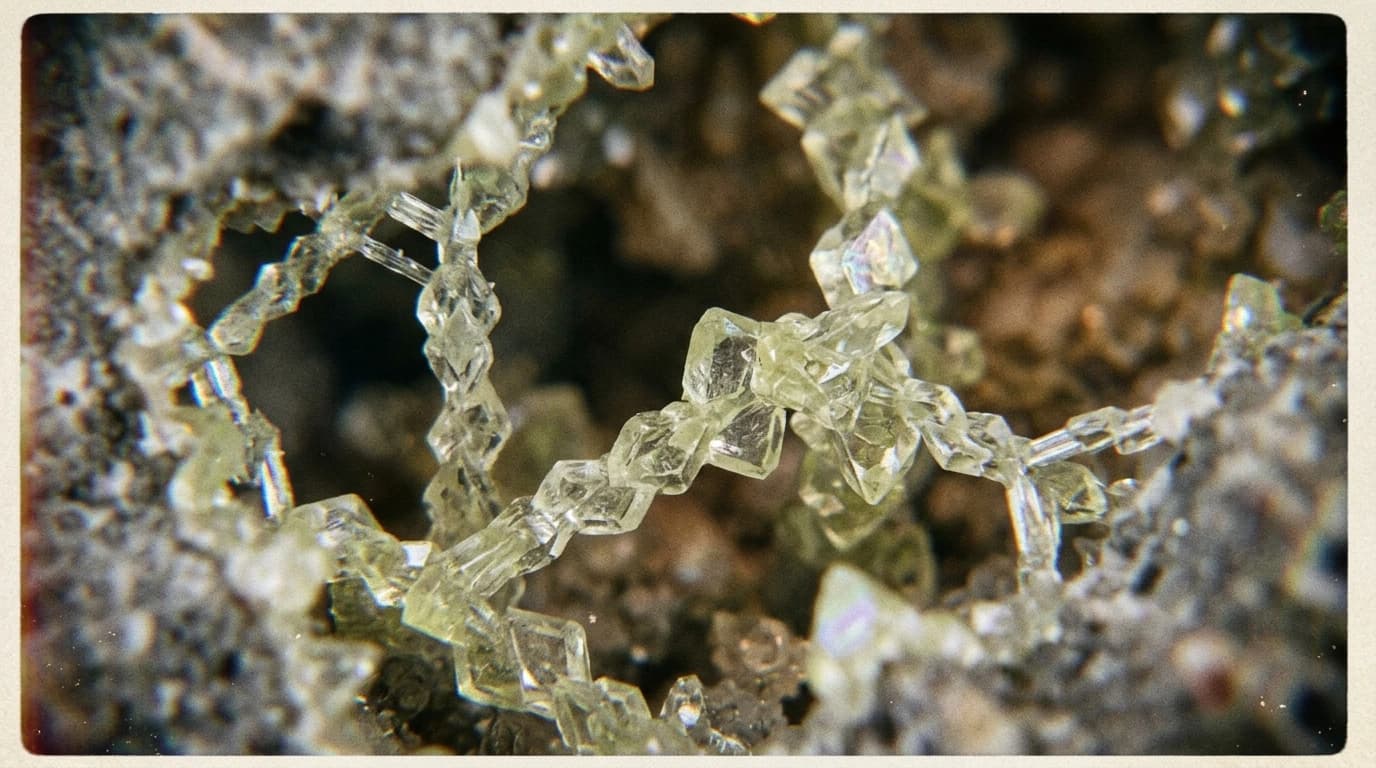
The Mechanics of Carbon Mineralisation
Imagine if you could breathe out and instantly turn your exhaled air into a suit of bulletproof armour. While humans struggle to build heavy machinery to trap greenhouse gases, a tiny ant is already doing it with its own breath.
Earth naturally stores carbon by turning it into stone, but the process usually takes geological timescales. We need faster methods to stabilise atmospheric CO2. This is where the fungus-farming ant, Sericomyrmex amabilis, enters the frame.
New preliminary research, currently awaiting peer review on Springer Science and Business Media LLC, suggests these ants have found a shortcut. They appear to pull CO2 directly from their nest air and convert it into a layer of dolomite on their bodies.
A Living Carbon Filter
The study used isotope tracking and high-tech imaging to watch this process. Researchers found that the ants could sequester up to 86 micrograms of carbon each—nearly 7% of their dry body weight.
- The process creates a biomineral layer that hardens the exoskeleton.
- The ants produce dolomite under ambient conditions, which is difficult to replicate in labs.
- This sequestration provides a defensive shield against predators or pathogens.
These early-stage findings could provide a new model for carbon capture. If we can mimic how these insects organise minerals, we might find more efficient ways to scrub CO2 from the air.
While the study is still awaiting peer review, it suggests that nature’s smallest engineers have already solved a massive chemistry problem. The future of carbon storage might look less like a factory and more like an ant hill.