Tracking Atmospheric aerosols: Early data suggests natural ocean emissions drive a new cooling trend
Source PublicationSpringer Science and Business Media LLC
Primary AuthorsMoschos, Chevassus, Fossum et al.
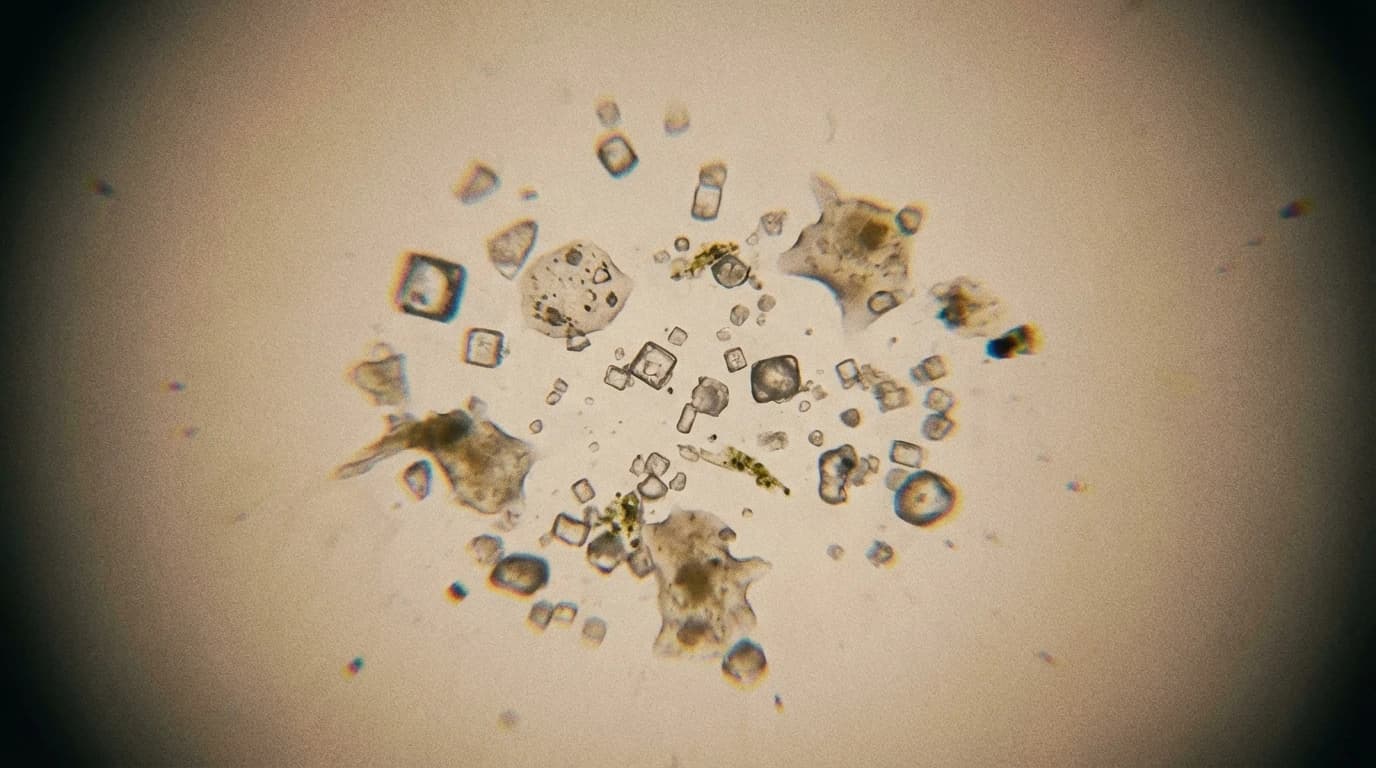
Atmospheric aerosols: A preliminary shift in climate modelling
Researchers have identified a distinct cooling effect over the world's oceans driven by natural emissions, even as human-made pollution trends plateau. Measuring these atmospheric aerosols has historically proved extraordinarily difficult because long-term, composition-resolved data over open water is exceptionally rare.
For decades, climate models relied heavily on broad satellite estimates and short-term shipboard measurements to calculate how particles reflect and absorb sunlight over the seas. This older approach provided poorly constrained snapshots that often failed to capture the highly variable nature of oceanic emissions.
The context of marine emissions
Marine environments are vast and notoriously difficult to monitor consistently. Previous methodologies struggled to separate seasonal weather variations from long-term shifts in particle composition, leaving a massive gap in climate forcing calculations.
By contrast, this new analysis leverages detailed, continuous records from 2008 to 2019 at two interhemispheric observatories: Mace Head in Ireland and Kennaook/Cape Grim in Tasmania. This composition-resolved approach allows scientists to mathematically remove seasonality and track exactly which types of particles are increasing or decreasing across the concentration distribution over time.
The discovery: Natural cooling outpaces pollution
According to the analysis of the 2008–2019 observatory records, the data reveals a surprising trend. At Mace Head, historical declines in human-made pollutants like ammonium-sulphate have largely levelled off.
The net climate forcing from anthropogenic sources in this region is now statistically indistinguishable from zero. The data shows that reduced particle scattering is effectively cancelled out by weaker absorption from black and brown carbon.
Instead, natural sources are dictating the trend. The researchers measured distinct increases in several natural particles:
- Sea-salt generated by ocean wind and spray.
- Biogenic sulphate produced by marine biological activity.
- Marine organics linked to ocean surface interactions.
Together, these natural particles drive a robust cooling trend over the ocean, estimated at a median of −0.03 Watts per square metre per decade. Data from Tasmania suggests this phenomenon is not isolated to the North Atlantic, as researchers recorded similar decreases in black carbon alongside increases in biogenic sulphate.
What this study does not solve
Despite the rigorous data collection, this early-stage research leaves several questions unanswered. The study relies on just two fixed observatories located at opposite ends of the globe. This sparse distribution means the data cannot provide a complete, high-resolution global map of aerosol behaviour.
Furthermore, while the researchers measured an increase in extreme aerosol episodes linked to wildfires, marine blooms, and long-range transport, the exact mechanisms driving the frequency of these extreme events remain unquantified. The findings suggest a regional cooling trend, but they do not predict how these natural marine emissions will react as global ocean temperatures continue to rise.
The impact on future climate models
If validated on a broader global scale, these findings demand a significant update to current climate projections. Existing global models must be adjusted to account for evolving natural aerosol sources rather than focusing exclusively on anthropogenic pollution.
Failing to include these composition-resolved natural trends could lead to highly inaccurate predictions of near-term marine climate forcing. The research indicates that continuous, high-fidelity monitoring of the ocean's natural emissions will be required to build an accurate picture of the Earth's changing atmosphere.