The White Death in the Soil: CRISPR for Salt Tolerance in Crops Faces Biological Reality
Source PublicationBMC Plant Biology
Primary AuthorsSun, Wu, Ma et al.
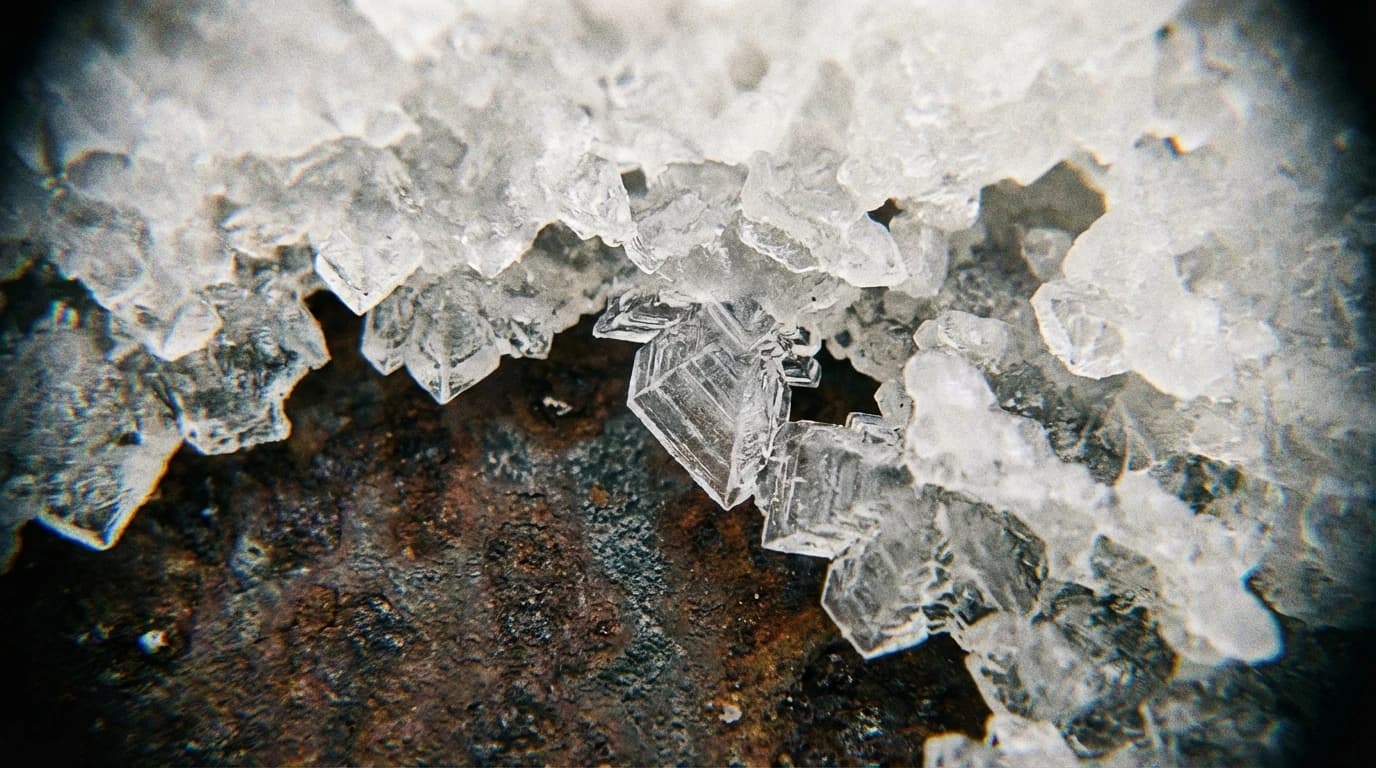
The soil does not scream. It simply turns white, a pale shroud creeping across the furrow. This is the silent siege of salinity. To the wheat stalk or the rice paddy, salt is a cruel paradox: it is thirst amidst water. The roots reach out, desperate for hydration, only to intake a toxic brine that shatters cellular structures and halts photosynthesis. The plant suffocates from the inside out. For the farmer, it is a slow-motion tragedy. First, the leaf tips burn. Then, the growth stunts. Finally, the field, once a lush green engine of calories, becomes a barren wasteland. This chemical parasite occupies vast swathes of arable land, holding global food security hostage. It is a villain that cannot be shot or poisoned; it is the environment itself turning hostile. It demands a response that is as precise as the damage is pervasive. The stakes are absolute. We are not merely losing profit; we are losing the very earth capable of sustaining us.
Into this hostile theatre steps the molecular editor. Scientists have long hoped that precise genetic intervention could armour our food against this inorganic predator. A new systematic review consolidates data from 83 peer-reviewed studies conducted between 2015 and 2024, assessing the performance of five major staples—rice, wheat, maize, sorghum, and barley—when altered by modern tools.
CRISPR for salt tolerance in crops encounters complex trade-offs
The narrative of the review offers a sharp plot twist. Early optimism centred on the idea that disabling a single gene could confer immunity. While these single-gene edits often achieved a 30–50 per cent improvement in sodium exclusion, the plants frequently failed to thrive in the field. They survived the poison but lost their productivity. The review identifies a hidden layer of complexity: the plant’s internal logic is not linear. It is a web.
The data indicates that the solution may lie in 'hidden compartments'—specifically, the spatial regulation of genes. The analysis highlights that constitutive editing, where a gene is tweaked in every cell, can be disastrous. For instance, altering root-dominant genes in the shoots reduced yields by 15–28 per cent in some trials. The plant requires different instructions for its roots than it does for its leaves. Furthermore, the review identifies 12 hub genes, including SOS3 and MPK6, as high-risk targets. Disrupting these central nodes creates a ripple effect, or pleiotropy, where fixing one problem inadvertently breaks another physiological system.
Current literature suggests that multiplex designs—editing several genes simultaneously to manage ion balance and osmoprotection—offer a more robust defence. However, the path forward is obstructed by technical hurdles. Genotype dependence remains a stubborn barrier; a technique that works in one variety of wheat may fail entirely in another. The authors conclude that while the tools are sharp, our understanding of the plant's resilience mechanisms must become equally sophisticated to secure a harvest from the salted earth.