The Tug-of-War Inside an Exhausted Mind: The Effects of Sleep Deprivation on Brain Activity
Source PublicationopenRxiv
Primary AuthorsBurman, Brodersen, Alfonsa et al.
"A car speeding down a steep hill with failing brakes, where the driver jams the gearbox into a lower gear; the vehicle is saved from crashing, but the engine is strained and unable to accelerate or steer smoothly."
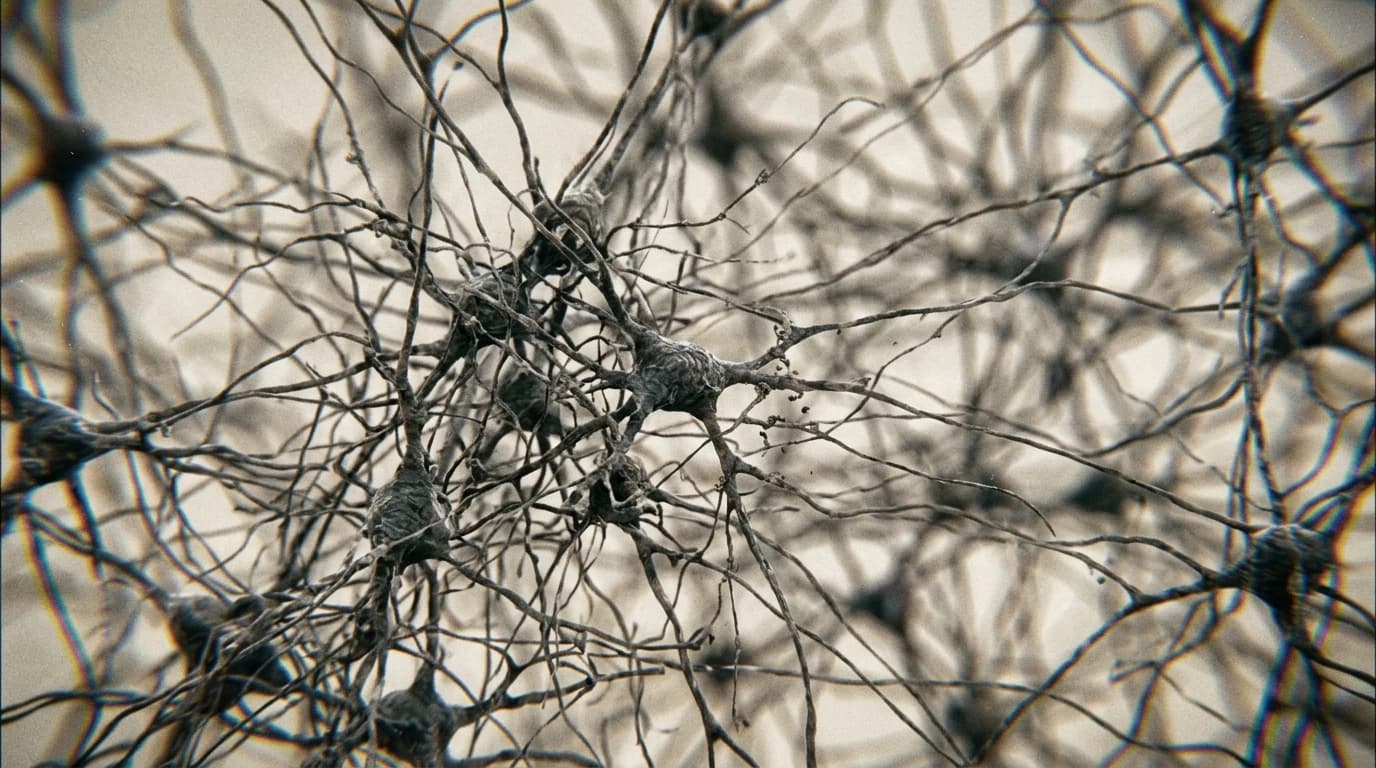
In the quiet dark of an exhausted mind, a silent chemical rebellion occurs. The molecular signals that usually quieten neural firing suddenly switch sides, transforming from reliable brakes into accelerators.
We have all felt the heavy, physical fog of a sleepless night, yet our minds somehow manage to keep us upright and functioning. Scientists have long struggled to explain how the delicate grey matter of the cortex avoids total chaos when starved of vital rest.
Measuring the Effects of Sleep Deprivation on Brain Activity
To find out, researchers performed precise electrical recordings within the cortical neurons of sleep-deprived mice. They measured a dramatic shift in cellular chemistry: sleep loss alters internal chloride gradients, causing inhibitory GABA receptors to depolarise and actively excite neurons.
To counter this dangerous surge of excitation, the neurons engaged an elegant self-defence mechanism. They raised their physical firing thresholds, actively resisting the urge to over-fire. This delicate balancing act successfully stabilises the neural network, but it exacts a heavy toll.
This desperate compromise explains the sluggish, low-frequency oscillations seen in exhausted brains. The study suggests that while this emergency response keeps us functioning, it leaves the brain rigid. By locking down to survive, the cortex may lose its vital capacity to adapt.
- Basic behavioural performance is preserved under extreme fatigue.
- The cortex loses the flexibility needed to organise and store new memories.
- Neurons remain locked in a rigid, high-threshold state to prevent network failure.