The Spy Network in Your Head: Sleep Deprivation and Memory Mechanisms
Source PublicationSLEEP
Primary AuthorsBalendran, Liu, Wu et al.
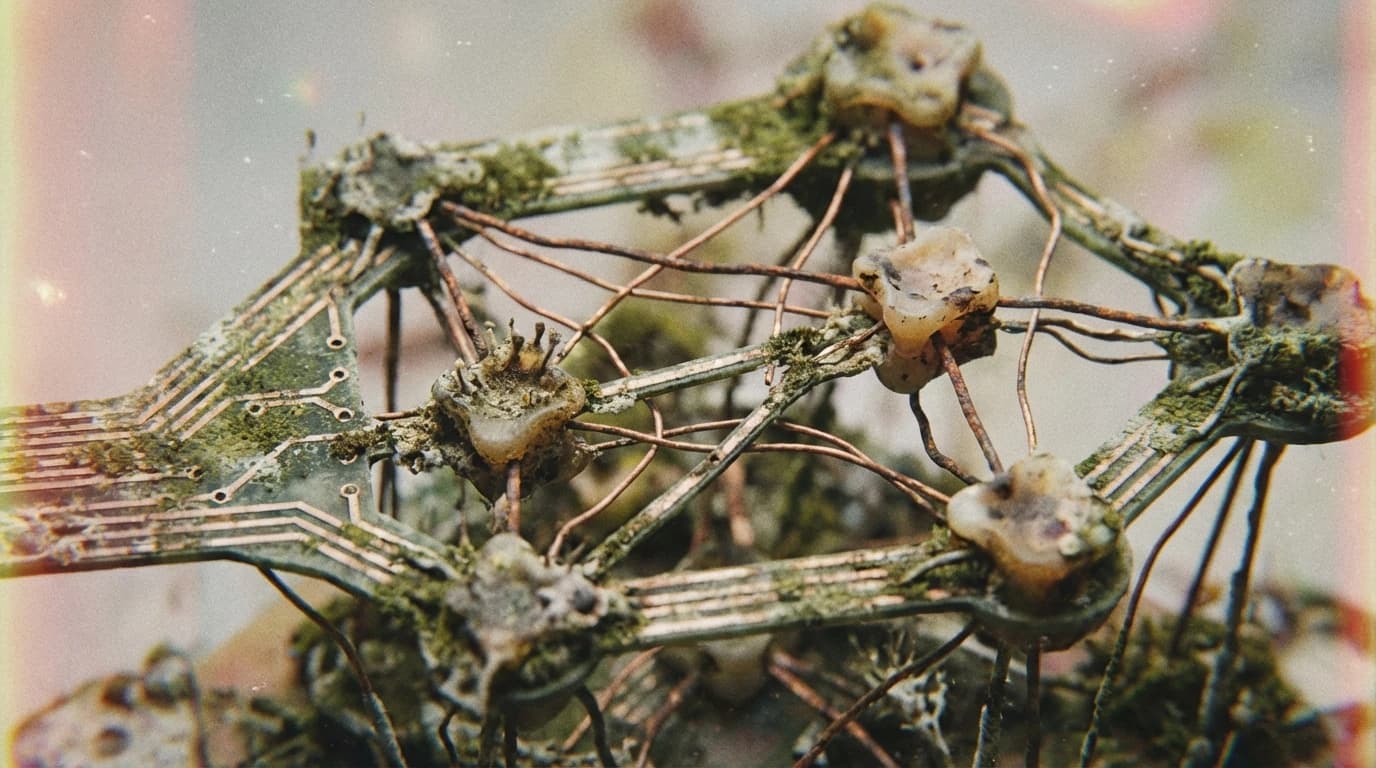
Imagine your brain is running a Cold War spy network.
The Hippocampus is the Safehouse. This is where vital secrets (memories) are securely filed away. The Neocortex represents the Field Agents gathering raw intelligence from the outside world. But you cannot just let every agent walk into the Safehouse. It would be chaos. You need Handlers.
In the brain, these Handlers are the SST+ interneurons located in the Entorhinal Cortex. They stand at the gates of the Safehouse. Their job is specific: filter the incoming chatter. If the intel is valid, they let it pass. If it is noise, they inhibit it. Now, consider what happens when the Handlers are forced to work a double shift without rest. They stop vetting the agents properly. The security protocol collapses.
This metaphor illustrates the biological link between sleep deprivation and memory.
How Sleep Deprivation and Memory Falter in the Lab
To see this breakdown in action, scientists studied male mice using a technique called 'Brainbow 3.0'. This method paints individual cells in distinct colours, allowing researchers to track specific 'Handlers' (SST+ interneurons) after the mice learned to fear a specific context. One group of mice slept. The other was kept awake.
If the mice slept, the Handlers maintained robust connections. Their equipment was in top shape. However, in the sleep-deprived group, the physical structure of these cells changed dramatically.
The study observed two distinct types of failure in the Handlers depending on their location:
- The Equipment Failure (Lateral Entorhinal Cortex): In this region, the Handlers did not disappear, but their 'receivers' (dendritic spines) shrank. Imagine a spy trying to listen to a wiretap, but the volume is turned down so low they cannot hear the code.
- The Line Cut (Medial Entorhinal Cortex): In this area, the Handlers lost connections entirely. The density of their spines dropped. It was not just quiet; the phone line was dead.
The Silence of the Handlers
The researchers also measured cFos, a protein that acts like a logbook of cellular activity. If the brain is well-rested, the Handlers are active, keeping the noise down. If sleep is denied, the Handlers go silent. The study measured reduced cFos expression in these interneurons.
Consequently, the excitatory neurons (the noisy crowd) became relatively overactive. Without the Handlers to dampen the noise, the Safehouse (Hippocampus) is likely overwhelmed with static. The delicate balance between excitation (action) and inhibition (control) is lost.
While this study was conducted on mice, it suggests a physical mechanism for why all-nighters make us forgetful. It implies that sleep does not just 'save' the memory; it maintains the security team that allows the memory to be filed correctly in the first place.