The Spinning Magnets Powering Superluminous Supernovae
Source PublicationScientific Publication
Primary AuthorsFarah JR, Prust LJ, Howell DA, Ni YQ, McCully C, Andrews M, Kumar H, Hiramatsu D, Gomez S, Wynn K, Filippenko AV, Bostroem KA, Berger E, Blanchard P.
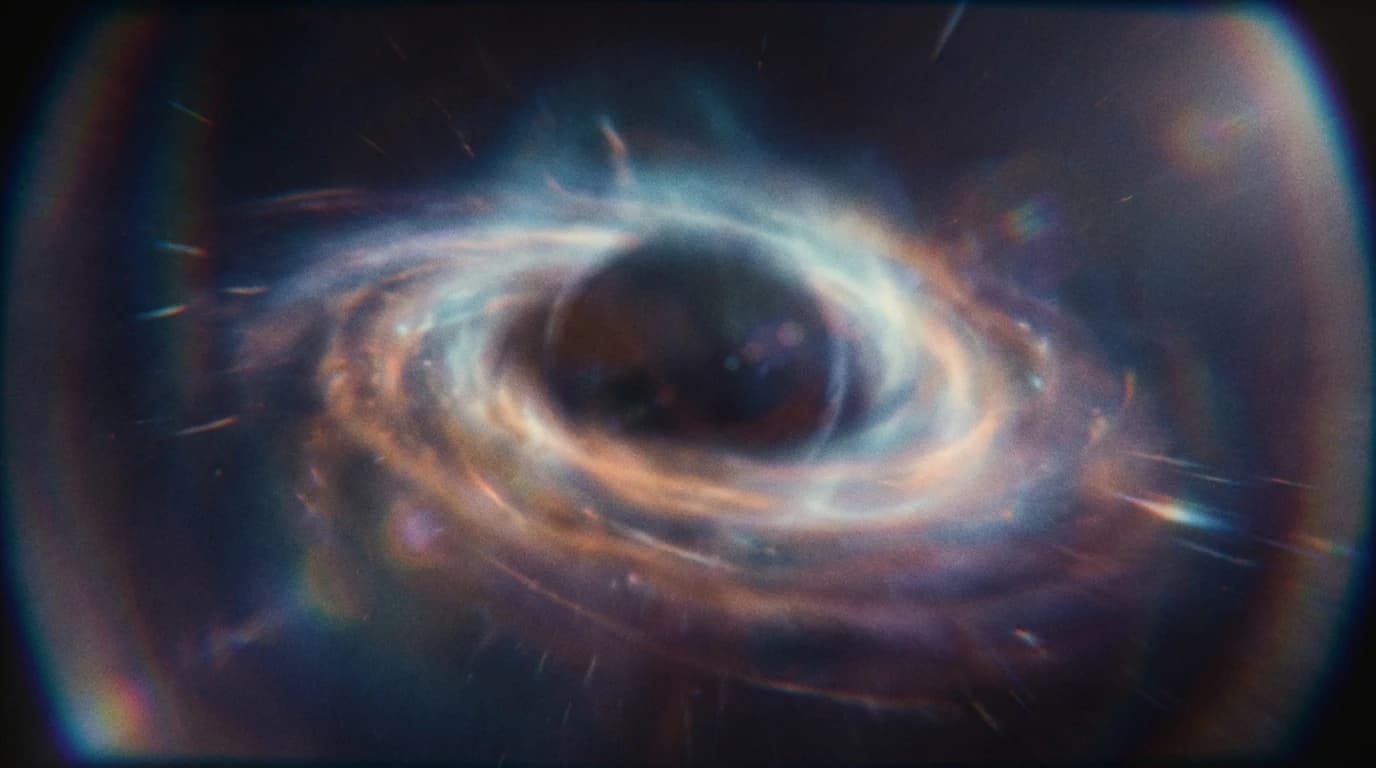
Deep in the cold, silent vacuum of space, stars die in violent explosions that outshine their host galaxies. Yet, for years, astronomers have stared at a specific class of these stellar deaths with mounting frustration. The maths simply did not add up.
These anomalies burned with an impossible, blinding intensity, defying every standard model of how a dying star should behave. Observers watched these brilliant flashes fade, only to notice strange, erratic flickers in the fading light. Something inside the wreckage was sputtering, but the thick ash of the explosion hid the engine from view.
The Mystery of Superluminous Supernovae
Standard stellar explosions are relatively well understood, powered by collapsing cores or runaway nuclear fusion. But superluminous supernovae are entirely different beasts, radiating at least ten times more light than a typical dying star.
For decades, the source of this extreme energy remained stubbornly hidden. Researchers suspected that a magnetar—a rapidly spinning, highly magnetic neutron star—might sit at the centre of the debris.
However, the strange bumps in the light curves refused to fit the standard magnetar theory. Astronomers were left arguing over two competing ideas.
They wondered if the star was colliding with a thick halo of its own shed gas, creating flashes of friction. Alternatively, perhaps the central engine itself was somehow misfiring, though no one could explain exactly why.
A Wobbling Top in Space
A recent study offers an elegant solution to this cosmic accounting error. By capturing high-frequency, multiband observations of a dying star, researchers recorded a light curve with a distinct 'chirped' pattern.
The flickers were not random collisions with space dust. They were speeding up, like a metronome ticking faster as the weeks passed.
This specific rhythm allowed researchers to mathematically peer through the expanding debris. Their measurements align perfectly with a central magnetar surrounded by a disk of infalling matter.
As the magnetar spins, it literally drags the fabric of space-time around with it, causing the accretion disk to wobble. This spatial distortion is known as Lense-Thirring precession.
This wobble creates the rhythmic bumps in the light that astronomers observed. By tracking the exact frequency of the flashes, the team measured the magnetar's spin period at a dizzying 4.2 milliseconds.
Testing Einstein in the Ashes
This observation provides the first direct evidence of the Lense-Thirring effect operating in the extreme environment of a magnetar. It confirms that the spin-down of these highly magnetic cores can indeed power the impossible brightness of these events.
The implications extend far beyond solving a stubborn astrophysical puzzle. This finding suggests these violent stellar deaths could serve as massive, natural laboratories.
Moving forward, astronomers may use these events to explore several fundamental questions:
- Testing the limits of general relativity in extreme gravitational fields.
- Measuring the exact magnetic field strengths of newly born neutron stars.
- Mapping the internal structure of supernova debris clouds.
By watching these distant, wobbling disks, physicists could soon test theories in conditions impossible to recreate on Earth. The blinding flashes in the dark are no longer just an anomaly; they offer a precise new tool for understanding the fundamental laws of the cosmos.