The Silent Leak Inside Zinc-bromine Batteries and the Two-Phase Solution
Source PublicationAdvanced Materials
Primary AuthorsLiu, Zhang, Jing et al.
Imagine a reservoir built to hold the ocean, yet it leaks from the inside out. This is the tragic reality of many promising energy storage systems. You fill them with power generated by the midday sun or a gale-force wind, expecting that energy to be there when the grid goes dark. But there is a thief in the water. In the chemistry of flow batteries, this thief is the polybromide crossover. It is a chemical betrayal, a wandering of ions that should remain anchored but instead drift across the separator, neutralising their counterparts and turning precious stored electricity into waste heat.
It acts like a parasite, feeding on the battery’s capacity to hold a charge. It is not a loud failure; nothing explodes or catches fire. Instead, the battery simply fades, bleeding out its potential until it becomes economically useless. For decades, this internal migration has been the primary antagonist in the story of grid-scale storage, keeping cheap, reliable power just out of reach. Engineers have tried thicker membranes and complex pumps to stop it, but the thief almost always finds a way through, rendering the system too short-lived for the real world.
Separating the Phases in Zinc-bromine Batteries
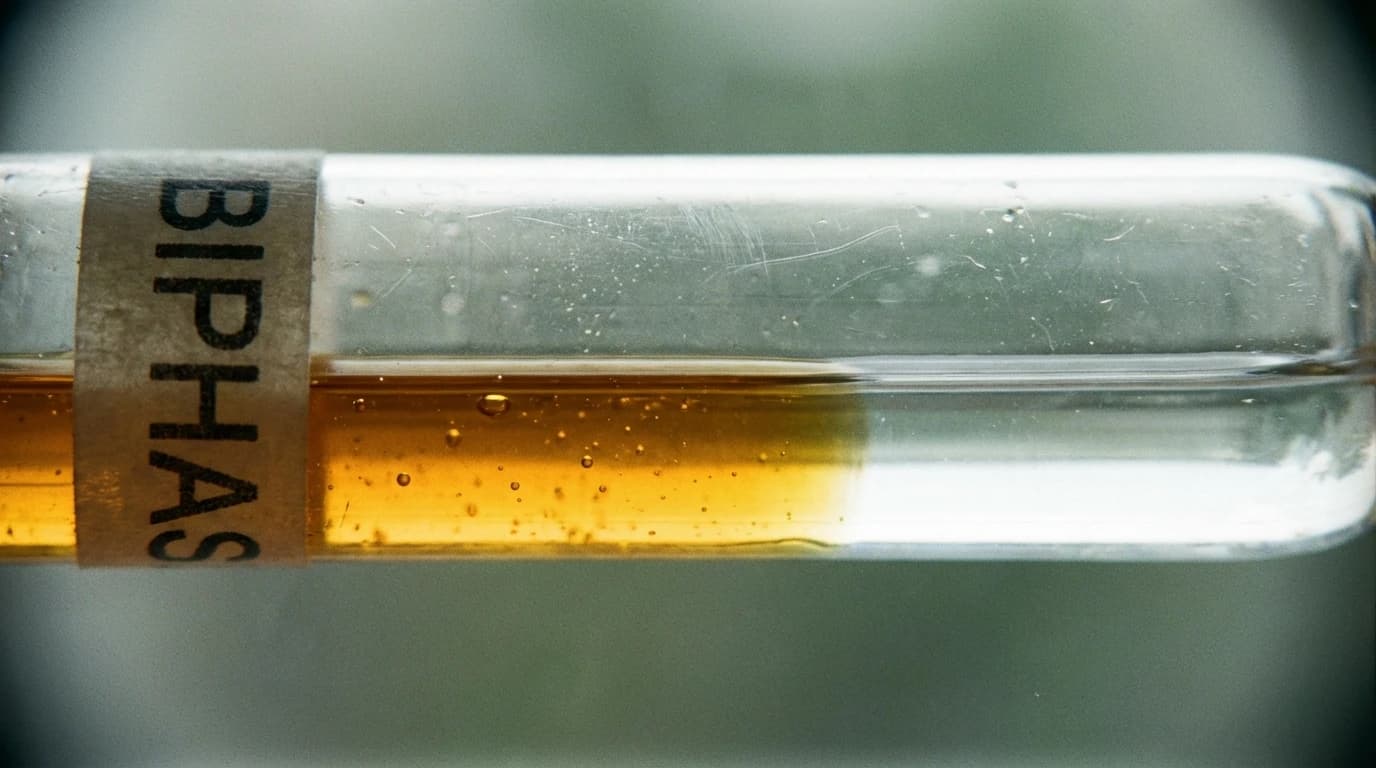
To stop this chemical bleed, researchers took a page from a salad dressing recipe. They stopped trying to force all the components to live in a single, chaotic mixture. Instead, they introduced a biphasic electrolyte system—essentially creating two distinct liquid layers that refuse to mix, much like oil and water. This is not merely a physical barrier; it is a thermodynamic wall.
The study reveals that the key to this separation lies in the choice of cations (positively charged ions). While monovalent and trivalent options were tested, the team found that divalent cations strike the perfect balance. They create an environment where the troublesome polybromides are locked into one phase, unable to cross over and cause the dreaded self-discharge. The data suggests this creates a 'confinement' effect, trapping the chemical reaction exactly where it needs to be.
The Role of Zwitterions
The innovation goes deeper than just separating liquids. The team introduced a dual-functional zwitterion—a molecule with both positive and negative charges. This acts as a stabilising agent. It suppresses the movement of polybromides even further and ensures the zinc deposits smoothly on the electrode, preventing the rough, mossy buildup that often kills battery cells.
The results are stark. This new architecture allows the battery to deliver an energy density of 40.6 Wh L-1. More importantly, it survives over 1,000 cycles, a lifespan that far exceeds previous attempts using similar chemistry. With a projected cost of around $100 per kWh, this approach implies that Zinc-bromine batteries may finally be ready to shoulder the burden of the electrical grid, turning a leaky vessel into a watertight vault.