The Shape-Shifting Science of CsPbBr3 Nanocrystals
Source PublicationAdvanced Materials
Primary AuthorsSkvortsova, Seth, Zito et al.
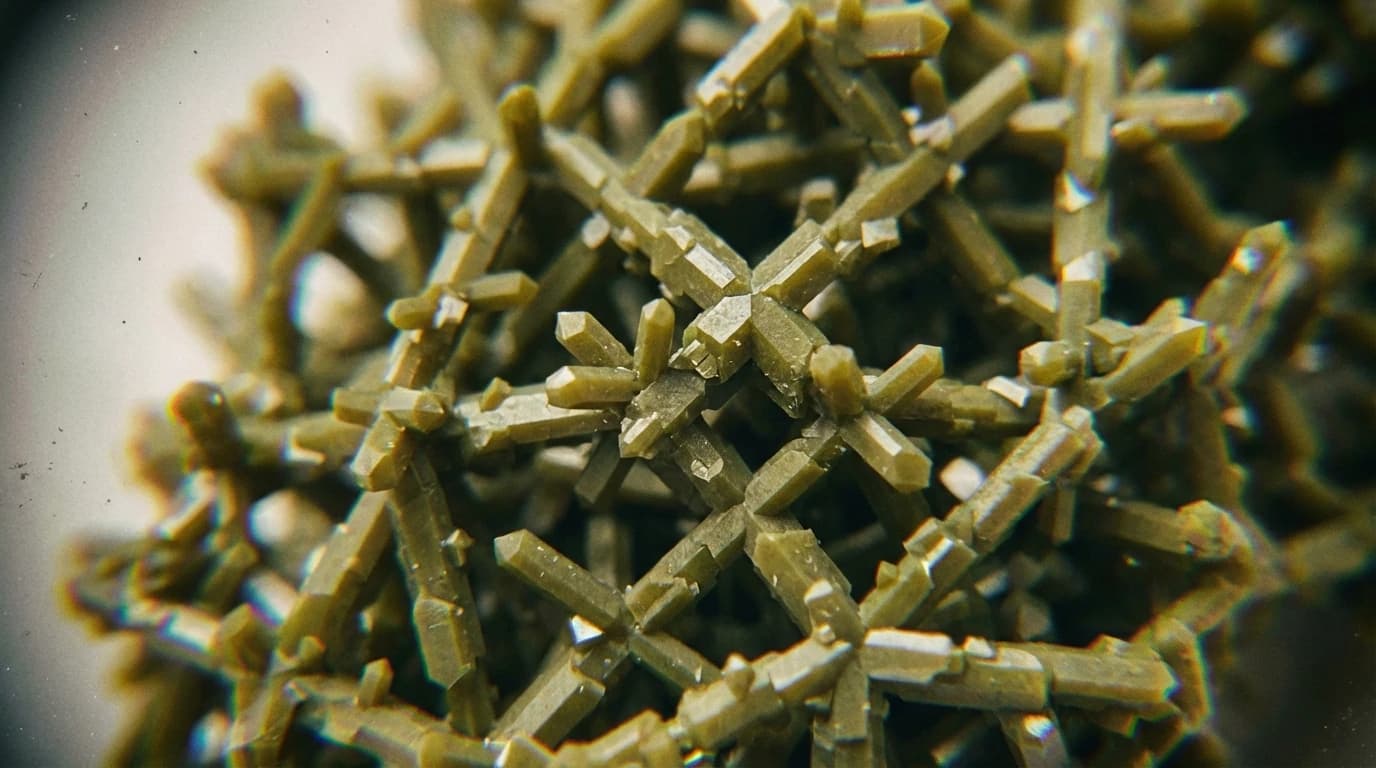
Imagine a set of microscopic Lego bricks that can sprout arms on command. If the arms are long, the brick glows with a steady, brilliant green colour. If the arms are short, it blinks rapidly like a tiny strobe light.
These results were observed under controlled laboratory conditions, so real-world performance may differ.
This is not a futuristic toy, but the basic mechanism behind a recent advance in materials science. Researchers are learning exactly how to manipulate the physical shape of glowing microscopic structures to alter their behaviour.
The Promise of CsPbBr3 Nanocrystals
In the world of advanced electronics, CsPbBr3 nanocrystals are highly sought after. These tiny particles are famous for their bright and incredibly stable green light emission.
Engineers want to use them to build better lasers, sharper digital displays, and highly efficient solar panels. However, getting these microscopic particles to perform specific tasks requires intense precision.
The challenge has always been figuring out which physical features dictate their optical behaviour. Scientists needed a reliable way to tune the crystals for different jobs.
Growing Arms on Demand
In a recent lab study, researchers found a way to grow these crystals with a central cubic core and multiple protruding arms. By carefully tweaking the chemical recipe, they managed to dictate the exact size of the structures.
Specifically, altering the concentration of a chemical called cesium oleate allowed the team to control the length of these arms. The researchers also measured what happens when the crystals are stored in a solvent called toluene.
Over time, the structures physically evolved. The long-armed shapes gradually morphed into complex 26-sided geometric shapes. Short-armed versions appeared as a natural intermediate step during this transition.
This structural shift did more than change how the crystals looked under a microscope. It directly altered how the particles handled light.
How Arm Length Changes Everything
The researchers measured distinct optical differences based entirely on arm length. These physical changes dictate exactly how the crystals might be used in future technologies.
Depending on their shape, the crystals displayed three distinct profiles:
- Long-armed crystals: These structures yielded extended light lifetimes and stopped blinking. This suggests they could be ideal for steady light-emitting devices and quantum photonics.
- Short-armed crystals: These exhibited faster light recombination and increased surface accessibility. This points to potential uses in environmental sensing and high-speed single-photon emission.
- Self-assembly: The arm length also controlled how the crystals packed together in three-dimensional space. This gives engineers a new way to organise complex microscopic structures.
By linking the physical shape of CsPbBr3 nanocrystals to their optical response, this research provides a fresh toolkit for materials scientists. It suggests that the electronics of tomorrow might be built by simply giving our microscopic building blocks the right set of arms.