The Shape of a Seizure: A Geometric Approach to EEG Source Localization
Source PublicationAdvanced Science
Primary AuthorsSiu, Karoly, Mansour L. et al.
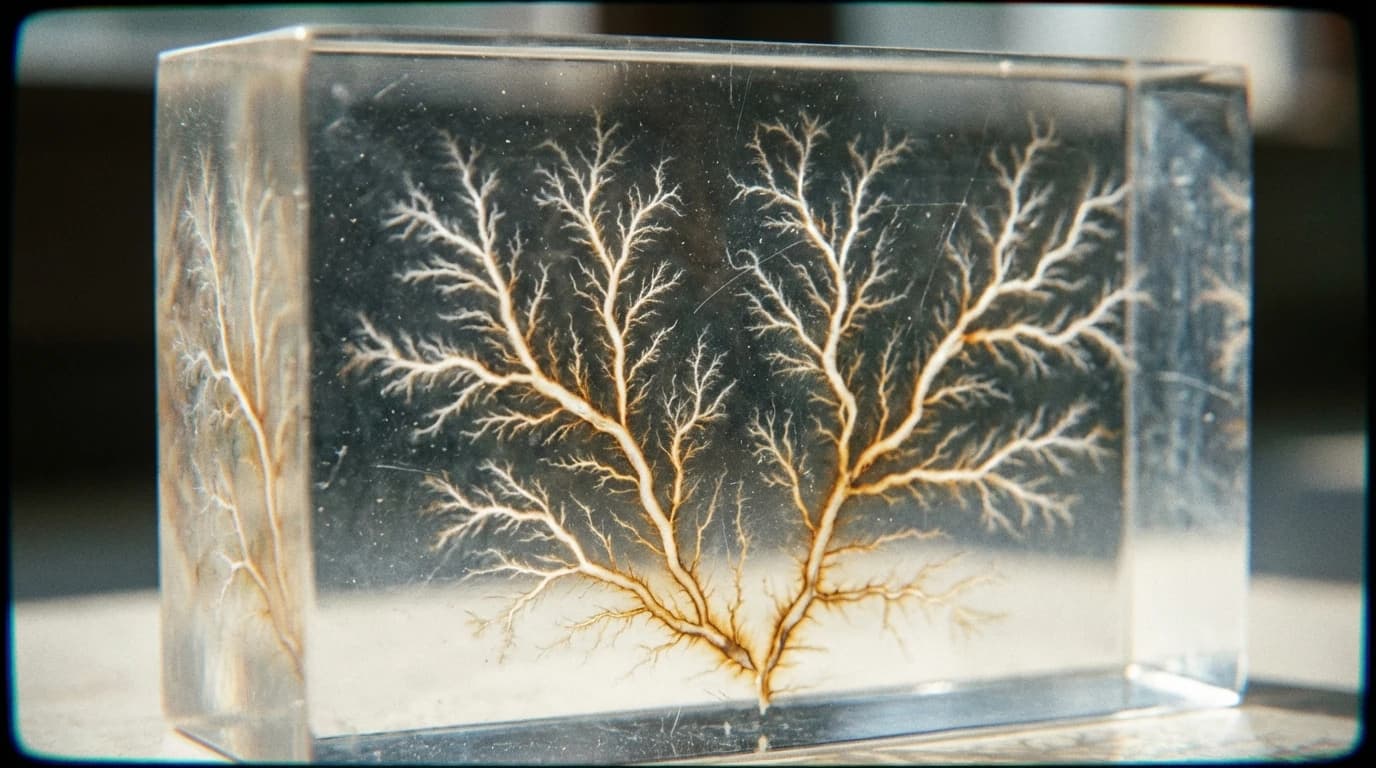
Imagine a violent electrical storm raging inside a dark, sealed vault. You stand outside, pressing a stethoscope to the thick walls, listening to the muffled cracks of thunder. From those distorted echoes alone, you must determine exactly where the lightning struck.
These results were observed under controlled laboratory conditions, so real-world performance may differ.
This is the daily reality for neurologists tracking severe epilepsy. They place a web of electrodes across a patient's scalp, catching the chaotic electrical ripples of a seizure. Yet, working backward from those surface echoes to locate the exact origin point deep within the folded grey matter remains a notoriously difficult mathematical puzzle.
A surgeon's scalpel depends on getting that location exactly right. If they miss, the seizures continue. The stakes are immense, but the skull keeps its secrets well guarded.
The Mathematical Trap of EEG Source Localization
The human skull is a stubborn, insulating barrier. It smears and diffuses the brain's delicate electrical signals long before they ever reach the surface sensors. This creates a deeply frustrating scenario for clinicians trying to map the brain.
Because there are infinitely many ways an internal signal could produce the exact same pattern on the scalp, doctors face what mathematicians call an 'underdetermined' problem. They cannot solve the equation without adding external rules to narrow down the possibilities.
For years, scientists assumed the best rulebook was the brain's connectome. This is the incredibly dense wiring diagram of nerve fibres linking different regions of the brain. The logic seemed perfectly sound: if you know exactly how the cables are routed, you should know exactly how the electricity flows.
The Elegance of Pure Shape
A recent study challenges that long-held assumption with a remarkably elegant alternative. The researchers asked whether the physical shape of the brain—its literal curves, grooves, and overall geometry—might explain the flow of electricity better than the complex wiring.
To test this, the team applied mathematical concepts called structural 'eigenmodes'. These are essentially resonant frequencies, much like the natural vibrations of a struck bell or the acoustics of an empty cathedral.
The researchers compared two distinct types of eigenmodes. One was based on the connectome wiring, and the other was based purely on the brain's geometric shape. They then measured how accurately each computational model could reconstruct the spread of an epileptic seizure.
The findings were entirely unexpected. The geometric eigenmodes tracked the seizure's path slightly better than the intricate wiring diagrams. They achieved this by relying merely on the physical folds of the brain's surface.
Mapping the Storm
Furthermore, both the geometric and connectome methods significantly outperformed the standard analytical approaches currently used to model brain activity.
This suggests that the raw, physical shape of the organ acts as a natural mould, physically constraining and guiding the flow of electrical storms. The actual geometry of the tissue may dictate function just as much as the microscopic connections.
While this approach is currently a computational framework rather than an immediate surgical tool, it provides a vital new mathematical constraint. By offering a sharper theoretical map, it gives researchers a powerful new way to interpret the distorted echoes of brain activity.
The physical contours of the mind may soon help us better chart, and perhaps one day calm, its most devastating storms.