The Secret Stability of Akkermansia muciniphila: A Microbe Built for the Long Haul
Source PublicationMicrobiology Spectrum
Primary AuthorsLigthart, Elzinga, Segers et al.
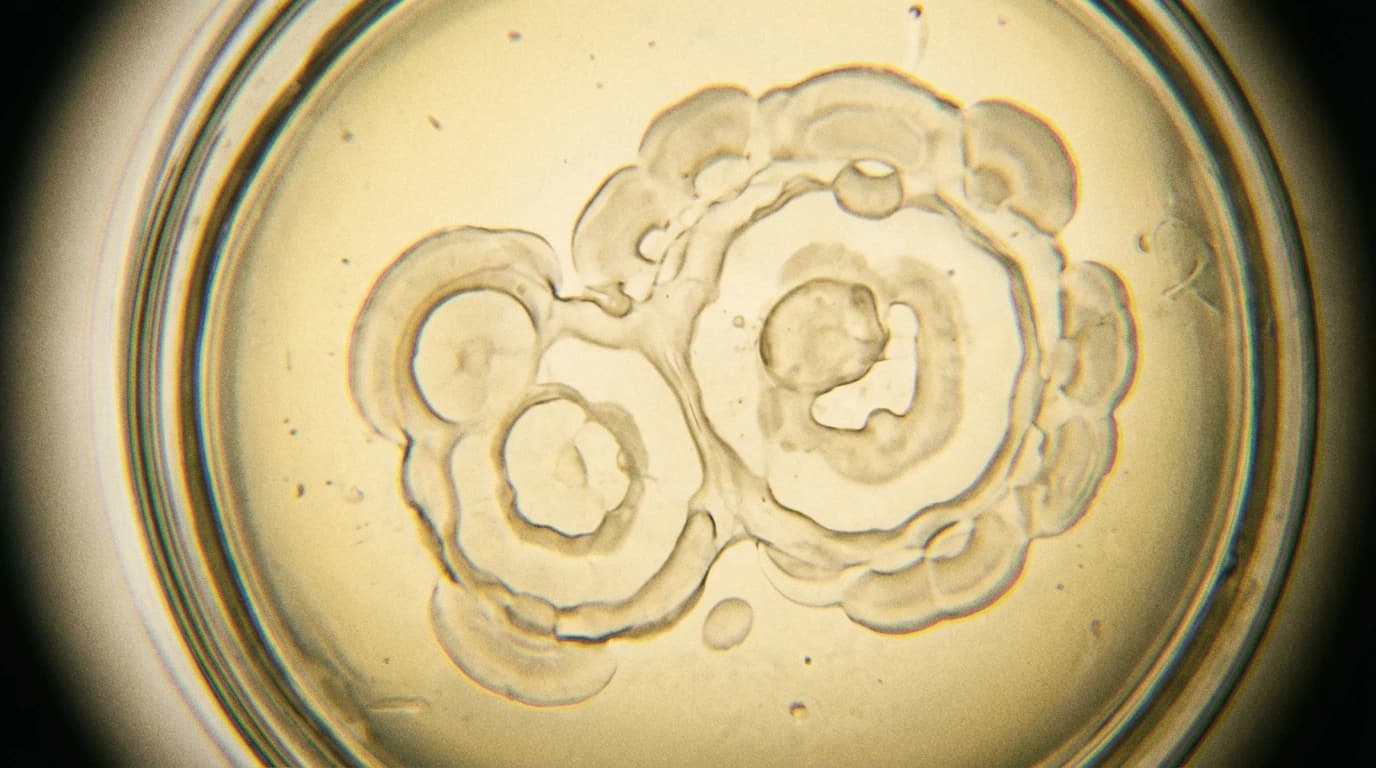
Imagine a master baker passing down a complex recipe through 1,000 generations of their family, without a single descendant altering a single gram of flour. That level of absolute precision sounds impossible in the real world.
Yet, deep inside your digestive tract, a certain bacterium pulls off a similarly flawless performance. Meet Akkermansia muciniphila, a microscopic resident of your gut that is currently capturing the attention of biologists.
Why Akkermansia muciniphila Matters Today
Your gut is a chaotic environment, constantly shifting with every meal you eat. To survive, bacteria usually need to adapt and mutate rapidly.
Scientists are highly interested in this specific microbe because it acts as a friendly tenant that reinforces the protective mucus lining of your intestines. Because it improves gut barrier function, researchers want to mass-produce it as a health supplement.
However, scaling up microbes is tricky business. When you grow bacteria in massive industrial vats, they reproduce incredibly fast.
With rapid reproduction comes the risk of genetic mutations, which could change how the bacteria behave. Industrial production requires predictability.
Putting the Microbe to the Test
To see if this bacterium could handle the pressure, researchers put it through a marathon experiment. They grew the microbe for over 1,000 generations under five different laboratory conditions.
During their analysis, the research team tracked several specific factors:
- The exact mutation rate across 1,000 generations of reproduction.
- The physical changes in strains grown in various high-stress environments.
- The specific genes responsible for attaching to gut mucus.
The results they measured were highly unusual. When grown in its favoured environment—a broth containing pig stomach mucus—the bacteria produced zero mutations.
Even when forced to grow in less ideal, industrial-style liquids, the mutation rate remained exceptionally low. However, the scientists did spot a tiny structural hiccup in a few rogue strains.
A minor genetic stutter occurred in a specific gene called Amuc_1413. This caused a frameshift—essentially a typo that shifts how the entire genetic sentence is read.
Because of this typo, the bacteria completely lost their ability to bind to mucus.
What This Means for the Future
This discovery tells us exactly how the bacterium anchors itself to our gut walls. The Amuc_1413 gene acts as an essential grappling hook.
More importantly, the study suggests that the genome of Akkermansia muciniphila is remarkably stable over long periods. If a company brews a massive vat of these probiotics, they need a guarantee that the bacteria at the end of the process are identical to the ones at the start.
This stability could make it an ideal candidate for large-scale production. If we can manufacture it reliably, it might soon find its way into everyday treatments for gut health.