The Rise of the Artificial Chemo-Ionic Synapse
Source PublicationAdvanced Materials
Primary AuthorsZhang, Xiang, Zhang et al.
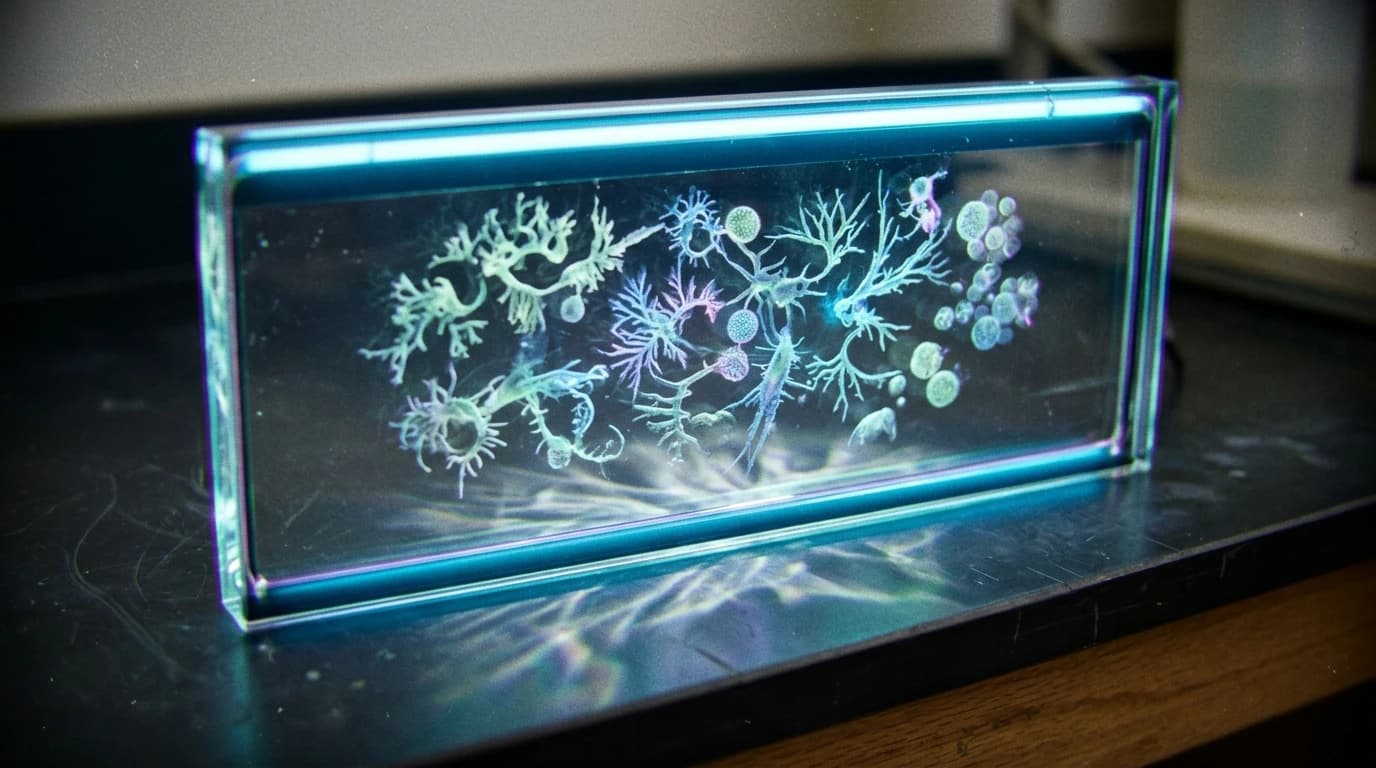
A single molecule of dopamine carries a command that a silicon chip cannot hear. To a computer, the chemical flux of the human brain is an alien tongue, silent and unreadable. This disconnect prevents machines from truly merging with biological life.
Researchers have now engineered an artificial chemo-ionic synapse that translates these molecular whispers into machine logic. By merging a dopamine sensor with a flexible ionic elastomer, the team created a system where chemical oxidation generates a local electric field. This field directs the flow of ions within the material, adjusting the device's electrical resistance just as a biological synapse adjusts its strength in response to neurotransmitters.
The Artificial Chemo-Ionic Synapse in Motion
The study measured how varying concentrations of dopamine altered the "synaptic weights" of the device. This allows for a direct conversion of biochemical information into physical action without complex external processing. To demonstrate, the researchers connected the synapse to a robotic platform:
- The sensor detected specific dopamine levels in its environment.
- The ionic elastomer processed this as a decision-making signal.
- The robot executed a selective grasping task based on the chemical input.
This success suggests a future where prosthetics feel and react to the body's internal chemistry. By moving away from pure silicon and toward ionic dynamics, engineers might organise a new class of embodied AI that mimics the energy efficiency and sensitivity of the human nervous system. The result is a perception-decision-execution loop that functions with biological logic.