The Quiet Physics of Spin Field-Effect Transistors
Source PublicationJournal of Physics: Condensed Matter
Primary AuthorsJiang, Xiao, Sun et al.
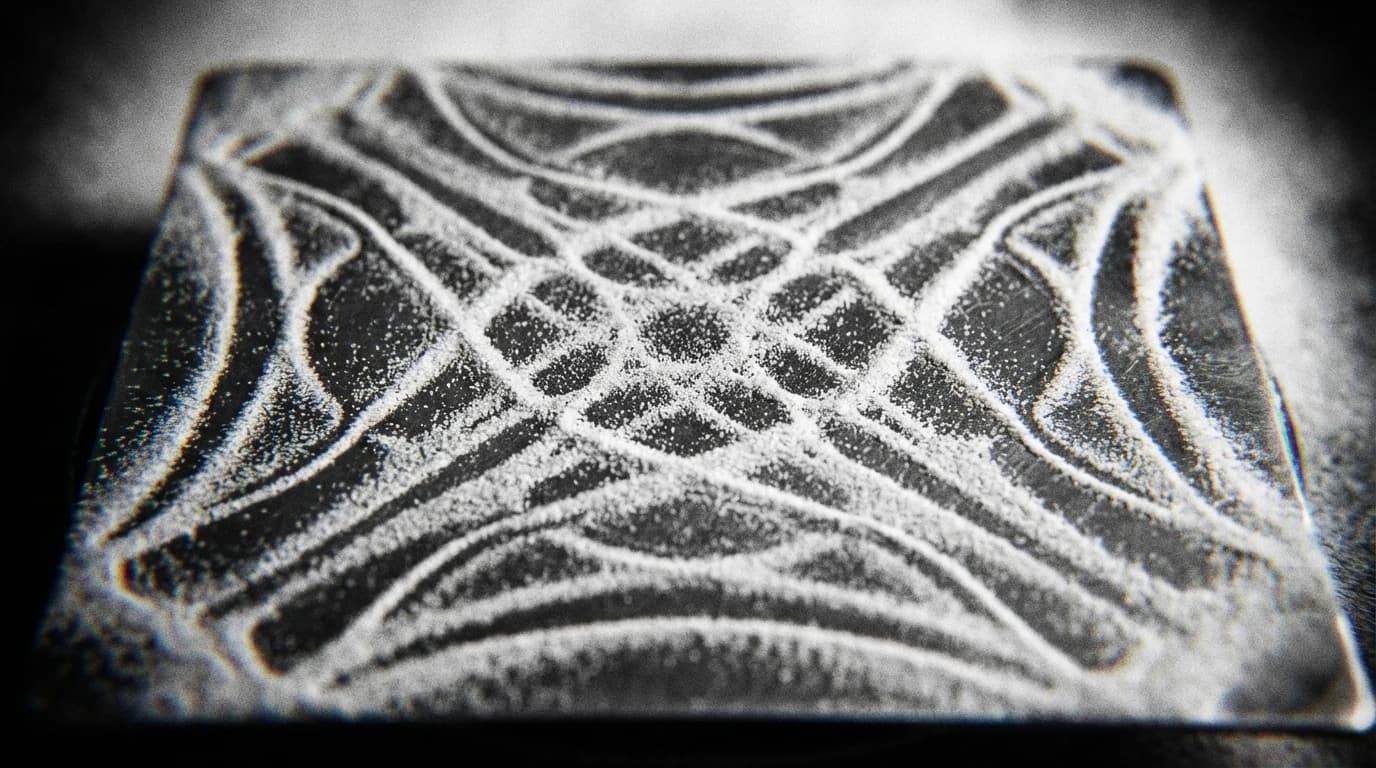
Deep inside the silicon chips that power our modern lives, a chaotic, invisible storm is raging. Every time you stream a video or train an algorithm, you are contributing to this microscopic friction. Billions of electrons are forced through shrinking channels, crashing into atomic walls and generating a feverish heat.
This relentless, erratic movement creates something physicists call "shot noise". It is a quantum racket, behaving much like microscopic hail battering a tin roof. As engineers shrink computing components down to the atomic scale, this erratic traffic becomes a severe barrier.
We are approaching the absolute physical limits of traditional electronics. The resulting thermal exhaustion and electrical static threaten to stall computing progress entirely.
For decades, physicists have chased an elegant alternative. The dream is to build machines that run entirely on the silent language of magnetism. Rather than relying solely on an electron’s electrical charge, they want to manipulate its intrinsic magnetic property, known as spin. This concept forms the foundation of spintronics.
If engineers can reliably control whether an electron spins 'up' or 'down', they can process data without the violent, heat-generating collisions of standard currents. However, electron spin is notoriously fragile and difficult to organise.
It jitters, drifts, and flips unpredictably when exposed to normal electrical noise. The very same shot noise that plagues traditional transistors disrupts the delicate magnetic alignment required for spintronic devices to function.
The Mechanics of Spin Field-Effect Transistors
A recent theoretical study offers a mathematical blueprint to quieten this microscopic storm. Researchers investigated the highly complex behaviour of electrons within extended spin field-effect transistors.
Instead of building physical prototypes, the team developed a sophisticated quantum transport model. This allowed them to simulate exactly how these devices behave under highly specific conditions. The researchers focused their simulations on three interdependent variables:
- The engineered magnetic orientation of the metallic leads feeding electrons into the device.
- The strength of spin-orbit coupling within the semiconductor, which links an electron's physical movement to its magnetic spin.
- The precise spatial configuration of tunable, three-dimensional magnetic fields.
Through numerical simulations, the scientists observed the shot noise fluctuating. They found that the spin-polarised noise does not just rise and autumn randomly. Instead, it oscillates in distinct, predictable frequencies that researchers can strictly control.
Silencing the Quantum Storm
By carefully tuning these three parameters, the researchers found they could force the electron waves to interact and cancel each other out. This coherent interference acts remarkably like noise-cancelling headphones for quantum particles.
The data reveals that under specific resonant conditions, the shot noise can be driven significantly below its natural, expected baseline. In physics, achieving this sub-Poissonian level of noise is a highly sought-after prize.
This study measured the exact microscopic mechanisms that cause spin-dependent noise. The findings suggest that engineers will eventually be able to programme and manipulate this noise at will.
While currently confined to computer models, this theoretical framework offers a robust guide for the future. It indicates that tomorrow's programmable spintronic devices could operate with remarkable efficiency, finally calming the chaotic storm inside our machines.