The Plastic Code: How Sequence-controlled polymers Could Fix Recycling
Source PublicationJournal of the American Chemical Society
Primary AuthorsDishner, Bourgery, Carper et al.
The Power of Order
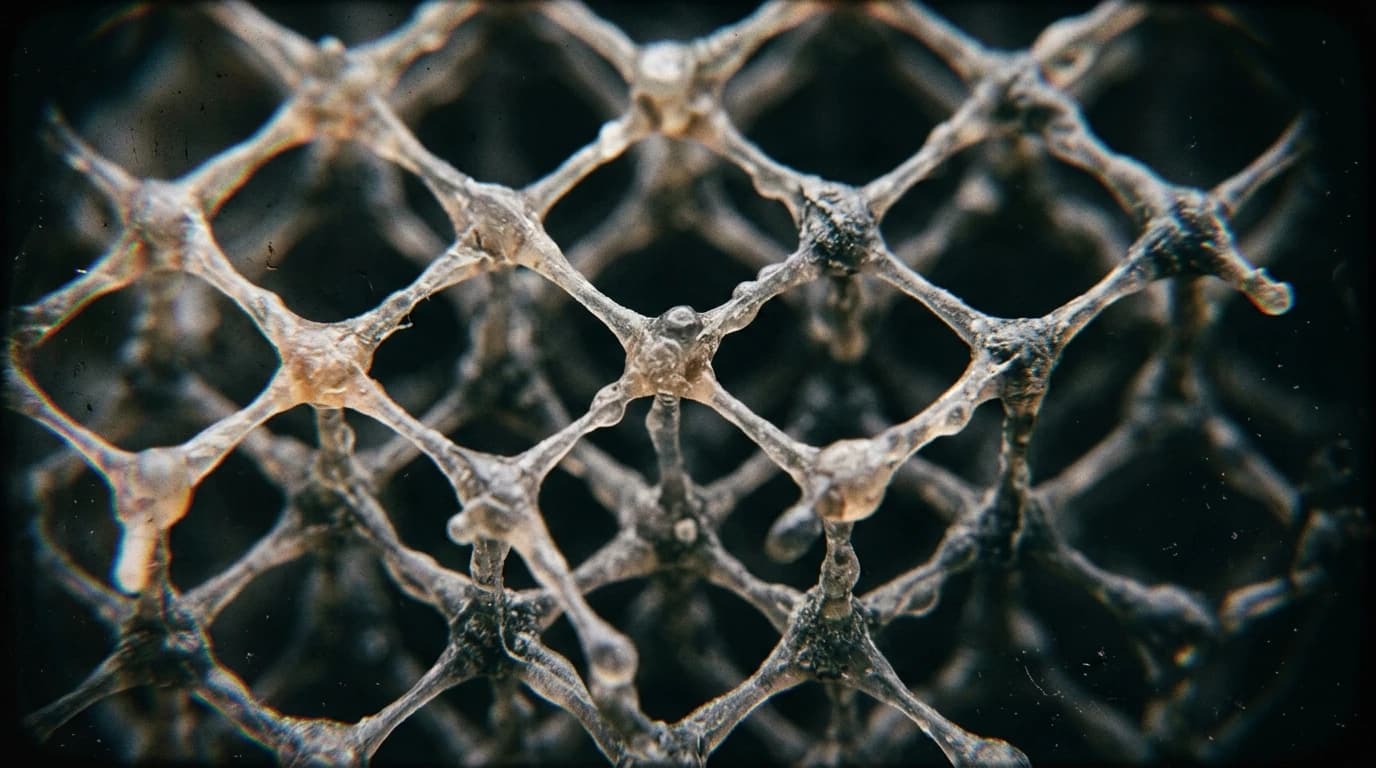
Imagine your plastic water bottle is a Lego set where every brick follows a strict colour pattern. Standard plastics are molecular soup; their building blocks are shoved together in a random scramble. This lack of organisation makes them hard to recycle without losing quality. Sequence-controlled polymers change the rules by arranging monomers in a specific, repeating pattern, much like the letters in a word.
These results were observed under controlled laboratory conditions, so real-world performance may differ.
Precision Cutting with Enzymes
Researchers synthesised a new material called poly(X,AMA) using solid-state polycondensation. This method ensures every unit sits in its exact, intended position. To test its recyclability, the team screened 96 different nylon-eating enzymes. They found that these biological 'scissors' did not just chew the plastic at random. Instead, the enzymes recognised the sequence and cut the chain into specific four-unit chunks called tetrads.
Building a Circular Future
The study measured how these enzymes interact with the polymer chain through computational modelling. The data suggests that we can design plastics with a built-in 'self-destruct' code. By controlling the sequence, scientists can tune a plastic's strength and heat resistance while ensuring it remains perfectly circular. This could lead to a system where waste is simply a set of instructions waiting to be rebooted into a new product.