The Pink Alga Thriving in Ancient Depths: Dunaliella salina and the Future of Arid Water
Source PublicationScientific Reports
Primary AuthorsRameshi, Emamjomeh, Gharaei et al.
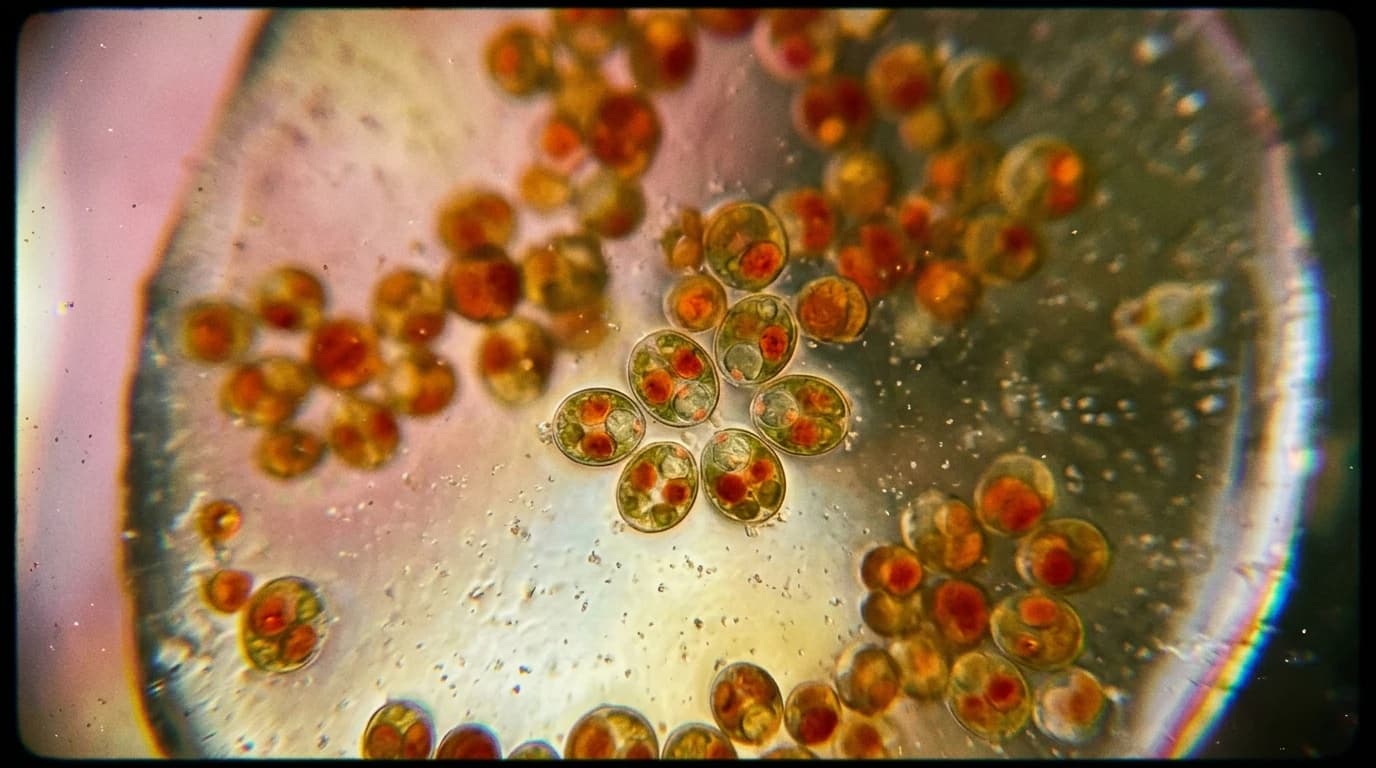
The Hidden Potential of Dunaliella salina
In the scorched silence of the desert, water is a ghost. For decades, the survival of arid communities has depended on dwindling freshwater reserves. But deep beneath the parched crust, ancient aquifers hold a chemical cocktail that might fuel a surprising industrial future.
These results were observed under controlled laboratory conditions, so real-world performance may differ.
As freshwater vanishes, biotechnology must adapt. Researchers recently investigated whether deep groundwater—often heavy with minerals—could support the cultivation of Dunaliella salina. This hardy microalga is prized for its vibrant pigments and nutrient density, yet its reliance on specific water profiles has historically limited its industrial scale.
By employing RNA-Seq technology, the team mapped the transcriptomic response of the alga to these deep-earth minerals. The results were unexpected. The high concentrations of nitrate, sulphate, and fluoride in the groundwater acted as a catalyst rather than a toxin.
A Genetic Blueprint for Survival
The study measured significant changes in 9,892 genes. The data reveals several key biological shifts:
- Enhanced ribosome synthesis, boosting the alga's protein-building capacity.
- Increased photosynthetic activity, allowing for more efficient energy conversion.
- Upregulation of the rpl3 and rpl8 genes, which provide the structural integrity needed to process mineral-rich water.
This genetic reconfiguration suggests that Dunaliella salina does not just tolerate deep groundwater; it thrives on it. By shifting industrial production to these non-potable sources, we can preserve freshwater for human consumption while scaling up the production of biofuels and antioxidants. The desert’s hidden depths may soon become its most productive centres.