The Oil-Rich Yeast: Perfecting Lipomyces starkeyi genome editing
Source PublicationFEMS Yeast Research
Primary AuthorsSato, Maruyama, Ara et al.
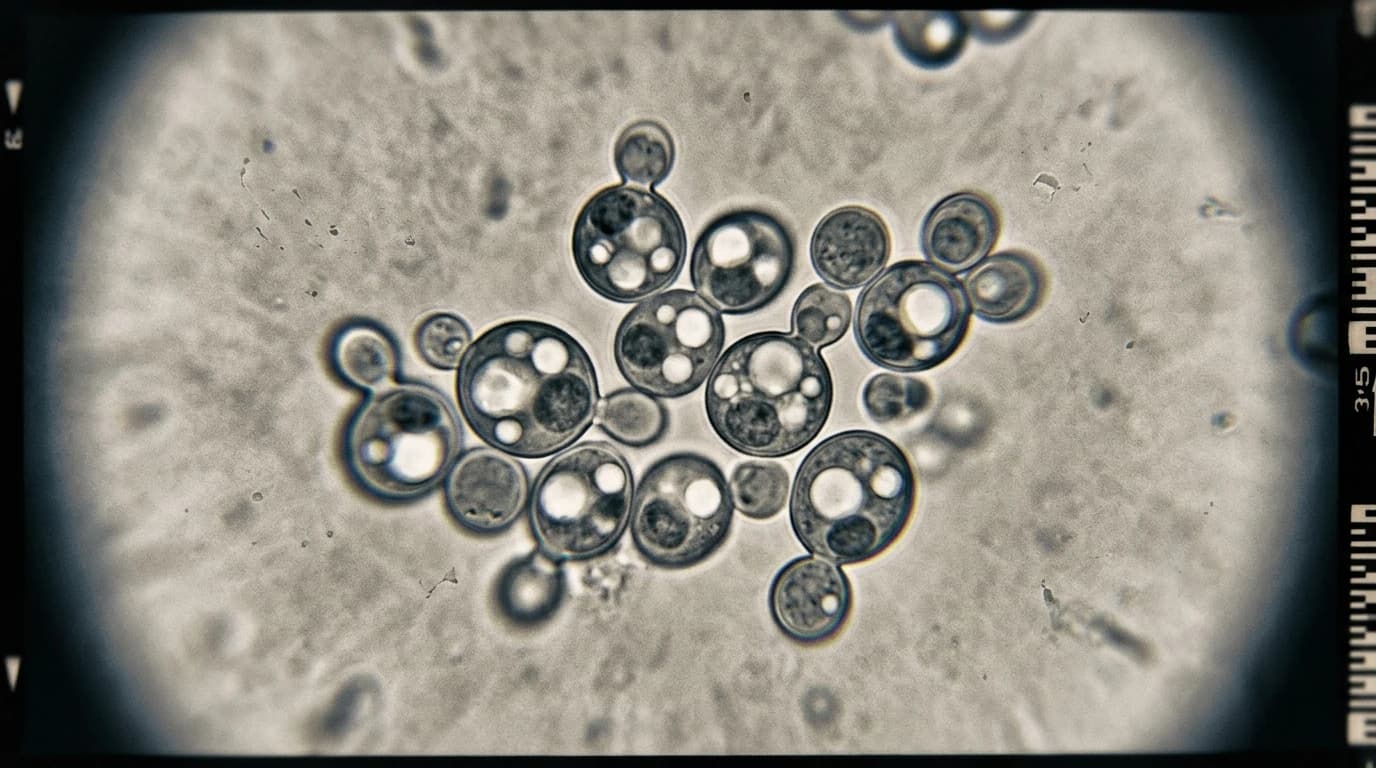
The Microscopic Oil Refinery
Imagine a microscopic balloon swelling with oil. Lipomyces starkeyi is a biological marvel, a yeast that spends its life accumulating lipids until it is nearly all fat. This organism offers a sustainable path to replace environmentally damaging oils, but its genetic code was historically a stubborn fortress, resistant to precise modification.
These results were observed under controlled laboratory conditions, so real-world performance may differ.
Laboured efforts to rewrite its DNA usually ended in failure. The yeast’s natural repair machinery often scrambled new instructions or required cumbersome, oversized genetic templates to recognise where to make changes. This made tailoring the yeast for industrial production a slow, imprecise task.
Mastering Lipomyces starkeyi genome editing
A recent study has resolved this bottleneck. Researchers engineered a CRISPR/Cas9 platform using a "Pol III-independent" approach, delivering pre-transcribed guide RNAs directly into the cell. This bypassed the yeast’s internal transcription hurdles, allowing the molecular scissors to find their target with new-found ease.
The team measured a dramatic shift in efficiency by manipulating the yeast's repair mechanics:
- They silenced the "non-homologous end joining" pathway, which usually causes errors.
- They achieved 100% accuracy in gene replacement using templates only 50 base-pairs long.
- A fluorescent green reporter confirmed the success, with the glow vanishing exactly where the DNA was clipped.
This precision suggests that L. starkeyi can now be treated as a programmable platform. The discovery provides a foundation for functional genomics, allowing scientists to design strains that produce specialised fats and biofuels on demand, potentially reducing global reliance on industrial palm oil plantations.