Physics & Astronomy18 March 2026
The Next Iteration of Solid-state spin qubits: Ytterbium-Doped Crystals Extend Coherence Times
Source PublicationNature Communications
Primary AuthorsTiranov, Green, Hermans et al.
These results were observed under controlled laboratory conditions, so real-world performance may differ.
The Persistent Challenge of Solid-state spin qubits
Historically, advancing these applications has been limited by the difficulty of finding host materials that simultaneously provide lifetime-limited optical coherence and long spin coherence. Older material candidates often excel at either holding optical transitions stable or maintaining spin coherence, but they rarely achieve both simultaneously. When a material interacts well with light, the internal electron spins tend to suffer from environmental noise and magnetic interference. This interference severely limits the practical use of these materials in quantum computing and secure communication. Finding a host matrix that isolates the ions from magnetic noise while still allowing clean optical access has remained a primary obstacle for hardware developers. The old materials force researchers to optimise for one variable at the expense of the other.A Precise Material Intervention
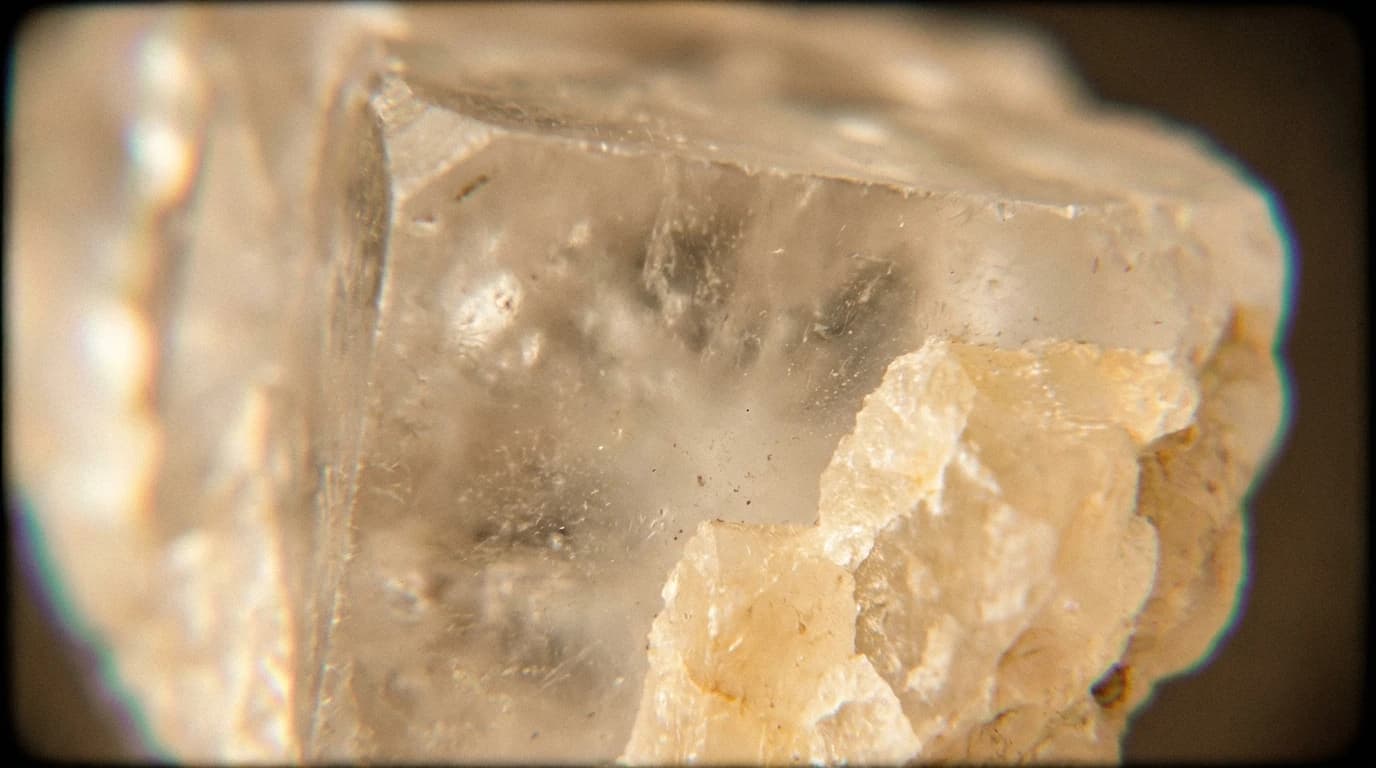
To bypass these older limitations, the research team measured the performance of 171Yb3+ ions embedded within a CaWO4 crystal. They performed high-resolution spectroscopy on the excited state, demonstrating complete all-optical coherent control over the electron-nuclear spin ensemble. The metrics recorded in the laboratory are highly specific and indicate a highly stable environment. The researchers measured a narrow inhomogeneous broadening of optical transitions at 185 MHz. Furthermore, they observed a radiative-lifetime-limited coherence time reaching up to 0.75 ms. Most notably, the team recorded a spin-transition ensemble line width of just 5 kHz. At temperatures between 50 mK and 1 K, the electron-nuclear spin coherence time reached 0.15 seconds.What the Data Does Not Solve
Despite these impressive metrics, this study does not resolve the physical engineering difficulties of scaling these systems for commercial use. The 0.15-second coherence time was only achieved at extreme cryogenic temperatures between 50 mK and 1 K, meaning the hardware still relies on stringent thermal management to minimise noise. Furthermore, while the material shows high stability for ensemble-based memories, the research has not yet demonstrated the targeted addressing of individual, single-ion qubits within a larger computational array.Future Outlook for Quantum Hardware
The measurements suggest that 171Yb3+:CaWO4 could function as a highly effective, low-noise platform for specific quantum applications. By moving away from noisier host materials, physicists can design more reliable quantum networks. If engineers can reliably manufacture this doped crystal at scale, it may improve several distinct hardware components:- Ensemble-based quantum memories that store information longer.
- Microwave-to-optical transducers for quantum networking.
- Optically addressable single-ion spin setups.