The Next Era of Farming: How Deep Learning Solves Wheat Yield Prediction
Source PublicationTheoretical and Applied Genetics
Primary AuthorsLokeshwari, Jha, Praveenkumar et al.
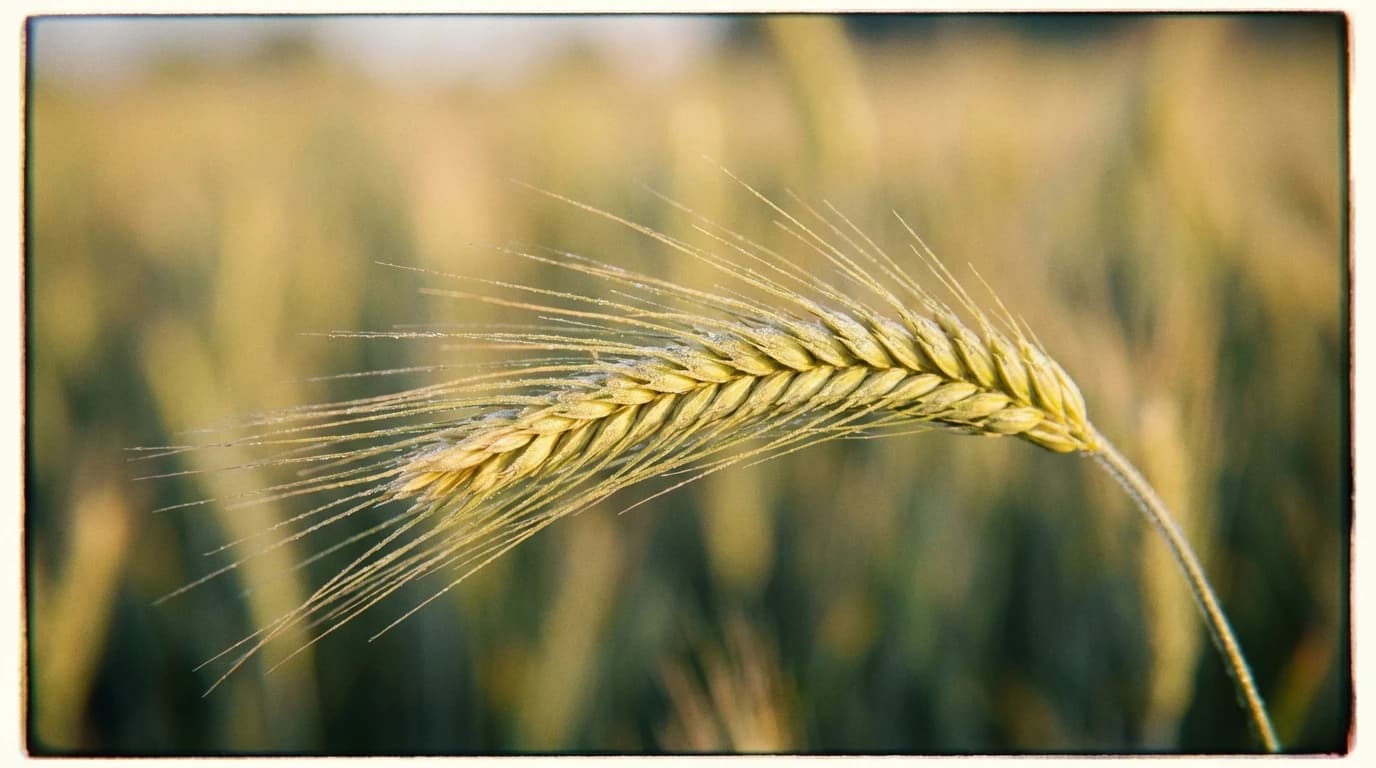
For decades, agricultural scientists have struggled with a major limitation: accurately forecasting crop outputs before the harvest actually begins. Traditional models often fail to account for the complex variables of weather and plant health, leaving farmers and breeders guessing. Now, a newly developed deep learning framework offers a solution that breaks this bottleneck in wheat yield prediction.
These results were observed under controlled laboratory conditions, so real-world performance may differ.
Global food security relies on our ability to optimise crop production. Breeders need to know which plant varieties perform best under different conditions, whether they are fully irrigated or rely entirely on rainfall. Until now, collecting this data was slow and often required destroying parts of the crop to measure actual biomass.
Active proximal sensing changes that dynamic completely. By attaching scanners to handheld devices or farm vehicles, researchers can monitor plant health rapidly and non-destructively. These sensors read the spectral light reflecting off the crops, providing an instant snapshot of field vitality.
In this new study, researchers tested the technology on 3,350 diverse wheat plants across two locations in India during the winter season. They gathered data on three main factors: canopy temperature, plant height, and the normalised difference vegetation index (NDVI). The sheer volume of data required a more sophisticated computational approach than standard regressions.
To make sense of this information, the team built a deep neural network and optimised it using a genetic algorithm. This biologically inspired code helps the computer system 'evolve' the best possible mathematical model by continually selecting the strongest predictive traits. The study measured the model's accuracy against older machine learning methods like Random Forest Regression.
The genetic algorithm consistently outperformed the older systems in both irrigated and rainfed conditions. Researchers found that NDVI alone possessed strong predictive capabilities across five different growth stages. For the first time, this combined hardware and software approach has been successfully applied to Indian agriculture.
The Future of Wheat Yield Prediction
Over the next five to ten years, this technology suggests a massive shift in how we manage agricultural resources. If scaled globally, breeders could use these algorithms to rapidly identify the most resilient plant genotypes without waiting for the final harvest. This means agricultural scientists could develop drought-resistant crops much faster than current breeding cycles allow.
By predicting yields months before harvest, governments and commodity markets can better prepare for potential food shortages or unexpected surpluses. The downstream applications of this data integration could include:
- Automated tractors that scan fields and adjust water or fertiliser distribution in real time.
- Rapid genotype selection for commercial breeders facing severe climate constraints.
- Adaptation of the neural network framework for other global staple crops like rice and soya beans.
While this study specifically measured results in Indian agriculture, the underlying mathematics apply anywhere seeds are sown. This approach offers a robust, scalable tool to help stabilise our food supply against unpredictable weather patterns. As climate volatility increases, deploying genetic algorithms alongside proximal sensors may become standard farming practice.