The Next Decade of Chemical Synthesis: Catalytic Hydrogenation of Nitroarenes Using Manganese
Source PublicationJournal of the American Chemical Society
Primary AuthorsDuan, Li, Ren et al.
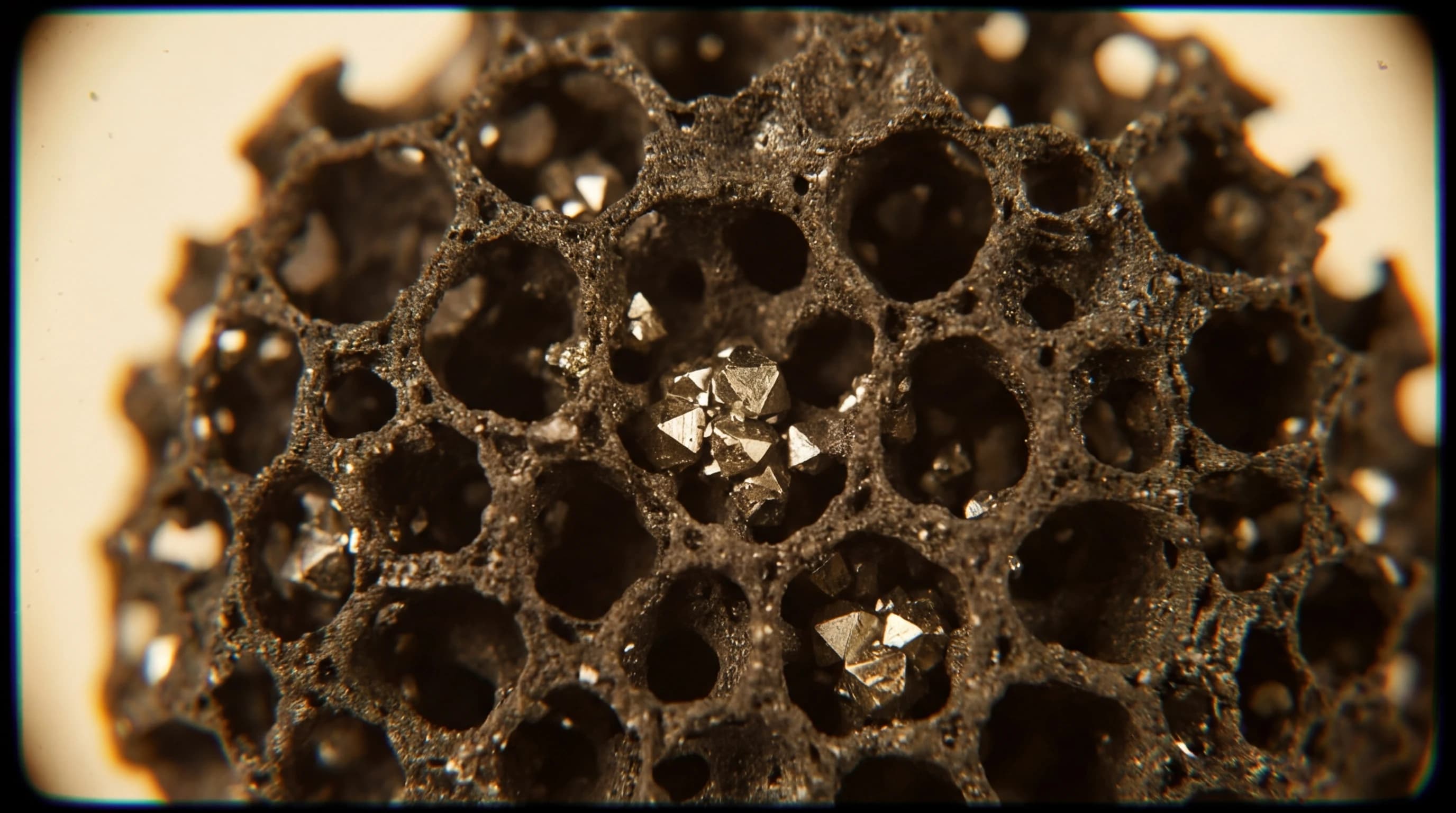
For decades, the chemical industry has relied on expensive, rare metals to drive essential reactions. This reliance creates a massive bottleneck for scaling up the production of pharmaceuticals and agricultural chemicals. Now, a new approach to the catalytic hydrogenation of nitroarenes breaks this barrier using one of Earth's most abundant metals.
These results were observed under controlled laboratory conditions, so real-world performance may differ.
Amines form the molecular backbone of modern society, acting as the foundation for countless everyday products. Without them, the development of modern synthetic materials, dyes, and life-saving drugs would simply grind to a halt. Millions of tonnes of these chemicals are produced annually across the globe.
Yet, the industrial processes used to create them remain tied to outdated, expensive catalytic systems. Traditional methods require costly materials that are highly vulnerable to global supply chain disruptions. Moving toward earth-abundant metals is both an economic and environmental necessity for the industry.
A New Approach to the Catalytic Hydrogenation of Nitroarenes
Researchers have successfully developed a manganese-based single-atom catalyst to drive this specific chemical reaction. This marks the first time scientists have used this specific manganese structure to selectively process these molecules. The study measured high selectivity in the resulting amines, particularly when processing nitrostyrene.
Interestingly, the team observed that adding water actually promoted the catalyst's overall activity. Mechanistic control experiments indicated that the heterolytic activation of hydrogen may be a contributing factor to this success. This provides a highly effective template for designing entirely new manganese-based heterogeneous catalysts.
What This Means for the Next Ten Years
Over the next five to ten years, this shift could drastically lower production costs across the chemical manufacturing sector. By replacing rare metals with abundant manganese, industries can scale up amine production without the usual financial penalties. This transition suggests we could soon see more affordable synthesis of complex pharmaceuticals.
The use of single-atom catalysts maximises the efficiency of every single metal atom within the system. This means factories will require significantly less raw material to achieve the exact same chemical output. Furthermore, the downstream applications extend far beyond medicine into agricultural chemicals and advanced polymers.
We can expect this method to influence several key areas of industrial production:
- More resilient supply chains for global chemical manufacturing.
- Lower environmental impact due to clean, atom-efficient synthesis.
- Cheaper production costs for essential amine-based consumer goods.
Engineers will likely spend the next few years optimising this manganese catalyst for continuous flow reactors. Once integrated into large-scale infrastructure, the economic benefits will ripple through the entire supply chain. Everyday items, from the plastics in our electronics to the fertilisers growing our food, could become cheaper to produce.
While the current data focuses on laboratory-scale reactions, the findings suggest a highly scalable future for industrial plants. Moving away from precious metals is no longer just a theoretical goal. As engineers scale these systems, we may see a dramatic reduction in the carbon footprint of chemical synthesis.