The Microscopic Traffic Tunnels That Could Perfect Solid-state lithium batteries
Source PublicationNature Communications
Primary AuthorsZhao, Yang, Zhang et al.
Every time you plug in your phone or start an electric car, millions of lithium ions surge across a chemical divide. They are the invisible workhorses of the modern world. But deep inside the battery, a silent, volatile chemistry dictates the limits of our technology.
The liquid electrolytes that shuffle this power back and forth are highly flammable and prone to overheating. They are also susceptible to forming microscopic metal spikes that can pierce the battery's internal walls.
Engineers have spent decades trying to freeze this liquid chaos into a stable, solid form. Yet, whenever they solidify the core, the flow of energy slows to a frustrating crawl.
The dream of a fully electrified society relies heavily on solving this chemical gridlock. Moving away from volatile liquid components reduces the risk of sudden fires and helps engineers organise the internal structure more efficiently. It also allows designers to pack far more energy into a much smaller space.
The problem lies in the transit system itself. An electrolyte functions as the microscopic highway between a battery's positive and negative terminals.
In a liquid, ions swim freely. In a solid, they must navigate a dense, rigid structure. Solid materials often act like brick walls to the lithium ions trying to pass through.
The ions clump together, aggregate in the corners, or get bogged down by other migrating particles. This traffic jam starves the device of power and makes fast charging nearly impossible.
Engineering the Perfect Tunnel
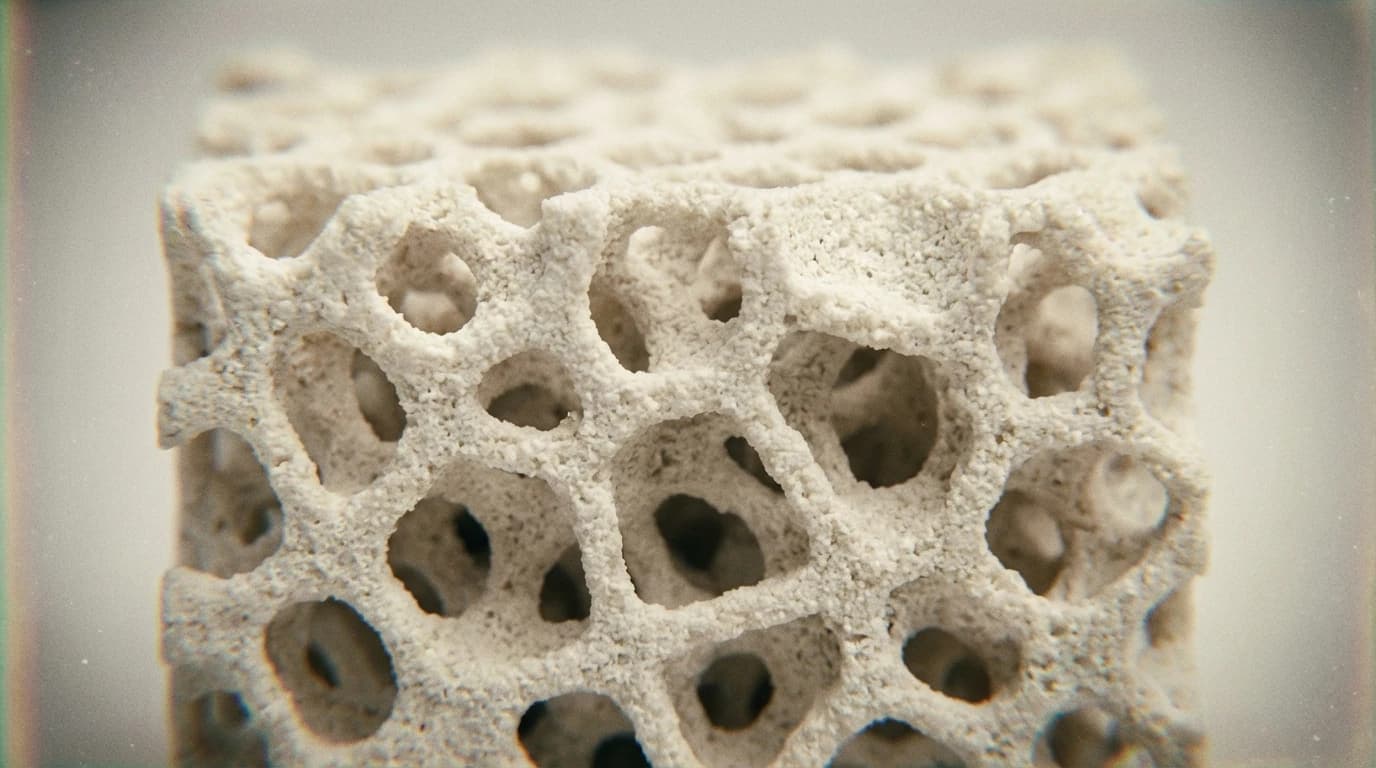
A recent laboratory study introduces an elegant structural fix to this microscopic traffic problem. Researchers engineered a porous, sponge-like material known as a covalent organic framework. These frameworks are prized for their design flexibility and environmentally friendly characteristics.
However, simply being porous is not enough. The researchers needed to control exactly what happens inside those microscopic tunnels. To do this, they lined the pores with alternating chemical chains, specifically oxyethylene and perfluoroalkyl.
This specific sequence acts as an intelligent chemical filter. The alternating chains suppress the movement of unwanted negative ions while actively helping to minimise the clumping of lithium ions.
The study measured a highly efficient, continuous pathway that allows lithium to zip from site to site without interruption.
The Promise of Solid-state lithium batteries
The physical measurements recorded by the team highlight the success of this structural design. The modified framework exhibited exceptional lithium-ion conductivity at standard room temperature.
When tested in a symmetrical cell, the setup maintained absolute stability for 7,500 hours of continuous operation. It achieved this milestone with minimal voltage drop, indicating that the internal resistance remained incredibly low over time.
The team then built a complete prototype battery to test its viability under intense conditions. Even when subjected to rapid charging and discharging, the solid-state device performed exceptionally well. The battery retained 80 percent of its original capacity after 700 cycles.
The implications of this research span several key areas of energy storage:
- Safety: Replacing flammable liquids with stable solids drastically reduces the risk of battery fires in electric vehicles.
- Longevity: The ability to cycle hundreds of times with minimal degradation suggests a significantly longer lifespan for consumer electronics.
- Speed: High ionic conductivity may finally allow drivers to recharge their cars in a fraction of the current time.
These findings suggest that sequence-controlled pore engineering could permanently solve the conductivity problem in solid electrolytes. While laboratory prototypes must still overcome the hurdles of mass manufacturing, the research offers a clear map forward. If scaled successfully, this structural design may finally make fast-charging, fire-proof energy storage a reliable, everyday reality.