The Internal Decay: How MOFs Could Save Aqueous Zn-halogen Batteries
Source PublicationNano-Micro Letters
Primary AuthorsArif, Yan, Mansoor et al.
It begins in the dark. A silent, creeping failure that rots the vessel from the inside out. For years, the promise of a cheap, water-based energy grid has been held hostage by this internal decay. The culprit is distinct yet elusive. It starts with the zinc itself—the very heart of the system. Instead of plating smoothly, it erupts into jagged, mossy growths. These dendrites stretch like cancerous fingers, piercing the separator, seeking to short-circuit the life of the cell. Simultaneously, a second affliction spreads. The active halogens, meant to stay put, begin to wander. They dissolve, drifting across the electrolyte in a chaotic migration known as the ‘shuttle effect’. This is the parasitic drain that leaves the battery exhausted before its work is done. It is a messy, sluggish death for a technology that the world desperately needs. The chemistry becomes a swamp, choked by its own byproducts, waiting for a cure that can impose order upon the entropy.
These results were observed under controlled laboratory conditions, so real-world performance may differ.
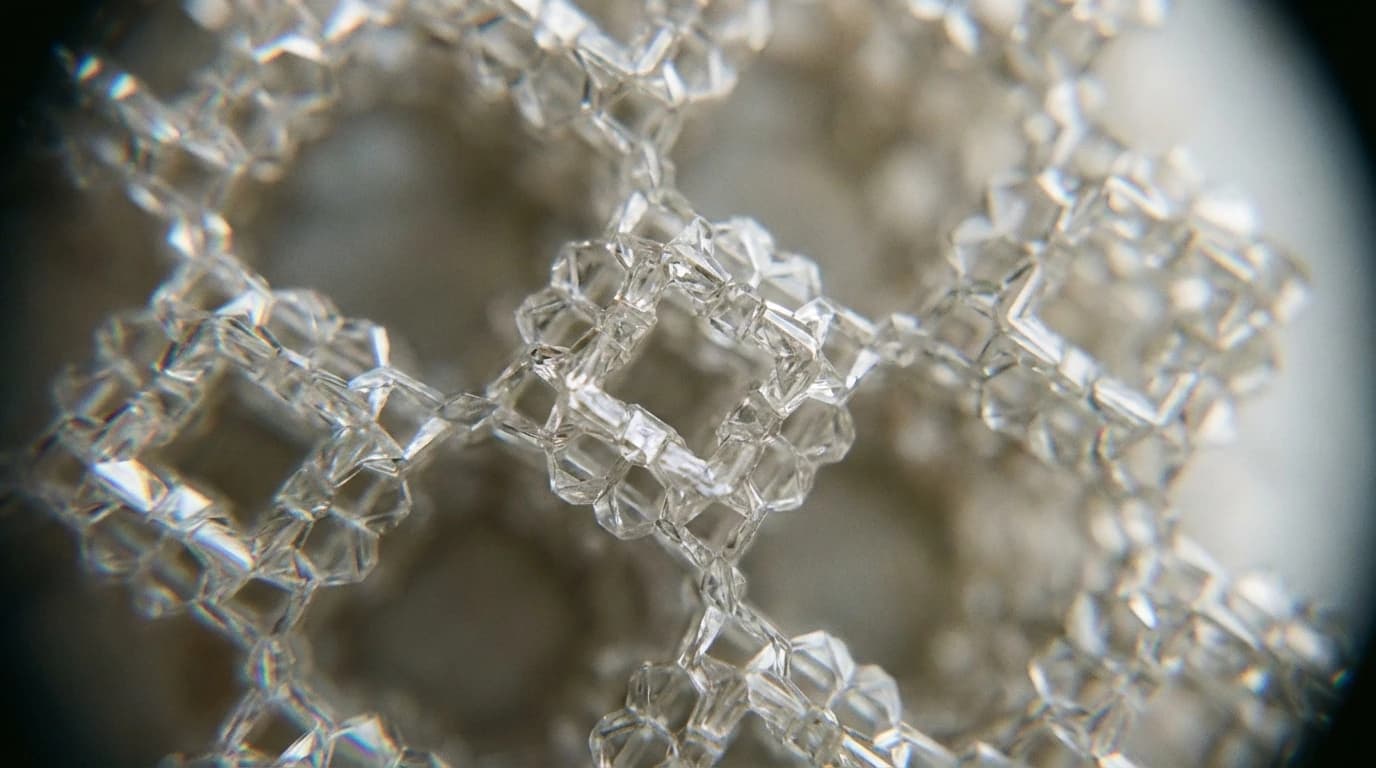
Suddenly, the narrative shifts. The chaotic soup of the electrolyte meets a rigid, disciplined structure. The review identifies Metal-Organic Frameworks (MOFs) as the unexpected protagonist in this struggle. These materials are not merely additives; they are cages.
The role of MOFs in Aqueous Zn-halogen batteries
MOFs possess a unique architecture defined by ‘hidden compartments’—highly porous structures that can be tuned at the molecular level. According to the review, these frameworks offer a way to trap the wandering halogens, effectively quarantining the shuttle effect. By functionalising the pores, scientists can create a selective barrier. It allows the necessary ions to pass while blocking the parasitic reactions that degrade the cell.
The study suggests that MOFs do more than just filter. When applied to the anode, they may regulate the deposition of zinc. Instead of the jagged, uncontrolled dendrite growth, the metal plates continuously and smoothly. The framework forces the zinc to behave, guiding it into a dense, uniform layer. This structural discipline improves the redox kinetics, transforming a sluggish chemical reaction into a snappy, efficient exchange of energy.
While the laboratory results are promising, the review notes that challenges remain. The stability of the MOFs themselves in the harsh aqueous environment must be guaranteed over thousands of cycles. Furthermore, the synthesis of these materials needs to be scalable to match the low-cost appeal of zinc systems. The authors outline a roadmap for future research, indicating that computational modelling will play a major role in predicting the perfect MOF structure before it is ever synthesised. If these engineered cages can hold, the zinc-halogen battery may finally survive its own chemistry.