The Industrial Scale of Invisible Light: A New Era for Metasurface Manufacturing
Source PublicationNature
Primary AuthorsHoang, Park, Kim et al.
The Weight of Glass
For centuries, optics meant grinding glass into heavy, curved shapes. These thick lenses anchor our cameras and telescopes, yet they struggle to manipulate light at the scale of a single photon. The weight of traditional glass limits the portability of our most advanced technology, from medical sensors to wearable displays.
Scientists have long known that flat metasurfaces—arrays of tiny pillars smaller than a wave of light—could replace bulky glass. However, these structures were stuck in cleanrooms, produced at a glacial pace that made commercial use impossible. High production costs meant these optical components remained an academic curiosity rather than a practical tool.
Scaling Metasurface Manufacturing
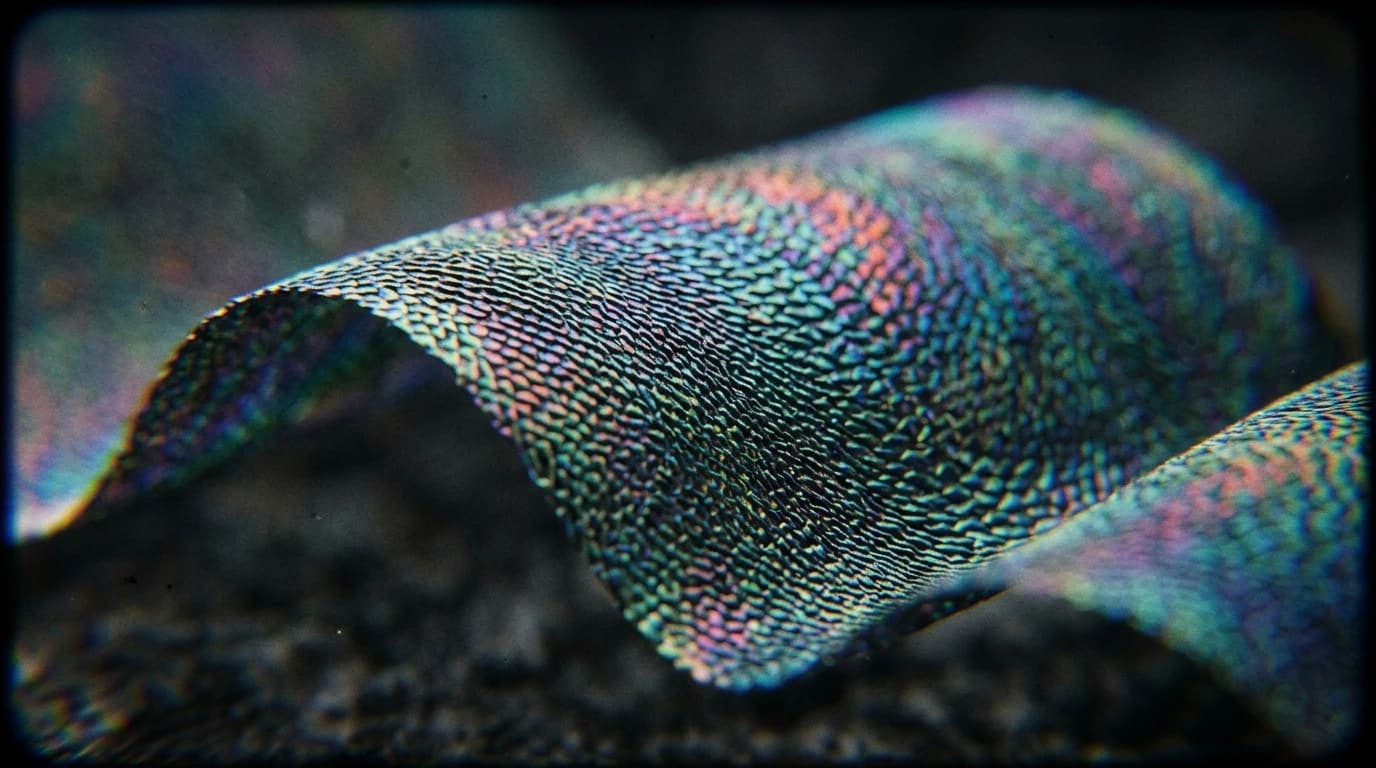
Engineers have now demonstrated a roll-to-roll nanoimprinting process that functions like a high-speed printing press for light. The team sought to optimise the throughput by stamping patterns onto a flexible substrate and adding a thin layer of titanium dioxide via atomic layer deposition. This system achieved a production rate of 300 metalenses per second, a speed that matches industrial requirements.
Experimental characterisation confirms high optical efficiency across the entire surface, suggesting that these flat lenses can match the performance of their glass predecessors. This automation removes the financial barrier to advanced optics. We may soon see these invisible structures inside smartphones and VR headsets. By moving from artisanal etching to industrialise the process, the cost of a high-performance lens may autumn below that of conventional glass.