The Ice Age Exchange That Redefined Dog Domestication
Source PublicationNature
Primary AuthorsMarsh, Scarsbrook, Yüncü et al.
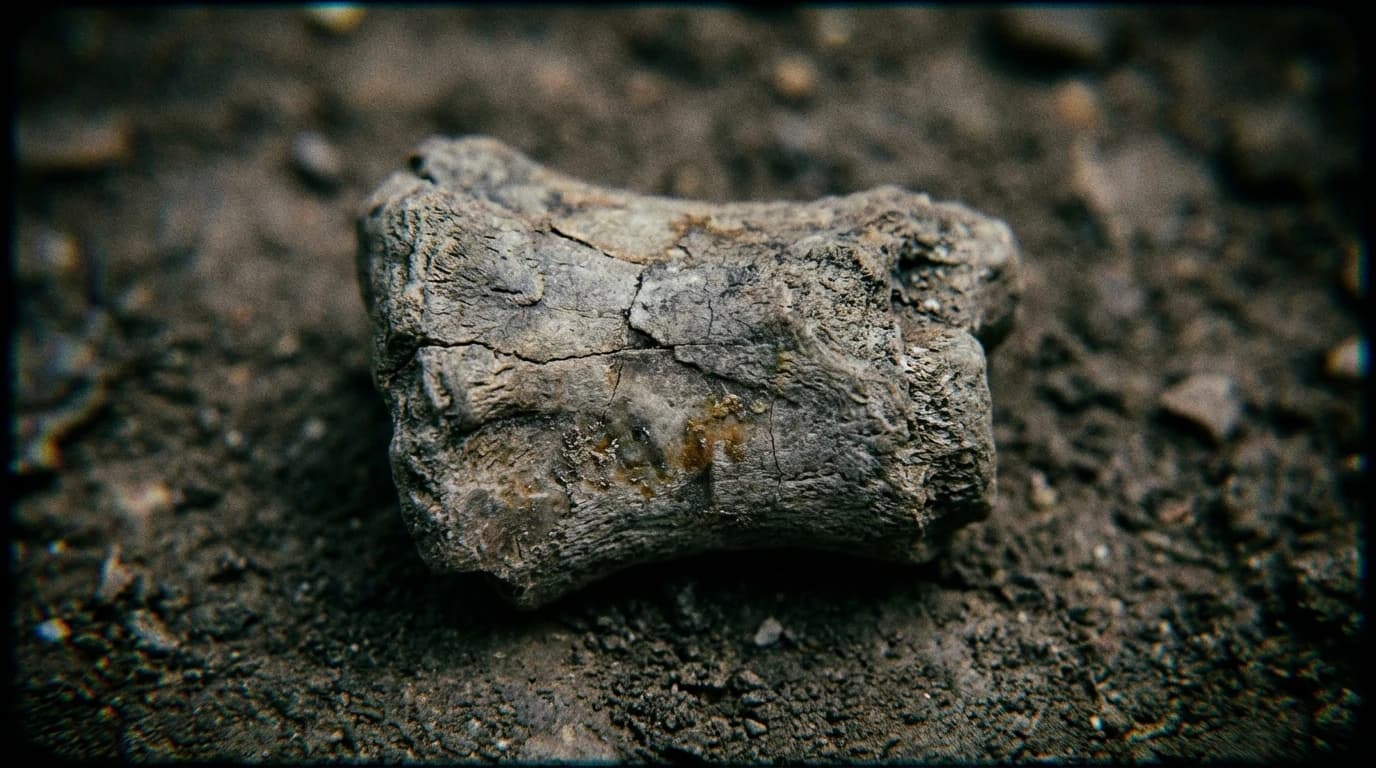
Deep within the limestone hollows of Gough’s Cave in Somerset, the bones of ice-age predators lay scattered among human debris. The air in these prehistoric shelters was once thick with woodsmoke and the scent of raw meat. For decades, archaeologists stared at fragmented canid skulls, trying to parse the wild from the tame. The physical line separating a fearsome wolf from a loyal companion is written in invisible ink, buried under millennia of dirt and decay. Identifying exactly when a predator became a pet has frustrated researchers, leaving a silent, frustrating gap in our understanding of early human survival.
Before the ice sheets retreated, human bands were scattered across a frozen continent. Survival meant isolation. The biological shift from wolf to companion happened somewhere in this freezing darkness, but the exact timeline remained blurry. Previous genetic evidence placed this shift around 10,900 years ago. However, older, ambiguous bones hinted at a much deeper history that researchers could not definitively prove.
Now, an international team has extracted and sequenced ancient DNA from deeply buried canid remains. The researchers successfully generated both nuclear and mitochondrial genomes from a 15,800-year-old specimen found at Pınarbaşı in Türkiye. They also sequenced a 14,300-year-old specimen from Gough’s Cave, alongside slightly younger remains from two sites in Serbia.
The genetic data revealed a startling uniformity. The researchers measured the genetic signatures and found that, by 14,300 years ago, a single, homogeneous population of dogs was already spread across vast stretches of Europe and Anatolia. This widespread distribution occurred long before the ice age ended.
The Mystery of Dog Domestication
This genetic overlap suggests something extraordinary about early human behaviour. These ancient humans—Magdalenian, Epigravettian, and Anatolian hunter-gatherers—were culturally distinct. They used different tools, lived in different environments, and remained genetically separate from one another.
Yet, they all possessed the exact same lineage of dogs. This data implies that ice-age humans were actively trading their canine companions across vast, hostile distances. Long before agriculture or the wheel, dogs acted as a shared biological asset. They were valuable enough to be passed between groups that otherwise had little in common.
A Shifting Genetic Record
The genetic record also measured a later, dramatic change in the canine population. During the Mesolithic period, a massive wave of eastern Eurasian dog ancestry flooded into Europe. This sudden genetic shift occurred alongside the documented migration of eastern hunter-gatherer populations moving westward.
The study suggests that as these new human groups moved into Europe, they brought their own distinct dogs with them. This ancient migration effectively overwrote the older genetic signatures. It established the primary ancestry traits that define European dog populations today.
To understand this prehistoric timeline, researchers highlighted three key phases:
- The Palaeolithic origin: Dogs diverged from wolves over 15,000 years ago.
- The Ice Age exchange: A single dog population was traded across distinct human cultures by 14,300 years ago.
- The Mesolithic influx: Eastern hunter-gatherers introduced new canine genetics to Europe, shaping modern breeds.
The history of man's best friend is not a simple, straight line of isolated taming. Instead, it is a complex web of prehistoric trade, survival, and migration. Our ancestors may have lived worlds apart, but they were connected by the dogs sleeping beside their fires.