The Hidden Forces Shaping Grassland Conservation at the Edge of the Himalayas
Source PublicationAnnals of Botany
Primary AuthorsBhowal, Banerjee, John
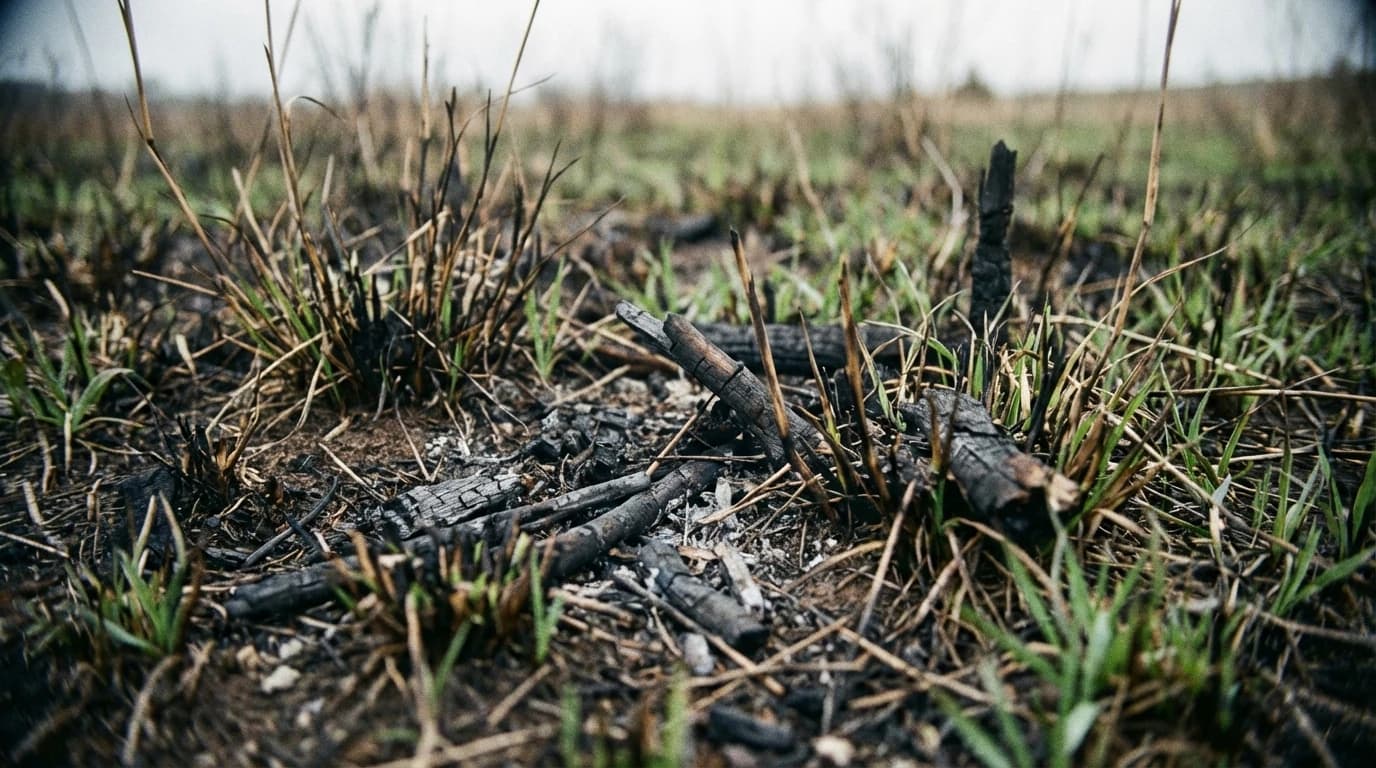
At the foot of the Himalayas, a slow, silent suffocation is taking place. Where vast, sunlit plains once stretched toward the horizon, dense thickets of woody shrubs are creeping in, choking out the native flora.
For decades, ecologists have watched this encroachment with a growing sense of dread. Without open spaces, the iconic megafauna of the region—rhinos, tigers, and elephants—lose their hunting grounds and grazing pastures.
The open savanna is dying, swallowed whole by the encroaching forest. The traditional instinct has been to fence off the remaining fragments, shield them from human contact, and hope the decay stops.
But nature is rarely so static. While conservationists monitored the vanishing plains, an opposing force was quietly at work in the shadows. New grasses were taking root in entirely unexpected places, replacing what was lost.
The Mystery Behind Grassland Conservation
The Terai-Duar Savanna and Grasslands ecoregion spans the borders of India and Nepal. It is a highly volatile environment, historically shaped by violent monsoon floods and intense seasonal fires.
Yet, the exact mechanics of how these open spaces regenerate have remained stubbornly opaque. Scientists knew the plains were shrinking, but they lacked a clear picture of where and why new growth might spontaneously appear.
To track this hidden regeneration, researchers turned to the sky. They analysed satellite imagery captured between 1988 and 2019, surveying the shifting ecological borders of eight protected areas across India and Nepal.
The data revealed a surprising pattern of resilience. Over three decades, new grass emerged across 9.5 percent of the previously overgrown areas. Today, these newly formed patches account for roughly 37 percent of the region’s total current savanna.
The researchers measured various environmental factors to isolate the triggers for this rebirth. They identified several distinct drivers that favoured the return of native grasses:
- Frequent fires that clear away encroaching woody shrubs.
- Steep slopes where water runoff prevents dense forestation.
- High soil moisture, which supports rapid grass germination.
More surprisingly, these open spaces frequently flourished closer to human settlements. The data suggests that human disturbances, such as livestock grazing and controlled burns, can closely mimic the natural environmental shocks that these ecosystems require to thrive.
Rethinking How We Protect the Plains
The findings complicate the traditional ethos of simply fencing off nature. In high-rainfall areas, fire proved to be the most powerful catalyst for new growth. In drier regions, topography and water proximity dictated where seeds would finally take hold.
This means effective grassland conservation cannot rely on a single, passive strategy. The ecosystem actually depends on regular, intense disruption. Without the violent clearing force of floods, fires, or grazing, the woody shrubs will always win the battle for sunlight.
By mapping these dynamics, the study provides a new blueprint for managing protected areas at the base of the Himalayas. It suggests that carefully applied human influence might not be a threat to these habitats. Instead, managed disruption could be a necessary pulse of life for an ecosystem that occasionally needs to be shaken awake.
Conservationists now face a delicate balancing act. They must protect these fragile spaces from urban development while intentionally inviting the right kinds of chaos. It is a bold shift in perspective, acknowledging that preservation sometimes requires a spark.