The Hidden Cost of Coastal Nutrient Enrichment
Source PublicationScientific Publication
Primary AuthorsHadkar, Dharmamony, Ameri et al.
"Imagine throwing a massive feast in a small room, but only inviting the most aggressive, fast-eating guests. They consume everything in minutes, leave a terrible mess, and use up all the breathable air so nobody else can survive."
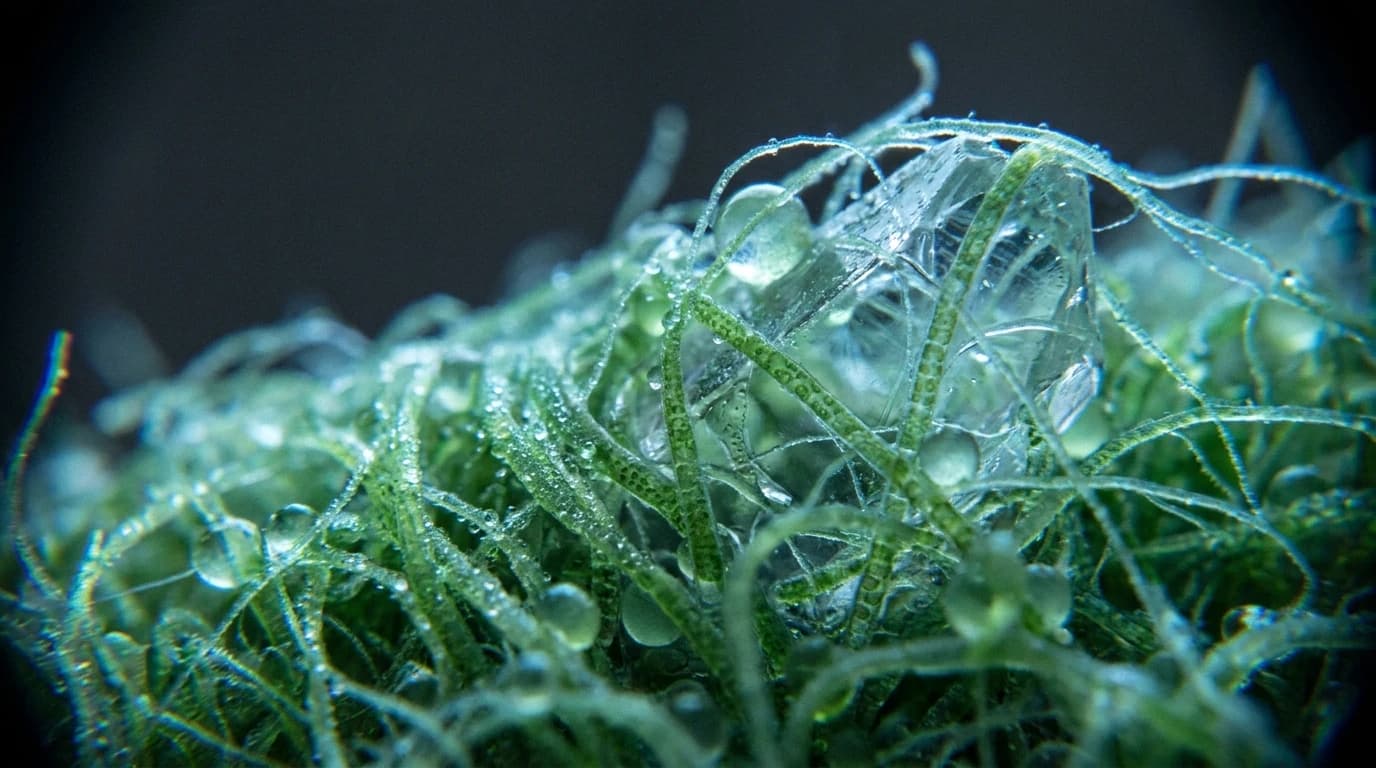
Is there a hidden elegance in biological chaos? When environments change rapidly, life scrambles to adapt in wild, unpredictable ways. But sometimes, human activity pushes this natural disorder past the brink of survival.
These results were observed under controlled laboratory conditions, so real-world performance may differ.
We are currently feeding our oceans far too much of a good thing. Every day, heavy loads of nitrogen and phosphorus from farms, factories, and urban centres wash into the sea. This sets off a chain reaction that suffocates marine life.
To understand why this happens, we must look at how marine ecosystems process sudden windfalls. Why do tiny marine algae respond so aggressively to our pollution? In nature, massive nutrient spikes are often rare and fleeting. When a continuous flood of human waste hits the water, opportunistic algae instantly exploit the feast. They multiply at terrifying speeds, creating harmful algal blooms. They thrive. Yet, this incredible biological success story spells disaster for the rest of the ecosystem. When the algae eventually die and rot, the ensuing decay sucks the oxygen out of the water, driving severe hypoxia and emerging coastal acidification.
The Global Threat of Coastal Nutrient Enrichment
A recent scientific review looked closely at this escalating crisis. While the researchers examined data from across the globe, they focused heavily on the highly dynamic coastlines of India as a primary case study to illustrate these mechanisms. In these regions, heavy monsoon-driven hydrology combines with expanding agriculture and rapid urban growth. This creates a perfect storm for pollution.
The researchers examined the major sources of this pollution and tracked how it travels from land to sea. They mapped out the physical spread of excess chemicals and the resulting dead zones. The findings are stark. The data suggests that coastal nutrient enrichment could permanently alter marine habitats, driving severe oxygen depletion and higher water acidity, amplified further by climate change.
This is not just an ecological issue. It affects local economies, fisheries, and human health. The review notes that current management efforts are often too fragmented to work well. Different sectors act independently, without a unified defence against the pollution.
So, how do we fix it? The researchers propose a broad management framework. This involves stopping the pollution at its source, intercepting runoff before it reaches the ocean, and using ecosystem-based solutions like restoring natural buffers. They also suggest that better predictive modelling and stronger government coordination are essential.
Nature is tough, but it has limits. By understanding the link between what we put into our rivers and what happens in the sea, we can start to clean up the mess. We just need to act before the damage becomes permanent.