The Hidden Code Within: Mapping Ribonucleoside Monophosphates in DNA
Source PublicationCell
Primary AuthorsKundnani, Lee, Yang et al.
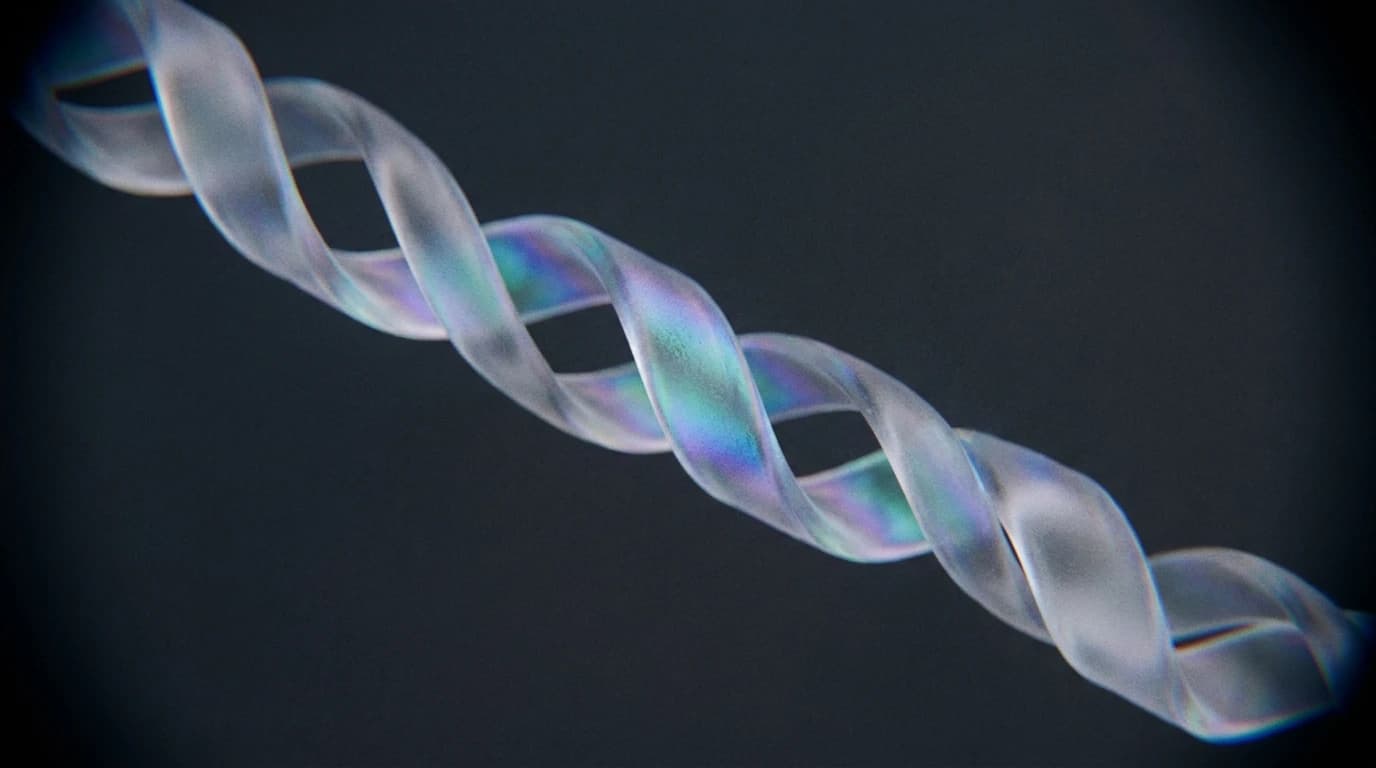
"Imagine DNA as a long, tightly twisted telephone cord. The embedded RNA pieces act like small, intentional kinks in the plastic that control exactly how and where the cord bends, helping the cell quickly access the genetic information it needs without getting tangled."
Deep within our cells, a silent landscape has remained largely uncharted. For decades, the human genome was viewed as a pristine, predictable instruction manual. It did not easily reveal its structural secrets. Instead, the true complexity of our genetic code slipped quietly under the radar of standard sequencing tools.
These results were observed under controlled laboratory conditions, so real-world performance may differ.
Once inside the nucleus, the traditional rules of genetics seem to vanish. The genome harbours hidden compartments of information. It builds tiny, silent structural variations that exist undetected by standard textbook models. For years, these anomalies were dismissed as mere errors. The true nature of our genetic blueprint waited in the shadows.
To decode such stealthy complexity, science must look inward. We need to understand the deepest secrets of our own cells, right down to the physical tension of the genetic code. How do our cells control their internal machinery? The answer might lie in a surprising plot twist within our DNA.
Finding Ribonucleoside Monophosphates in DNA
For a long time, textbooks taught us that DNA is made of four standard building blocks. But researchers have now mapped a hidden layer of information. They developed a highly sensitive tool to track ribonucleoside monophosphates in DNA. These are tiny pieces of RNA—normally a different type of genetic material—embedded directly into the human DNA sequence.
The study mapped around one million of these RNA pieces across various human cells in laboratory conditions. The researchers found that these embedded pieces are not random errors. Instead, they cluster in specific zones. They gather near the exact spots where cells start reading genes.
This discovery acts as a major plot twist for biology. The team measured how an enzyme called RNase H2 interacts with these RNA pieces. When this enzyme is missing, the RNA pieces build up. The researchers observed in cell cultures that cutting the DNA at these specific RNA spots changes how the DNA coils and twists upon itself, a process known as supercoiling. Think of DNA as a long, twisted telephone cord. If you twist it too much, it knots up. The cell must carefully manage this tension to read its genes properly.
These findings suggest that these embedded RNA fragments are not mistakes. They could be intentional epigenetic control switches. By altering how tightly the DNA is wound, they may help control which genes are turned on or off. Understanding this hidden layer of genetic control provides a powerful new tool. It gives researchers a fresh way to study how human cells manage their vast libraries of information, revealing a profound connection between our genome's physical shape and its function.