The Greener Way to Build Molecules: Silver-Free C-H arylation of fluoroarenes in Water
Source PublicationChemSusChem
Primary AuthorsBelnome, Garami, Varga et al.
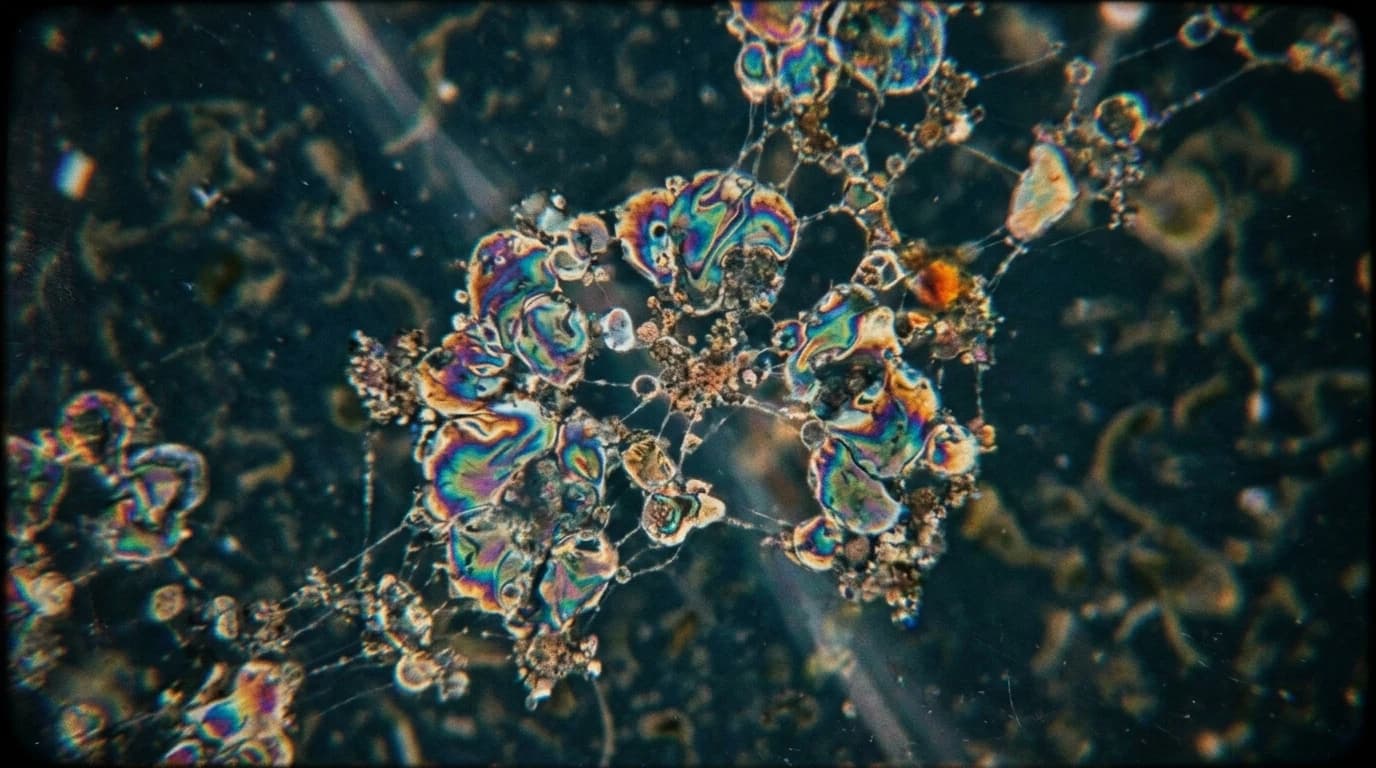
The Greener C-H arylation of fluoroarenes
Imagine trying to wash a greasy pan with cold water; the oil simply won’t budge. You need soap to trap the grease in tiny bubbles so the water can carry it away. Chemists have now applied this kitchen logic to complex molecular construction.
Modern drug manufacturing relies on joining carbon atoms, a process called C-H arylation of fluoroarenes. Traditionally, this requires toxic organic solvents and expensive silver additives to force the reaction. These ingredients are difficult to recycle and create significant industrial waste.
Researchers have developed a method using "micelles"—nanoscopic soap bubbles—to host these reactions in water. By using a specific surfactant called PS-750-M, the team successfully coupled pyridines and fluoroarenes without any silver. They used freeze-fracture electron microscopy and infrared spectroscopy to observe how the catalyst interacts with these tiny oily pockets.
Why Soap Bubbles Change the Lab
The data suggests this method works across a wide range of chemical groups. Because the reaction happens in water, scientists can perform "one-pot" sequences. This means they can run multiple steps in the same container without cleaning the mixture in between.
- Eliminates toxic organic co-solvents entirely.
- Removes the need for expensive silver additives.
- Enables complex multi-step reactions in a single vessel.
This approach could significantly reduce the environmental footprint of pharmaceutical production. It offers a practical path toward sustainable synthesis without sacrificing chemical precision or yield.