Neuroscience3 March 2026
The Glass Memory: Defeating the Ice in Brain cryopreservation
Source PublicationProceedings of the National Academy of Sciences
Primary AuthorsGerman, Akdaş, Flügel-Koch et al.
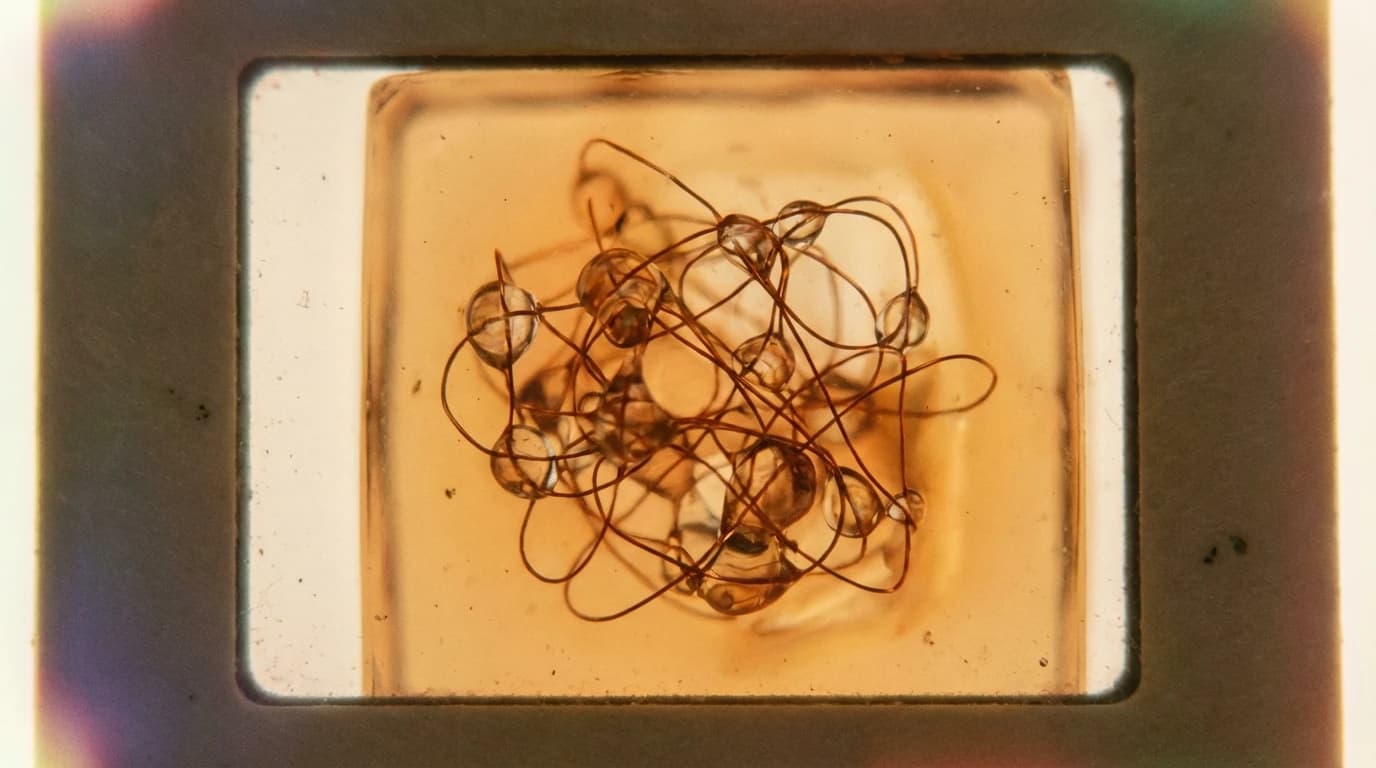
These results were observed under controlled laboratory conditions, so real-world performance may differ.
The Challenge of Brain cryopreservation
To pause biological time, researchers must find a way to stop molecular motion without forming ice. This is the central hurdle of brain cryopreservation. Traditional freezing methods obliterate the architecture that holds our memories, habits, and very selves. Scientists have long theorised about an alternative called vitrification. Instead of freezing into a crystalline solid, the tissue is cooled rapidly in the presence of highly concentrated cryoprotectants. These chemicals prevent water molecules from organising into ice. Instead, the cellular fluid turns into a smooth, glass-like state. While vitrification works for tiny embryos or single cells, scaling it up to an entire mammalian organ seemed biologically implausible. The density and extreme fragility of neural networks present a formidable barrier. The brain is an incredibly demanding organ, requiring constant energy just to maintain its shape and internal gradients. Pausing this active system without causing structural collapse has frustrated biologists for years.Glass Tissues and Revived Memories
A recent laboratory study on mice demonstrates that this barrier might finally be breaking. Researchers successfully applied vitrification to adult murine brain tissue, testing both isolated slices and the whole brain in situ. When they carefully warmed the tissues back to physiological temperatures, the results were startling. The neural architecture was not reduced to cellular debris. The glass had melted, leaving the intricate wiring intact. Instead of widespread cell death, the researchers measured the preservation of several vital biological functions:- Structural integrity of the delicate hippocampal regions.
- Metabolic responsiveness and normal neuronal excitability.
- Synaptic transmission, allowing cells to communicate across gaps.